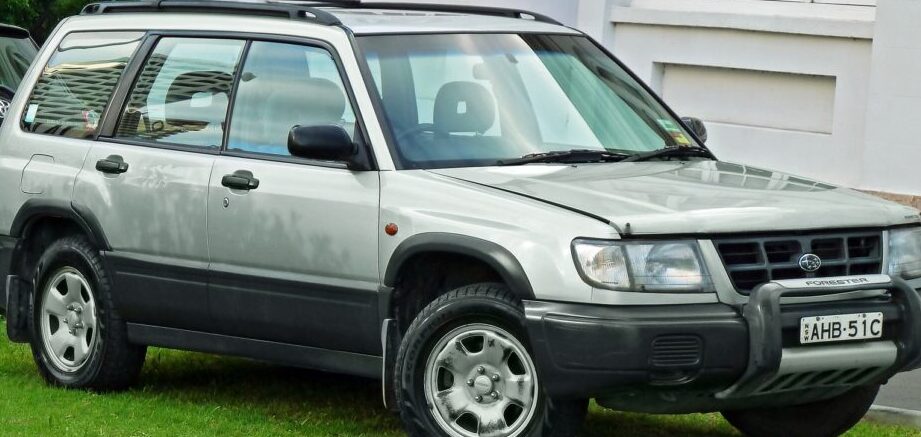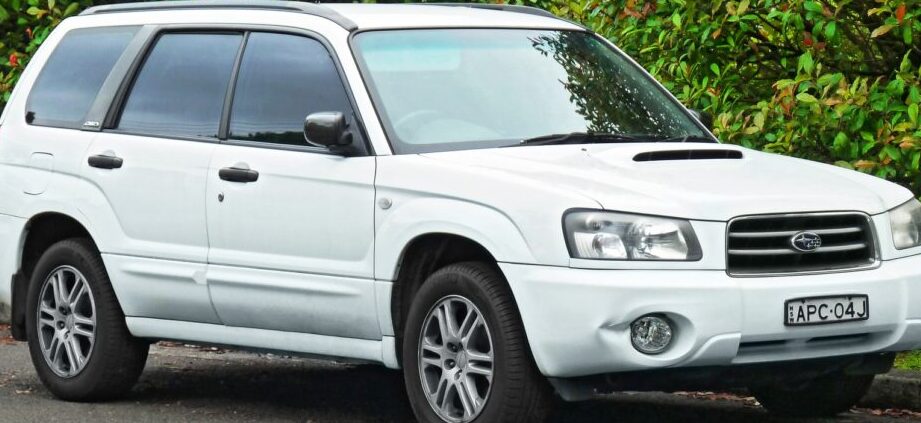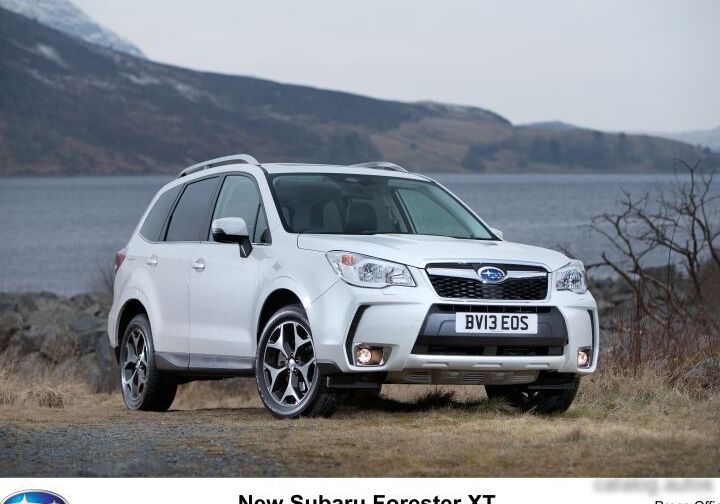
The Subaru Forester IV (facelift, 2016) 2.0d AWD Lineartronic represents a significant iteration of Subaru’s popular compact SUV, positioned as a practical and efficient option within the Forester lineup. Produced from 2016 to 2018, this variant combined a 2.0-liter turbocharged diesel engine with Subaru’s Lineartronic continuously variable transmission (CVT) and symmetrical all-wheel drive. It aimed to deliver a balance of fuel economy, usability, and the all-weather capability Subaru is known for, primarily targeting European and Asian markets where diesel engines were more prevalent. This model sat in the mid-range of the Forester IV offerings, offering a step up in refinement and fuel efficiency compared to the base petrol models, while remaining more accessible than the higher-specification trims.
Technical Specifications
| Brand | Subaru |
| Model | Forester |
| Generation | Forester IV (facelift 2016) |
| Type (Engine) | 2.0d (147 Hp) AWD Lineartronic |
| Start of production | 2016 |
| End of production | 2018 |
| Powertrain Architecture | Internal Combustion engine |
| Body type | SUV, Crossover |
| Seats | 5 |
| Doors | 5 |
| Fuel consumption (urban) | 7.3 l/100 km (32.2 US mpg, 38.7 UK mpg, 13.7 km/l) |
| Fuel consumption (extra urban) | 5.4 l/100 km (43.6 US mpg, 52.3 UK mpg, 18.5 km/l) |
| Fuel consumption (combined) | 5.1 l/100 km (46.1 US mpg, 55.4 UK mpg, 19.6 km/l) |
| CO2 emissions | 158 g/km |
| Fuel Type | Diesel |
| Acceleration 0 – 100 km/h | 9.9 sec |
| Acceleration 0 – 62 mph | 9.9 sec |
| Acceleration 0 – 60 mph | 9.4 sec |
| Maximum speed | 188 km/h (116.82 mph) |
| Emission standard | Euro 6 |
| Weight-to-power ratio | 11.1 kg/Hp, 90.5 Hp/tonne |
| Weight-to-torque ratio | 4.6 kg/Nm, 215.4 Nm/tonne |
| Power | 147 Hp @ 3600 rpm |
| Power per litre | 73.6 Hp/l |
| Torque | 350 Nm @ 1600-2800 rpm (258.15 lb.-ft. @ 1600-2800 rpm) |
| Engine layout | Front, Longitudinal |
| Engine Model/Code | EE20 |
| Engine displacement | 1998 cm3 (121.93 cu. in.) |
| Number of cylinders | 4 |
| Engine configuration | Boxer |
| Cylinder Bore | 86 mm (3.39 in.) |
| Piston Stroke | 86 mm (3.39 in.) |
| Compression ratio | 15.2:1 |
| Number of valves per cylinder | 4 |
| Fuel injection system | Diesel Commonrail |
| Engine aspiration | Turbocharger, Intercooler |
| Valvetrain | DOHC |
| Engine oil capacity | 5.9 l (6.23 US qt | 5.19 UK qt) |
| Coolant | 9 l (9.51 US qt | 7.92 UK qt) |
| Kerb Weight | 1625 kg (3582.51 lbs.) |
| Max. weight | 2080 kg (4585.62 lbs.) |
| Max load | 455 kg (1003.1 lbs.) |
| Trunk (boot) space – minimum | 505 l (17.83 cu. ft.) |
| Trunk (boot) space – maximum | 1557 l (54.98 cu. ft.) |
| Fuel tank capacity | 60 l (15.85 US gal | 13.2 UK gal) |
| Max. roof load | 80 kg (176.37 lbs.) |
| Permitted trailer load with brakes (12%) | 2000 kg (4409.25 lbs.) |
| Permitted trailer load without brakes | 750 kg (1653.47 lbs.) |
| Length | 4610 mm (181.5 in.) |
| Width | 1795 mm (70.67 in.) |
| Height | 1735 mm (68.31 in.) |
| Wheelbase | 2640 mm (103.94 in.) |
| Front track | 1545 mm (60.83 in.) |
| Rear (Back) track | 1555 mm (61.22 in.) |
| Ride height (ground clearance) | 220 mm (8.66 in.) |
| Minimum turning circle | 11.4 m (37.4 ft.) |
| Front suspension | Independent type McPherson |
| Rear suspension | Double wishbone |
| Front brakes | Ventilated discs |
| Rear brakes | Ventilated discs |
| Gearbox | automatic transmission Lineartronic |
| Tires size | 225/60 R17 |
| Wheel rims size | 7J x 17 |
INTRODUCTION
The 2016 facelift of the Subaru Forester IV brought subtle styling updates and refinements to the already popular model. The 2.0d AWD Lineartronic variant, powered by the EE20 diesel engine, was a key offering, particularly in markets where diesel fuel was favored. This version built upon the strengths of the Forester IV platform – spaciousness, practicality, and Subaru’s renowned symmetrical all-wheel-drive system – while aiming to improve fuel efficiency and provide a more relaxed driving experience through the use of a continuously variable transmission. The Forester IV, based on the Subaru Global Platform, represented a move towards increased rigidity and improved crash safety compared to its predecessor.
Powertrain & Engine Architecture
At the heart of the 2.0d Lineartronic Forester lies the EE20 2.0-liter horizontally-opposed (Boxer) diesel engine. This engine utilizes a common-rail direct injection system, delivering fuel at extremely high pressure for optimized combustion. The EE20 features a single turbocharger with an intercooler, boosting power and torque. The engine’s flat-four configuration contributes to a low center of gravity, enhancing stability and handling. The Lineartronic CVT, Subaru’s implementation of a toroidal CVT, replaces traditional gearsets with a belt and pulley system, offering seamless and stepless gear changes. This CVT is programmed with simulated shift points to mimic the feel of a conventional automatic transmission, addressing a common criticism of CVTs. The engine code EE20 is known for its durability, but requires regular maintenance, particularly regarding the diesel particulate filter (DPF).
Driving Characteristics
The 2.0d Lineartronic Forester delivers a comfortable and composed driving experience. While not overtly sporty, the 147 horsepower and 350 Nm (258 lb-ft) of torque provide adequate performance for everyday driving and highway cruising. The Lineartronic CVT prioritizes fuel efficiency and smoothness over rapid acceleration. Compared to the 6-speed manual version of the same engine, the CVT offers a more relaxed driving experience, particularly in urban traffic. However, the manual transmission provides a more direct connection to the engine and slightly quicker acceleration. The symmetrical all-wheel-drive system provides excellent traction in all weather conditions, making the Forester a confident performer on slippery surfaces. The CVT’s programming can sometimes feel sluggish when requesting sudden bursts of power, a characteristic common to many CVTs.
Equipment & Trim Levels
The 2.0d Lineartronic trim typically included standard features such as automatic climate control, a touchscreen infotainment system with Bluetooth connectivity, alloy wheels, and a suite of safety features including ABS, stability control, and multiple airbags. Higher trim levels added features like leather upholstery, a sunroof, and advanced driver-assistance systems such as adaptive cruise control and lane departure warning. Interior upholstery was generally cloth on the base 2.0d, with leather options available on higher-spec models. The dashboard layout was functional and user-friendly, prioritizing practicality over outright luxury.
Chassis & Braking
The Forester IV utilizes a MacPherson strut front suspension and a double-wishbone rear suspension, providing a comfortable ride and predictable handling. The 2.0d Lineartronic models typically featured ventilated disc brakes on all four wheels, providing ample stopping power. Stabilizer bars were fitted to both the front and rear axles to reduce body roll during cornering. The suspension tuning was geared towards comfort and ride quality, rather than aggressive handling. The Forester’s relatively high ground clearance (220mm) contributes to its off-road capability.
Market Reception & Comparison
The Subaru Forester IV 2.0d Lineartronic was generally well-received by automotive critics. It was praised for its spacious interior, comfortable ride, and excellent all-weather capability. The Lineartronic CVT was a point of contention for some reviewers, with some finding it less engaging than a traditional automatic transmission. Compared to other diesel-powered SUVs in its class, the Forester offered a compelling combination of practicality, fuel efficiency, and reliability. The 1.6L petrol versions were less expensive but offered significantly lower torque and fuel economy. The higher-spec 2.0L petrol turbo models provided more performance but at a higher price point and with increased fuel consumption.
Legacy
The EE20 diesel engine, while generally reliable, is known to require diligent maintenance, particularly concerning the diesel particulate filter. Regular oil changes and the use of high-quality diesel fuel are crucial for long-term durability. The Lineartronic CVT, when properly maintained, is also a robust transmission. In the used car market, the 2016-2018 Forester IV 2.0d Lineartronic remains a popular choice for buyers seeking a practical, reliable, and fuel-efficient SUV with all-wheel-drive capability. Its reputation for dependability and its spacious interior continue to make it a competitive option in its segment.