
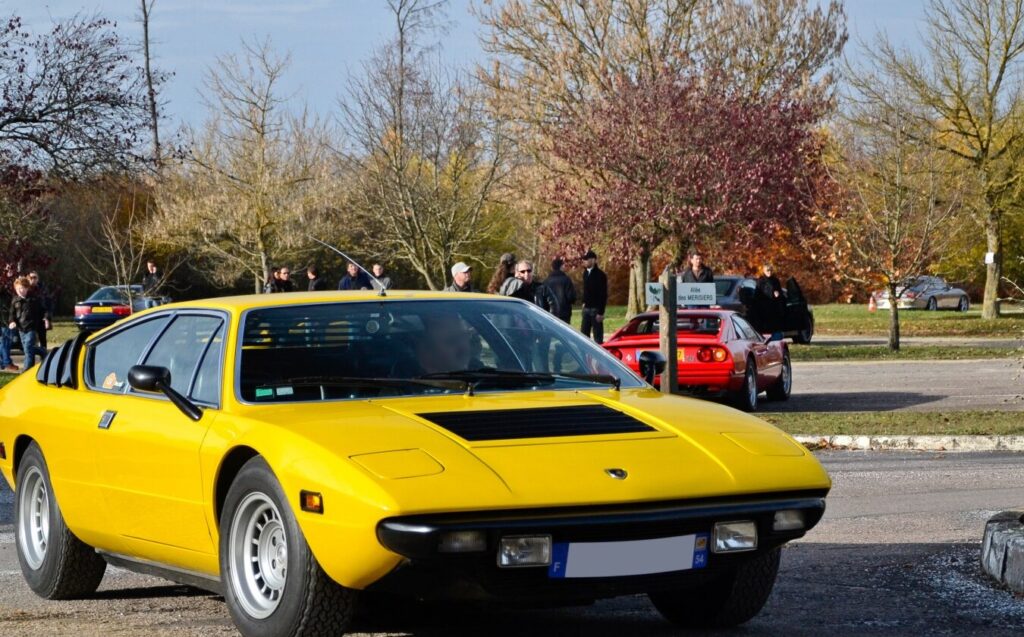
The Lamborghini Urraco P300, produced between 1974 and 1981, represented a significant departure for the Italian automaker. Positioned as a more accessible entry into the world of Lamborghini ownership, the Urraco was intended to broaden the brand’s appeal beyond the exclusive realm of the Countach and Miura. It was the first Lamborghini to utilize a mid-engine layout with a transversely mounted engine, a design choice influenced by the need for a more compact and cost-effective platform. The P300 designation refers to the engine’s approximate horsepower output, and it served as the initial and most common variant of the Urraco model line, paving the way for the later P200 and P110 versions.
Technical Specifications
| Brand | Lamborghini |
| Model | Urraco |
| Generation | Urraco |
| Type (Engine) | P300 (265 Hp) |
| Start of production | 1974 |
| End of production | 1981 |
| Powertrain Architecture | Internal Combustion engine |
| Body type | Coupe |
| Seats | 4 |
| Doors | 2 |
| Fuel consumption (combined) | 13.8 l/100 km (17 US mpg, 20.5 UK mpg, 7.2 km/l) |
| Fuel Type | Petrol (Gasoline) |
| Acceleration 0 – 60 mph | 6.6 sec |
| Maximum speed | 254 km/h (157.83 mph) |
| Weight-to-power ratio | 4.2 kg/Hp, 240.9 Hp/tonne |
| Weight-to-torque ratio | 4.2 kg/Nm, 240 Nm/tonne |
| Power | 265 Hp @ 7800 rpm |
| Power per litre | 88.5 Hp/l |
| Torque | 264 Nm @ 5750 rpm (194.72 lb.-ft. @ 5750 rpm) |
| Engine layout | Middle, Transverse |
| Engine Model/Code | L302 |
| Engine displacement | 2996 cm3 (182.83 cu. in.) |
| Number of cylinders | 8 |
| Engine configuration | V-engine |
| Cylinder Bore | 86 mm (3.39 in.) |
| Piston Stroke | 64.5 mm (2.54 in.) |
| Compression ratio | 10.5:1 |
| Fuel injection system | Carburettor |
| Engine aspiration | Naturally aspirated engine |
| Valvetrain | DOHC |
| Engine oil capacity | 7 l (7.4 US qt | 6.16 UK qt) |
| Kerb Weight | 1100 kg (2425.08 lbs.) |
| Fuel tank capacity | 80 l (21.13 US gal | 17.6 UK gal) |
| Length | 4250 mm (167.32 in.) |
| Width | 1760 mm (69.29 in.) |
| Height | 1160 mm (45.67 in.) |
| Wheelbase | 2450 mm (96.46 in.) |
| Front track | 1450 mm (57.09 in.) |
| Rear track | 1470 mm (57.87 in.) |
| Drivetrain Architecture | Rear wheel drive |
| Drive wheel | Rear wheel drive |
| Number of gears and type of gearbox | 5 gears, manual transmission |
| Front brakes | Ventilated discs |
| Rear brakes | Ventilated discs |
| Tires size | Front: 195/70 VR14, Rear: 205/70 VR14 |
| Wheel rims size | Front: R14, Rear: R14 |
Powertrain & Engine Architecture
The heart of the Urraco P300 is the Lamborghini L302 engine, a 2.996-liter V8. This engine, while sharing some lineage with the earlier Lamborghini V12s, was designed to be more compact and affordable. It featured a 90-degree V-angle and utilized a dual overhead camshaft (DOHC) valvetrain, operating four valves per cylinder. The engine employed three Weber 40 DCN F carburetors for fuel delivery, a relatively simple system for the time but contributing to the engine’s responsive nature. The transversely mounted configuration, a first for Lamborghini, necessitated a complex gearbox arrangement. The P300 was exclusively offered with a five-speed manual transmission, designed to handle the engine’s power and torque. The engine’s relatively high 10.5:1 compression ratio contributed to its spirited performance.
Driving Characteristics
The Urraco P300 offered a distinctly engaging driving experience. Its relatively light weight (around 2425 lbs) combined with the 265 horsepower engine resulted in a 0-60 mph time of approximately 6.6 seconds and a top speed of 158 mph. The transversely mounted engine and rear-wheel drive configuration provided a balanced feel, although the car could be prone to oversteer if pushed to its limits. The five-speed manual transmission offered precise shifts, and the gear ratios were well-suited to the engine’s powerband. Compared to the later P200, which featured a smaller engine and lower power output, the P300 delivered noticeably stronger acceleration and a more visceral driving experience. It lacked the raw power of the Countach, but offered a more manageable and accessible performance profile.
Equipment & Trim Levels
The Urraco P300 was relatively sparsely equipped compared to modern luxury cars, reflecting its positioning as a more affordable Lamborghini. Standard features included leather upholstery, power windows, and a wood-rimmed steering wheel. Air conditioning was often an optional extra, as were features like a radio and upgraded sound system. The interior design was functional and driver-focused, with a clean dashboard layout and well-placed controls. Trim levels were limited, with most customization options revolving around exterior paint colors and interior upholstery choices. The emphasis was on the driving experience rather than lavish luxury.
Chassis & Braking
The Urraco P300 utilized a steel monocoque chassis, providing a rigid and lightweight platform. The suspension consisted of independent double wishbones all around, with coil springs and anti-roll bars. The braking system featured ventilated disc brakes on all four wheels, providing adequate stopping power for the car’s performance capabilities. The steering was unassisted, offering a direct and communicative feel. The relatively narrow tires (195/70 VR14 front, 205/70 VR14 rear) contributed to the car’s handling characteristics, but also limited grip in certain conditions.
Market Reception & Comparison
The Urraco P300 was generally well-received by automotive critics, who praised its performance, handling, and distinctive styling. However, some criticized its relatively basic interior and the occasional reliability issues associated with the early production models. Compared to the Ferrari Dino 308 GT4, a contemporary competitor, the Urraco P300 offered a more raw and visceral driving experience, but lacked the Dino’s refinement and build quality. Fuel economy was predictably poor, averaging around 17 mpg. The P300’s price point was significantly lower than the Countach, making it a more attainable option for enthusiasts.
Legacy
The Lamborghini Urraco P300 holds a significant place in Lamborghini’s history as the brand’s first truly “accessible” sports car. While not as iconic as the Miura or Countach, it demonstrated Lamborghini’s willingness to experiment with new designs and broaden its appeal. The transversely mounted engine layout pioneered by the Urraco would influence future Lamborghini models. Today, the Urraco P300 is a sought-after classic car, appreciated by collectors for its unique styling, engaging driving experience, and historical significance. Reliability can be a concern, as with any classic Italian sports car, and maintenance costs can be substantial. However, well-maintained examples continue to command strong prices in the used car market, representing a tangible piece of Lamborghini’s rich heritage.
