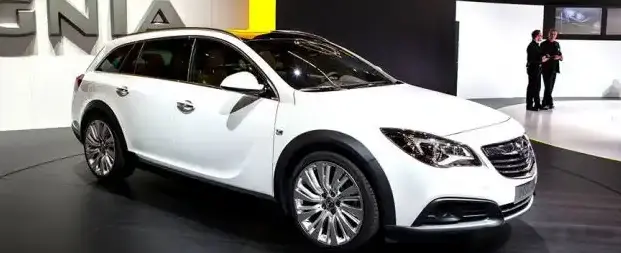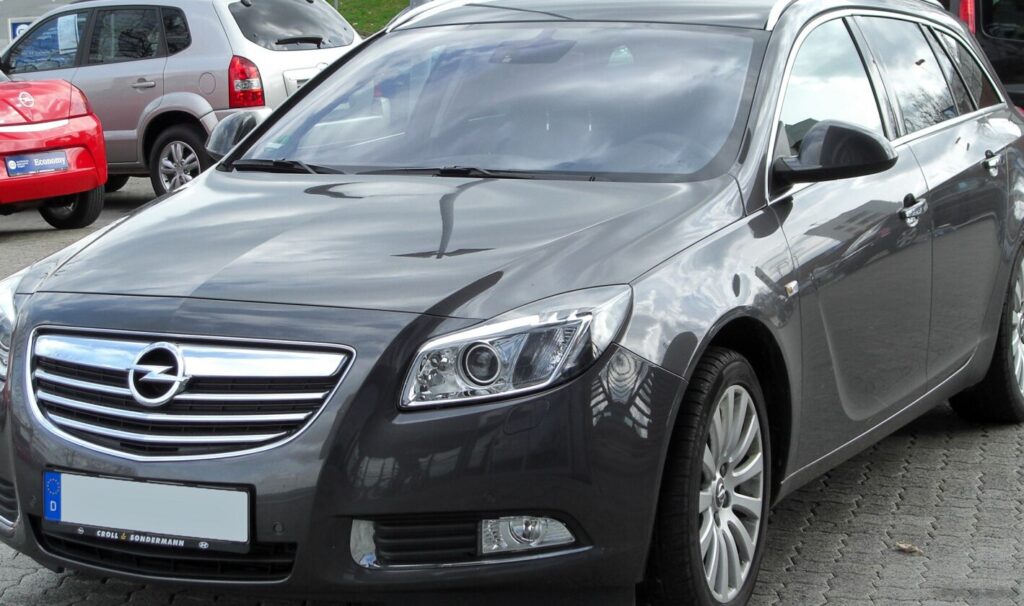
The Opel Insignia Sports Tourer (A) 1.6i (115 hp) was a station wagon produced between March 2009 and June 2012, representing an entry-level offering within the broader Insignia range. Part of the first generation (A) Insignia, which utilized the GM Epsilon II platform, the Sports Tourer aimed to provide a practical and affordable option for families and those requiring increased cargo capacity. This variant occupied the lower end of the Insignia lineup, positioned below the more powerful 1.8L, 2.0L Turbo, and diesel options. It was primarily marketed in Europe as a competitor to vehicles like the Ford Mondeo Estate, Volkswagen Passat Variant, and Peugeot 508 SW.
Technical Specifications
| Brand | Opel |
| Model | Insignia |
| Generation | Insignia Sports Tourer (A) |
| Type (Engine) | 1.6i (115 Hp) |
| Start of production | March, 2009 |
| End of production | June, 2012 |
| Powertrain Architecture | Internal Combustion engine |
| Body type | Station wagon (estate) |
| Seats | 5 |
| Doors | 5 |
| Fuel consumption (urban) | 10.8 l/100 km (21.8 US mpg, 26.2 UK mpg, 9.3 km/l) |
| Fuel consumption (extra urban) | 6 l/100 km (39.2 US mpg, 47.1 UK mpg, 16.7 km/l) |
| Fuel consumption (combined) | 7.7 l/100 km (30.5 US mpg, 36.7 UK mpg, 13 km/l) |
| CO2 emissions | 178 g/km |
| Fuel Type | Petrol (Gasoline) |
| Acceleration 0 – 100 km/h | 13.8 sec |
| Acceleration 0 – 62 mph | 13.8 sec |
| Acceleration 0 – 60 mph | 13.1 sec |
| Maximum speed | 187 km/h (116.2 mph) |
| Emission standard | Euro 5 |
| Weight-to-power ratio | 13.1 kg/Hp, 76.2 Hp/tonne |
| Weight-to-torque ratio | 9.7 kg/Nm, 102.6 Nm/tonne |
| Power | 115 Hp @ 6000 rpm |
| Power per litre | 72 Hp/l |
| Torque | 155 Nm @ 4000 rpm (114.32 lb.-ft. @ 4000 rpm) |
| Engine layout | Front, Transverse |
| Engine Model/Code | A16XER |
| Engine displacement | 1598 cm3 (97.52 cu. in.) |
| Number of cylinders | 4 |
| Engine configuration | Inline |
| Cylinder Bore | 79 mm (3.11 in.) |
| Piston Stroke | 81.5 mm (3.21 in.) |
| Compression ratio | 10.8:1 |
| Number of valves per cylinder | 4 |
| Fuel injection system | Multi-port manifold injection |
| Engine aspiration | Naturally aspirated engine |
| Valvetrain | DOHC |
| Engine oil capacity | 4.5 l (4.76 US qt | 3.96 UK qt) |
| Coolant | 5.6 l (5.92 US qt | 4.93 UK qt) |
| Kerb Weight | 1510 kg (3328.98 lbs.) |
| Max. weight | 2165 kg (4773.01 lbs.) |
| Max load | 655 kg (1444.03 lbs.) |
| Trunk (boot) space – minimum | 540 l (19.07 cu. ft.) |
| Trunk (boot) space – maximum | 1530 l (54.03 cu. ft.) |
| Fuel tank capacity | 70 l (18.49 US gal | 15.4 UK gal) |
| Length | 4908 mm (193.23 in.) |
| Width | 1858 mm (73.15 in.) |
| Height | 1520 mm (59.84 in.) |
| Wheelbase | 2737 mm (107.76 in.) |
| Front track | 1585 mm (62.4 in.) |
| Rear (Back) track | 1587 mm (62.48 in.) |
| Ride height (ground clearance) | 160 mm (6.3 in.) |
| Minimum turning circle | 11.4 m (37.4 ft.) |
| Drivetrain Architecture | The Internal combustion engine (ICE) drives the front wheels of the vehicle. |
| Drive wheel | Front wheel drive |
| Number of gears and type of gearbox | 6 gears, manual transmission |
| Front brakes | Ventilated discs |
| Rear brakes | Disc |
| Assisting systems | ABS (Anti-lock braking system) |
| Tires size | 215/60 R16; 225/55 R17 |
| Wheel rims size | 16; 17 |
INTRODUCTION
The Opel Insignia Sports Tourer (A) 1.6i (115 hp) was introduced in 2009 as part of the first generation Insignia lineup. The Insignia was a significant model for Opel, intended to replace the Vectra and Signum, offering a more modern and stylish alternative in the mid-size segment. The Sports Tourer body style, the station wagon variant, provided increased practicality and cargo space compared to the hatchback. This 1.6-liter engine option was designed to appeal to buyers prioritizing fuel efficiency and affordability, making it a popular choice for families and company car fleets. It was built on the GM Epsilon II platform, shared with other vehicles like the Chevrolet Malibu and Saab 9-3.
Powertrain & Engine Architecture
The heart of this Insignia variant is the A16XER engine, a 1.6-liter inline-four cylinder petrol engine. This engine utilizes a naturally aspirated configuration, meaning it doesn’t employ a turbocharger or supercharger. It features multi-port fuel injection, delivering fuel directly into the intake ports, and a double overhead camshaft (DOHC) valvetrain for improved engine breathing. The compression ratio is set at 10.8:1. The engine produces 115 horsepower at 6000 rpm and 155 Nm (114.32 lb-ft) of torque at 4000 rpm. The engine is transversely mounted in the front of the vehicle. The standard transmission for this model was a six-speed manual gearbox, although an automatic transmission was also available as an option, albeit less common. The automatic transmission was a six-speed unit designed to balance fuel economy and drivability.
Driving Characteristics
The 1.6i (115 hp) Insignia Sports Tourer offered a comfortable, but not particularly sporty, driving experience. Acceleration was modest, taking approximately 13.8 seconds to reach 100 km/h (62 mph). The engine felt somewhat strained when accelerating hard, particularly when fully loaded with passengers and luggage. The six-speed manual transmission helped to keep the engine in its optimal power band, but the lack of significant low-end torque meant frequent gear changes were often necessary. Compared to the more powerful 1.8L and 2.0L Turbo versions, this variant felt noticeably slower and less responsive. The automatic transmission, while providing convenience, further dulled the driving experience and slightly impacted fuel economy. The suspension was tuned for comfort, providing a smooth ride over most road surfaces, but body roll was noticeable during cornering.
Equipment & Trim Levels
The 1.6i Insignia Sports Tourer typically came with a reasonable level of standard equipment. This included air conditioning, electric front windows, a CD/radio system, and ABS brakes. Higher trim levels, such as ‘Edition’ or ‘Sport’, added features like alloy wheels, cruise control, rear parking sensors, and upgraded interior trim. Interior upholstery was typically cloth, with options for leather available on higher-spec models. The dashboard layout was functional and well-designed, with a clear instrument cluster and intuitive controls. Optional extras included a sunroof, navigation system, and premium sound system.
Chassis & Braking
The Insignia Sports Tourer featured a MacPherson strut front suspension and a multi-link rear suspension, providing a good balance of ride comfort and handling. The front brakes were ventilated discs, while the rear brakes were solid discs. ABS (Anti-lock Braking System) was standard, enhancing braking performance and safety. The steering was electrically assisted, providing a light and precise feel. The suspension was tuned to prioritize comfort, with stabilizer bars helping to reduce body roll. Wheel sizes typically ranged from 16 to 17 inches, depending on the trim level.
Market Reception & Comparison
The 1.6i Insignia Sports Tourer was generally well-received by critics as a practical and affordable family car. However, its performance was often criticized as being underwhelming, particularly compared to its more powerful siblings. Fuel economy was considered reasonable, but not class-leading. The Insignia’s spacious interior and large cargo capacity were praised, as was its comfortable ride. Compared to the 1.8L version, the 1.6i offered lower running costs but sacrificed performance. The diesel variants provided even better fuel economy but came with a higher purchase price. Reliability was generally good, although some owners reported minor issues with the electrical system.
Legacy
The A16XER engine, while not known for its exceptional performance, proved to be a relatively reliable unit. The Insignia Sports Tourer (A) 1.6i (115 hp) remains a relatively affordable option on the used car market. Its practicality, spaciousness, and comfortable ride continue to appeal to buyers seeking a budget-friendly family car. However, potential buyers should be aware of the engine’s modest power output and the possibility of age-related wear and tear. Regular maintenance and servicing are essential to ensure the long-term reliability of this powertrain. The Insignia Sports Tourer helped establish Opel as a competitive player in the mid-size segment, paving the way for the subsequent generations of the model.