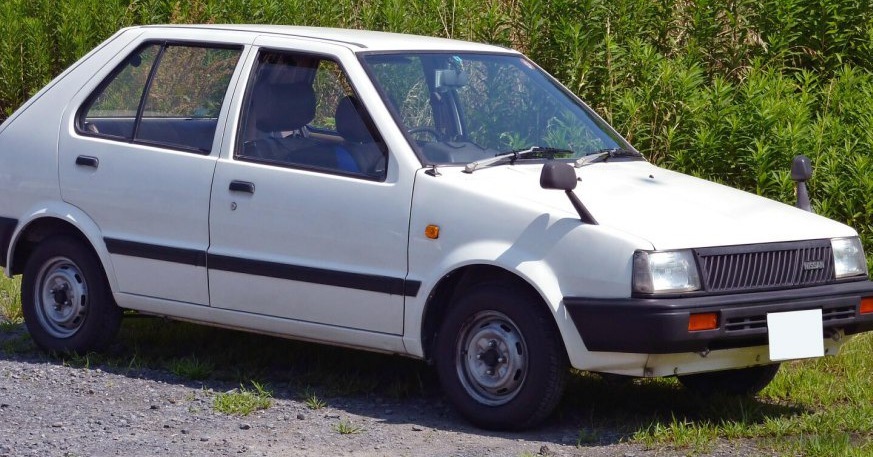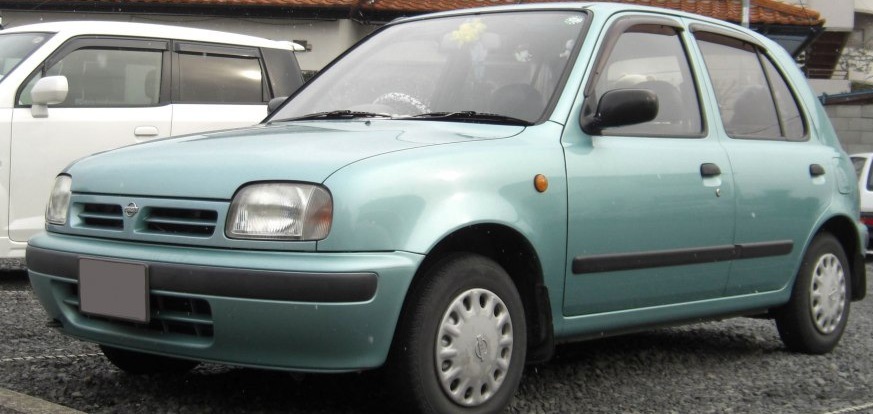
The Nissan March, known as the Micra in many international markets, is a supermini car produced by Nissan since 1982. The K11 series, manufactured from 1992 to 2002, represented a significant redesign and a move towards a more rounded, contemporary aesthetic. The 1.0-liter (60 hp) variant with a Continuously Variable Transmission (CVT) – produced primarily between 2000 and 2002 – occupied the entry-level position in the K11 lineup in many European and Asian markets. This model aimed to provide affordable and economical transportation, particularly appealing to first-time car buyers and city dwellers. While not sold extensively in the United States, the K11 March was a popular choice in regions where small, fuel-efficient vehicles were highly valued.
Technical Specifications
| Brand | Nissan |
| Model | March |
| Generation | March (K11) |
| Type (Engine) | 1.0 (60 Hp) CVT |
| Start of production | 2000 year |
| End of production | 2002 year |
| Powertrain Architecture | Internal Combustion engine |
| Body type | Hatchback |
| Seats | 5 |
| Doors | 3/5 |
| Fuel consumption (urban) | 7.5 l/100 km (31.4 US mpg) |
| Fuel consumption (extra urban) | 5 l/100 km (47 US mpg) |
| Fuel Type | Petrol (Gasoline) |
| Acceleration 0 – 100 km/h | 18 sec |
| Acceleration 0 – 62 mph | 18 sec |
| Acceleration 0 – 60 mph | 17.1 sec |
| Maximum speed | 147 km/h (91.34 mph) |
| Weight-to-power ratio | 13.9 kg/Hp |
| Weight-to-torque ratio | 10.4 kg/Nm |
| Power | 60 Hp @ 6000 rpm |
| Power per litre | 60.1 Hp/l |
| Torque | 80 Nm @ 4000 rpm (59 lb.-ft. @ 4000 rpm) |
| Engine layout | Front, Transverse |
| Engine displacement | 998 cm3 (60.9 cu. in.) |
| Number of cylinders | 4 |
| Engine configuration | Inline |
| Cylinder Bore | 71 mm (2.8 in.) |
| Piston Stroke | 63 mm (2.48 in.) |
| Compression ratio | 9.5:1 |
| Number of valves per cylinder | 4 |
| Fuel injection system | Multi-port manifold injection |
| Engine aspiration | Naturally aspirated engine |
| Kerb Weight | 835 kg (1840.86 lbs.) |
| Max. weight | 1340 kg (2954.19 lbs.) |
| Max load | 505 kg (1113.33 lbs.) |
| Trunk (boot) space – minimum | 205 l (7.24 cu. ft.) |
| Trunk (boot) space – maximum | 960 l (33.9 cu. ft.) |
| Fuel tank capacity | 42 l (11.1 US gal) |
| Length | 3746 mm (147.48 in.) |
| Width | 1595 mm (62.8 in.) |
| Height | 1440 mm (56.69 in.) |
| Wheelbase | 2360 mm (92.91 in.) |
| Front track | 1360 mm (53.54 in.) |
| Rear (Back) track | 1325 mm (52.17 in.) |
| Drivetrain Architecture | The Internal combustion engine (ICE) drives the front wheels of the vehicle. |
| Drive wheel | Front wheel drive |
| Number of gears and type of gearbox | automatic transmission CVT |
| Front suspension | Wishbone |
| Rear suspension | Spring Strut |
| Front brakes | Ventilated discs |
| Rear brakes | Drum |
| Assisting systems | ABS (Anti-lock braking system) |
| Steering type | Steering rack and pinion |
| Power steering | Hydraulic Steering |
| Tires size | 165/60 R14 |
| Wheel rims size | 14 |
Powertrain & Engine Architecture
The heart of this March variant is the CG10DE, a 998cc inline-four cylinder engine. This engine, part of Nissan’s CG series, is known for its simplicity and reliability. It features a single overhead camshaft (SOHC) and four valves per cylinder. Fuel delivery is managed by a multi-point fuel injection system, contributing to reasonable fuel efficiency. The engine produces 60 horsepower at 6000 rpm and 80 Nm (59 lb-ft) of torque at 4000 rpm. The CVT (Continuously Variable Transmission) was a relatively new technology at the time, offering seamless gear changes and contributing to improved fuel economy compared to traditional automatic transmissions. The CVT used in the K11 March is a chain-driven type, known for its durability.
Driving Characteristics
The 1.0L CVT March delivers modest performance. Acceleration is leisurely, taking approximately 18 seconds to reach 62 mph (100 km/h). The CVT, while smooth, doesn’t offer the immediate response of a traditional automatic or manual transmission. Power delivery is linear, but the engine feels strained when pushed hard, particularly when fully loaded. The CVT’s programming prioritizes fuel efficiency, resulting in a somewhat ‘rubber band’ feel during acceleration. Compared to the 1.3L or 1.4L variants, the 1.0L CVT March is noticeably slower, but it excels in urban driving conditions where low-speed maneuverability and fuel economy are paramount. The gear ratios are optimized for city driving, providing adequate power for everyday commutes.
Equipment & Trim Levels
The 1.0L CVT March typically came with a basic level of equipment. Standard features generally included power steering, central locking, and an AM/FM radio. Air conditioning was often an optional extra. Interior upholstery was typically cloth, with a simple dashboard layout. Higher trim levels, available in some markets, added features like electric windows, alloy wheels, and a more sophisticated audio system. The overall interior design was functional and practical, prioritizing space efficiency over luxury. Safety features were relatively basic for the time, typically including a driver’s airbag and ABS (Anti-lock Braking System) on some models.
Chassis & Braking
The K11 March utilizes a front-wheel-drive layout with a relatively simple suspension setup. The front suspension consists of independent wishbones, while the rear employs a torsion beam setup. This configuration provides a comfortable ride, although handling is not particularly sporty. The braking system features ventilated discs on the front wheels and drum brakes on the rear. ABS was often included as standard or optional equipment, enhancing braking performance and safety. The relatively lightweight construction of the K11 March contributes to its nimble handling and reasonable fuel efficiency.
Market Reception & Comparison
The 1.0L CVT March was generally well-received as an affordable and economical city car. Critics praised its fuel efficiency and ease of driving, but noted its lack of performance. Compared to the higher-output variants, such as the 1.3L or 1.4L models, the 1.0L CVT March offered significantly less power and acceleration. However, it was more fuel-efficient and generally cheaper to insure. The CVT transmission was a point of contention for some reviewers, who preferred the more direct feel of a traditional automatic or manual gearbox. In terms of reliability, the K11 March is generally considered to be a dependable vehicle, although regular maintenance is essential to prevent issues.
Legacy
The Nissan March K11, particularly the 1.0L CVT variant, remains a popular choice in the used car market, especially in regions where small, fuel-efficient vehicles are in demand. The CG10DE engine is known for its durability, and the CVT transmission, while requiring occasional servicing, is generally reliable. However, potential buyers should be aware of potential issues such as corrosion, particularly in areas with harsh winters. The K11 March represents a significant step forward in small car design, offering a combination of practicality, affordability, and fuel efficiency that continues to appeal to budget-conscious buyers today. Its impact on the supermini segment is undeniable, paving the way for future generations of compact and efficient vehicles.