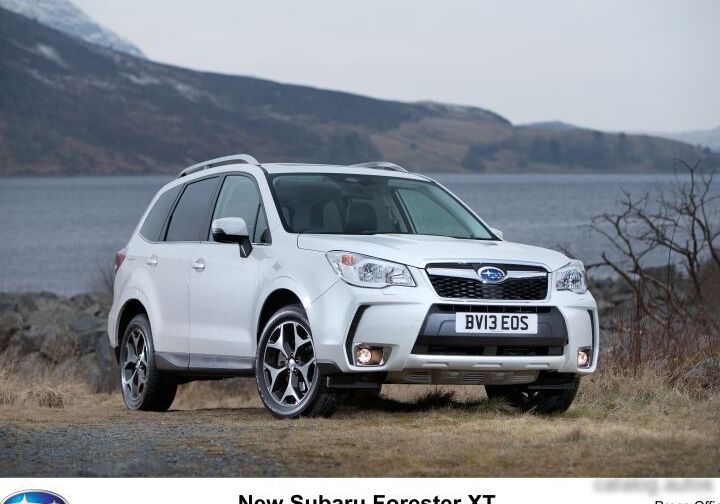
The Subaru Forester IV (facelift, introduced in 2016) 2.0i, producing 150 horsepower with all-wheel drive, represented a key offering within Subaru’s popular compact SUV lineup. Produced from 2016 through 2018, this variant occupied a middle ground in the Forester IV range, positioned between the base models and the more powerful 2.5i trims. The facelift brought styling updates and minor technological enhancements to the already well-regarded fourth-generation Forester (SJ platform), solidifying its position as a practical and capable family vehicle, particularly in markets where Subaru had a strong presence like North America, Europe, and Australia. This specific configuration aimed to balance affordability with Subaru’s signature symmetrical all-wheel drive system and a reasonable level of equipment.
Technical Specifications
| Brand | Subaru |
| Model | Forester |
| Generation | Forester IV (facelift 2016) |
| Type (Engine) | 2.0i (150 Hp) AWD |
| Start of production | 2016 |
| End of production | 2018 |
| Powertrain Architecture | Internal Combustion engine |
| Body type | SUV, Crossover |
| Seats | 5 |
| Doors | 5 |
| Fuel consumption (urban) | 8.1 l/100 km (29 US mpg, 34.9 UK mpg, 12.3 km/l) |
| Fuel consumption (extra urban) | 5.5 l/100 km (42.8 US mpg, 51.4 UK mpg, 18.2 km/l) |
| Fuel consumption (combined) | 6.5 l/100 km (36.2 US mpg, 43.5 UK mpg, 15.4 km/l) |
| CO2 emissions | 150 g/km |
| Fuel Type | Petrol (Gasoline) |
| Acceleration 0 – 100 km/h | 10.6 sec |
| Acceleration 0 – 62 mph | 10.6 sec |
| Acceleration 0 – 60 mph | 10.1 sec |
| Maximum speed | 190 km/h (118.06 mph) |
| Emission standard | Euro 6 |
| Weight-to-power ratio | 9.9 kg/Hp, 101 Hp/tonne |
| Weight-to-torque ratio | 7.5 kg/Nm, 133.3 Nm/tonne |
| Power | 150 Hp @ 6200 rpm |
| Power per litre | 75.2 Hp/l |
| Torque | 198 Nm @ 4200 rpm (146.04 lb.-ft. @ 4200 rpm) |
| Engine layout | Front, Longitudinal |
| Engine Model/Code | FB20 |
| Engine displacement | 1995 cm3 (121.74 cu. in.) |
| Number of cylinders | 4 |
| Engine configuration | Boxer |
| Cylinder Bore | 84 mm (3.31 in.) |
| Piston Stroke | 90 mm (3.54 in.) |
| Compression ratio | 10.5:1 |
| Number of valves per cylinder | 4 |
| Fuel injection system | Multi-port manifold injection |
| Engine aspiration | Naturally aspirated engine |
| Valvetrain | DOHC |
| Engine oil capacity | 4.8 l (5.07 US qt | 4.22 UK qt) |
| Kerb Weight | 1485 kg (3273.86 lbs.) |
| Max. weight | 2015 kg (4442.31 lbs.) |
| Max load | 530 kg (1168.45 lbs.) |
| Trunk (boot) space – minimum | 505 l (17.83 cu. ft.) |
| Trunk (boot) space – maximum | 1564 l (55.23 cu. ft.) |
| Fuel tank capacity | 60 l (15.85 US gal | 13.2 UK gal) |
| Max. roof load | 80 kg (176.37 lbs.) |
| Permitted trailer load with brakes (12%) | 1800 kg (3968.32 lbs.) |
| Permitted trailer load without brakes | 750 kg (1653.47 lbs.) |
| Length | 4610 mm (181.5 in.) |
| Width | 1795 mm (70.67 in.) |
| Height | 1735 mm (68.31 in.) |
| Wheelbase | 2640 mm (103.94 in.) |
| Front track | 1545 mm (60.83 in.) |
| Rear (Back) track | 1555 mm (61.22 in.) |
| Ride height (ground clearance) | 220 mm (8.66 in.) |
| Minimum turning circle (turning diameter) | 11.4 m (37.4 ft.) |
| Approach angle | 23° |
| Departure angle | 25° |
| Ramp-over (brakeover) angle | 23° |
| Drive wheel | All wheel drive (4×4) |
| Number of gears and type of gearbox | 6 gears, manual transmission |
| Front suspension | Independent type McPherson |
| Rear suspension | Double wishbone |
| Front brakes | Ventilated discs |
| Rear brakes | Disc |
| Assisting systems | ABS (Anti-lock braking system) |
| Steering type | Steering rack and pinion |
| Tires size | 225/60 R17 |
| Wheel rims size | 7J x 17 |
Powertrain & Engine Architecture
The heart of the 2016-2018 Subaru Forester 2.0i is the FB20 2.0-liter naturally aspirated boxer-four engine. This engine is a hallmark of Subaru engineering, known for its horizontally opposed pistons which contribute to a low center of gravity, enhancing stability. The FB20 utilizes multi-point fuel injection and a double overhead camshaft (DOHC) valvetrain with four valves per cylinder. This configuration allows for efficient combustion and a respectable power output for its displacement. The engine produces 150 horsepower at 6,200 rpm and 198 Nm (146 lb-ft) of torque at 4,200 rpm. The engine’s longitudinal mounting, coupled with Subaru’s symmetrical all-wheel drive system, provides excellent traction and handling characteristics. The 2.0i was typically paired with a continuously variable transmission (CVT), although a 6-speed manual transmission was also available in some markets. The CVT was designed to maximize fuel efficiency and provide smooth acceleration, but some drivers found it less engaging than a traditional automatic or manual gearbox.
Driving Characteristics
The Forester 2.0i Automatic delivers adequate, though not exhilarating, performance. Acceleration from 0-60 mph takes around 10.1 seconds, making it suitable for everyday commuting and family transportation. The CVT transmission prioritizes fuel economy, and while it offers smooth transitions, it can sometimes feel sluggish during quick acceleration. Compared to the 2.5i models, the 2.0i offers less outright power, but it also benefits from slightly better fuel economy. The manual transmission version provides a more direct and engaging driving experience, but the CVT is more popular due to its ease of use. The symmetrical all-wheel drive system provides confident handling in various weather conditions, making the Forester a capable vehicle for all-season driving.
Equipment & Trim Levels
The 2.0i trim typically included standard features such as air conditioning, power windows and locks, a rearview camera, and a basic infotainment system with Bluetooth connectivity. Higher trim levels offered upgrades like a larger touchscreen display, premium audio system, leather upholstery, heated front seats, and advanced safety features such as automatic emergency braking and lane departure warning. The 2.0i often served as the entry point to the Forester range, offering a good balance of features and affordability. Optional extras included a sunroof, navigation system, and various accessory packages.
Chassis & Braking
The Forester IV utilizes a McPherson strut front suspension and a double-wishbone rear suspension, providing a comfortable ride and predictable handling. The chassis is designed to be robust and durable, capable of handling both on-road and light off-road conditions. Braking duties are handled by ventilated discs at the front and solid discs at the rear, equipped with an anti-lock braking system (ABS). The suspension tuning is geared towards comfort, but it also provides adequate body control during cornering. The all-wheel drive system contributes to enhanced stability and traction, particularly on slippery surfaces.
Market Reception & Comparison
The 2016-2018 Subaru Forester 2.0i was generally well-received by automotive critics. It was praised for its practicality, safety, and all-weather capability. However, some reviewers noted that the 2.0-liter engine felt underpowered compared to the 2.5-liter options. Fuel economy was considered good for its class, averaging around 36.2 US mpg in combined driving. Compared to competitors like the Honda CR-V and Toyota RAV4, the Forester offered a unique combination of standard all-wheel drive and a spacious interior. The 2.0i trim was often seen as a good value proposition for buyers who didn’t need the extra power of the 2.5i models.
Legacy
The FB20 engine, in general, has proven to be a reliable powerplant, although it is known to consume some oil, requiring regular monitoring. The CVT transmission, while efficient, has had some reported issues with durability in certain model years, though Subaru addressed many of these concerns with updated designs. Today, used 2016-2018 Forester 2.0i models represent a relatively affordable entry point into Subaru ownership. They continue to be popular choices for buyers seeking a practical, safe, and capable compact SUV, particularly in regions with inclement weather. The Forester’s reputation for reliability and its standard all-wheel drive system ensure continued demand in the used car market.