
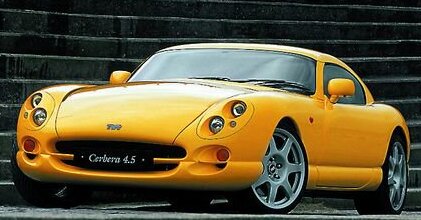
The TVR Cerbera 4.5 i V8, produced between 1997 and 2003, represents the pinnacle of TVR’s engineering during that period. Positioned as the flagship model within the Cerbera range, it was designed to be a true grand tourer, offering a potent combination of performance and distinctive British styling. The Cerbera, named after the three-headed dog guarding the gates of the Underworld in Greek mythology, aimed to revitalize TVR’s image and compete with established sports car manufacturers. This particular 4.5 i V8 variant was the most powerful Cerbera available, boasting a naturally aspirated V8 engine and a focus on driver engagement. It was built on TVR’s own chassis, a lightweight structure designed to maximize performance.
Technical Specifications
| Brand | TVR |
| Model | Cerbera |
| Generation | Cerbera |
| Type (Engine) | 4.5 i V8 (426 Hp) |
| Start of production | 1997 |
| End of production | 2003 |
| Powertrain Architecture | Internal Combustion engine |
| Body type | Coupe |
| Seats | 4 |
| Doors | 2 |
| Fuel consumption (urban) | 20 l/100 km (11.8 US mpg) |
| Fuel consumption (extra urban) | 12 l/100 km (19.6 US mpg) |
| Fuel consumption (combined) | 15 l/100 km (15.7 US mpg) |
| Fuel Type | Petrol (Gasoline) |
| Acceleration 0 – 100 km/h | 3.9 sec |
| Acceleration 0 – 62 mph | 3.9 sec |
| Acceleration 0 – 60 mph | 3.7 sec |
| Maximum speed | 257 km/h (159.69 mph) |
| Weight-to-power ratio | 2.6 kg/Hp |
| Weight-to-torque ratio | 2.1 kg/Nm |
| Power | 426 Hp @ 6750 rpm |
| Power per litre | 95.2 Hp/l |
| Torque | 515 Nm @ 5000 rpm (379.84 lb.-ft. @ 5000 rpm) |
| Engine layout | Front, Longitudinal |
| Engine displacement | 4475 cm3 (273.08 cu. in.) |
| Number of cylinders | 8 |
| Engine configuration | V-engine |
| Cylinder Bore | 91 mm (3.58 in.) |
| Piston Stroke | 86 mm (3.39 in.) |
| Compression ratio | 10.75:1 |
| Number of valves per cylinder | 2 |
| Fuel injection system | Multi-port manifold injection |
| Engine aspiration | Naturally aspirated engine |
| Valvetrain | DOHC |
| Engine oil capacity | 6 l (6.34 US qt | 5.28 UK qt) |
| Coolant capacity | 12 l (12.68 US qt | 10.56 UK qt) |
| Kerb Weight | 1100 kg (2425.08 lbs.) |
| Trunk (boot) space | 390 l (13.77 cu. ft.) |
| Fuel tank capacity | 65 l (17.17 US gal | 14.3 UK gal) |
| Length | 4280 mm (168.5 in.) |
| Width | 1860 mm (73.23 in.) |
| Height | 1220 mm (48.03 in.) |
| Wheelbase | 2565 mm (100.98 in.) |
| Front track | 1465 mm (57.68 in.) |
| Rear track | 1470 mm (57.87 in.) |
| Drivetrain Architecture | Rear wheel drive |
| Number of gears | 5 gears, manual transmission |
| Front suspension | Spring Strut |
| Rear suspension | Spring Strut |
| Front brakes | Ventilated discs |
| Rear brakes | Ventilated discs |
| Assisting systems | ABS (Anti-lock braking system) |
| Steering type | Steering rack and pinion |
| Tires size | 235/40 ZR17 |
Powertrain & Engine Architecture
The heart of the Cerbera 4.5 i V8 is its 4.5-liter (4475 cc) naturally aspirated V8 engine. This engine, designated as the AJP8, was designed and built in-house by TVR. It featured a 90-degree V-angle, providing inherent balance and smoothness. The engine utilized a multi-port fuel injection system and a double overhead camshaft (DOHC) valvetrain with two valves per cylinder. The 10.75:1 compression ratio contributed to its high output. The engine’s power output of 426 horsepower at 6750 rpm and 515 Nm (379.84 lb-ft) of torque at 5000 rpm was substantial for its time. The engine was mated to a five-speed manual transmission, delivering power to the rear wheels. The longitudinal engine layout helped with weight distribution and handling.
Driving Characteristics
The Cerbera 4.5 i V8 offered a raw and visceral driving experience. The combination of a lightweight chassis and a powerful V8 engine resulted in exhilarating acceleration – 0 to 60 mph in approximately 3.7 seconds and a top speed of 159.69 mph. The manual transmission provided precise control, but required a skilled driver to fully exploit the engine’s potential. The car’s handling was responsive, but could be challenging due to its limited electronic aids and relatively short wheelbase. Compared to other Cerbera variants, such as the 4.2-liter model, the 4.5 i V8 offered significantly more power and torque, resulting in a more aggressive and engaging driving experience. The 4.5 was a far cry from the more economical 2.0L inline-four models, which were aimed at a different segment of the market.
Equipment & Trim Levels
The Cerbera 4.5 i V8 was generally well-equipped, though TVR offered a high degree of customization. Standard features included leather upholstery, power windows, central locking, and an upgraded sound system. The interior design was driver-focused, with a simple and functional layout. Optional extras included air conditioning, heated seats, and various trim upgrades. The dashboard featured a combination of analog gauges and a central digital display. The level of luxury was not comparable to German grand tourers, but the Cerbera prioritized driving experience over opulent features.
Chassis & Braking
The Cerbera utilized a tubular steel space frame chassis, designed for maximum rigidity and minimal weight. This chassis was a key element in the car’s handling performance. The suspension consisted of independent spring struts at all four corners. Braking was provided by ventilated discs on all wheels, assisted by an anti-lock braking system (ABS). The braking system was adequate for the car’s performance, but could feel somewhat lacking in feel compared to more modern systems. The relatively light curb weight of 1100 kg (2425.08 lbs) contributed to the car’s agility.
Market Reception & Comparison
The TVR Cerbera 4.5 i V8 received generally positive reviews from automotive journalists, who praised its performance, handling, and distinctive styling. However, it was also criticized for its build quality, reliability, and lack of refinement compared to its competitors. Fuel economy was predictably poor, averaging around 15.7 US mpg combined. Compared to other cars in its price range, such as the Porsche 911, the Cerbera offered a more raw and visceral driving experience, but lacked the Porsche’s reputation for reliability and build quality. The Cerbera appealed to enthusiasts who prioritized driving enjoyment over practicality and refinement.
Legacy
The TVR Cerbera 4.5 i V8 remains a highly sought-after car among collectors and enthusiasts. The AJP8 V8 engine, while known for its performance, also gained a reputation for requiring careful maintenance. Finding qualified technicians to work on these cars can be challenging. Despite its potential reliability issues, the Cerbera 4.5 i V8 is remembered as a truly unique and exciting sports car, representing a high point in TVR’s history. Today, well-maintained examples command significant prices in the used car market, reflecting their rarity and desirability.
