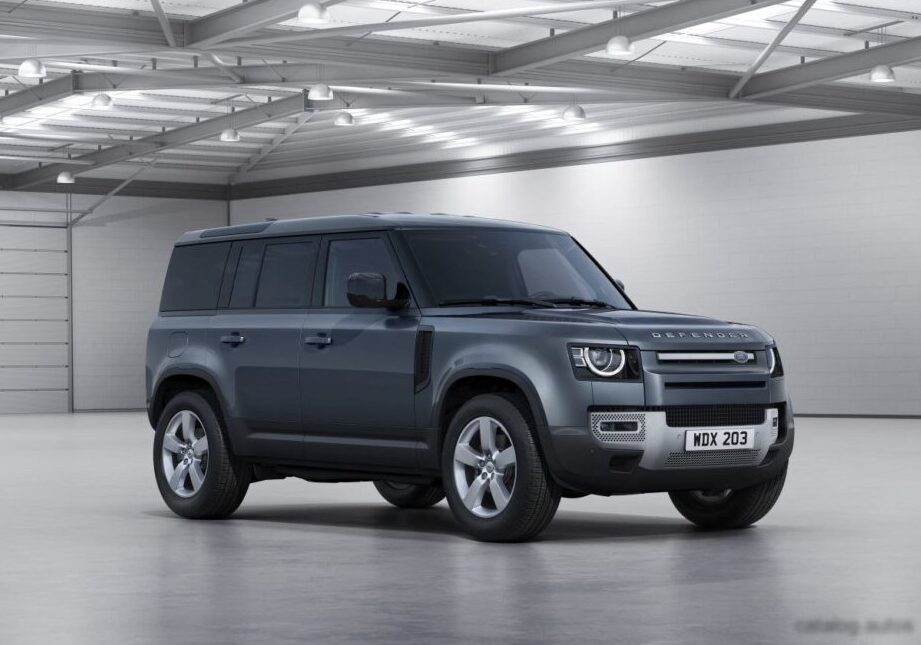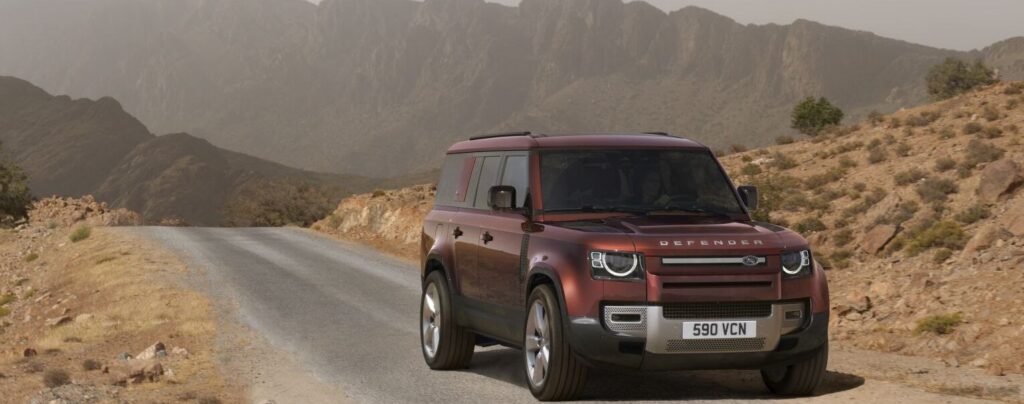
The Land Rover Defender 130 (L663) 3.0 D250, introduced in May 2022, represents the largest iteration of the revived Defender family. Positioned as a premium, full-size SUV, the 130 expands upon the capabilities of the standard Defender 90 and 110 models by offering optional eight-seat accommodation alongside enhanced cargo capacity. This variant, powered by the Ingenium 3.0-liter inline-six diesel engine producing 249 horsepower, utilizes a mild-hybrid system and is exclusively paired with an eight-speed automatic transmission and all-wheel drive. The D250 trim occupies a middle ground within the 130 lineup, offering a balance between performance, fuel efficiency, and luxury features, appealing to buyers seeking a capable and comfortable family vehicle.
Technical Specifications
| Brand | Land Rover |
| Model | Defender |
| Generation | Defender 130 (L663) |
| Type (Engine) | 3.0 D250 (249 Hp) Mild Hybrid AWD Automatic |
| Start of production | May, 2022 |
| Powertrain Architecture | MHEV (Mild Hybrid Electric Vehicle) |
| Body type | Off-road vehicle |
| Seats | 5-8 |
| Doors | 5 |
| Fuel consumption at Low speed (WLTP) | 12.3-12.7 l/100 km (19.1 – 18.5 US mpg) |
| Fuel consumption at Medium speed (WLTP) | 8.7-9 l/100 km (27 – 26.1 US mpg) |
| Fuel consumption at high speed (WLTP) | 7.1-7.7 l/100 km (33.1 – 30.5 US mpg) |
| Fuel consumption at very high speed (WLTP) | 8.9-9.6 l/100 km (26.4 – 24.5 US mpg) |
| Combined fuel consumption (WLTP) | 8.8-9.3 l/100 km (26.7 – 25.3 US mpg) |
| CO2 emissions (WLTP) | 231-245 g/km |
| Fuel Type | Diesel |
| Acceleration 0 – 100 km/h | 8.9 sec |
| Acceleration 0 – 62 mph | 8.9 sec |
| Acceleration 0 – 60 mph | 8.4 sec |
| Maximum speed | 188 km/h (116.82 mph) |
| Weight-to-power ratio | 10.2 kg/Hp |
| Weight-to-torque ratio | 4.3 kg/Nm |
| Battery technology | Lithium-ion (Li-Ion) |
| Power | 249 Hp @ 4000 rpm |
| Torque | 600 Nm @ 1250-2250 rpm (442.54 lb.-ft. @ 1250-2250 rpm) |
| Engine layout | Front, Longitudinal |
| Engine Model/Code | Ingenium / DT306 |
| Engine displacement | 2997 cm3 (182.89 cu. in.) |
| Number of cylinders | 6 |
| Engine configuration | Inline |
| Cylinder Bore | 83 mm (3.27 in.) |
| Piston Stroke | 92.3 mm (3.63 in.) |
| Compression ratio | 15.5:1 |
| Number of valves per cylinder | 4 |
| Fuel injection system | Diesel Commonrail |
| Engine aspiration | Turbocharger, Intercooler |
| Valvetrain | DOHC |
| Engine oil capacity | 8.8 l (9.3 US qt | 7.74 UK qt) |
| Coolant | 11.6 l (12.26 US qt | 10.21 UK qt) |
| Kerb Weight | 2550-2589 kg (5621.79 – 5707.77 lbs.) |
| Max. weight | 3380 kg (7451.62 lbs.) |
| Max load | 791-830 kg (1743.86 – 1829.84 lbs.) |
| Trunk (boot) space – minimum | 290 l (10.24 cu. ft.) |
| Trunk (boot) space – maximum | 2078 l (73.38 cu. ft.) |
| Fuel tank capacity | 89 l (23.51 US gal | 19.58 UK gal) |
| AdBlue tank | 20.7 l (5.47 US gal | 4.55 UK gal) |
| Max. roof load | 168 kg (370.38 lbs.) |
| Permitted trailer load with brakes (12%) | 3000 kg (6613.87 lbs.) |
| Permitted trailer load without brakes | 750 kg (1653.47 lbs.) |
| Permitted towbar download | 120 kg (264.55 lbs.) |
| Length | 5358 mm (210.94 in.) |
| Width with mirrors folded | 2008 mm (79.06 in.) |
| Width including mirrors | 2105 mm (82.87 in.) |
| Height | 1970 mm (77.56 in.) |
| Front track | 1706 mm (67.17 in.) |
| Rear (Back) track | 1702 mm (67.01 in.) |
| Ride height (ground clearance) | 219-290 mm (8.62 – 11.42 in.) |
| Minimum turning circle (turning diameter) | 13.1 m (42.98 ft.) |
| Approach angle | 30.1-37.5° |
| Departure angle | 24.5-28.5° |
| Ramp-over (brakeover) angle | 22-27.8° |
| Wading depth | 900 mm (35.43 in.) |
| Drivetrain Architecture | ICE and electric motor permanently drive all four wheels |
| Drive wheel | All wheel drive (4×4) |
| Number of gears and type of gearbox | 8 gears, automatic transmission |
| Front suspension | Double wishbone |
| Rear suspension | Independent multi-link suspension |
| Front brakes | Ventilated discs, 363 mm |
| Rear brakes | Ventilated discs, 350 mm |
| Steering type | Steering rack and pinion |
| Power steering | Electric Steering |
INTRODUCTION
The Land Rover Defender 130 (L663) represents a significant expansion of the Defender lineup, first reintroduced in 2020. Built on the D7x aluminum-intensive platform (part of the JLR MLA family), the 130 distinguishes itself through its extended wheelbase and optional third-row seating, increasing passenger capacity to up to eight occupants. The D250 variant, featuring the 3.0-liter Ingenium diesel engine, was launched alongside other powertrain options in 2022, aiming to provide a balance of performance, efficiency, and refinement for buyers prioritizing family transport and long-distance comfort. It slots into the range between the lower-powered D200 and the higher-performance D300 models.
Powertrain & Engine Architecture
The heart of the D250 is Jaguar Land Rover’s Ingenium 3.0-liter inline-six diesel engine, designated DT306. This engine utilizes a sophisticated mild-hybrid system, incorporating a 48-volt electrical architecture and a belt-integrated starter generator (BiSG). The BiSG assists the engine during acceleration, enabling smoother starts and improved fuel economy, while also facilitating regenerative braking. The engine employs a common-rail direct injection system, delivering fuel at pressures up to 2,500 bar for optimized combustion. A single twin-scroll turbocharger with variable geometry enhances responsiveness across the rev range. The engine boasts a high compression ratio of 15.5:1 and a double overhead camshaft (DOHC) valvetrain with four valves per cylinder. The eight-speed automatic transmission, sourced from ZF, is a key component of the powertrain, offering smooth and efficient gear changes. It’s programmed with specific shift points tailored to the D250’s torque characteristics.
Driving Characteristics
The D250’s 249 horsepower and 442 lb-ft of torque provide ample power for the larger 130 body style. While not as overtly sporty as the D300, the D250 delivers strong acceleration, achieving 0-60 mph in approximately 8.4 seconds. The eight-speed automatic transmission contributes to a relaxed driving experience, particularly on highways, with well-spaced gear ratios. The mild-hybrid system provides a noticeable boost during initial acceleration, mitigating some of the turbo lag inherent in diesel engines. Compared to the D200, the D250 offers a more confident and effortless driving experience, especially when fully loaded with passengers and luggage. The automatic transmission, while smooth, doesn’t offer the same level of driver engagement as the available manual options in the 90 and 110 models.
Equipment & Trim Levels
The Defender 130 D250 typically comes well-equipped as standard. Interior features include leather upholstery, heated front seats, a touchscreen infotainment system with Apple CarPlay and Android Auto integration, and a premium sound system. Higher trim levels add features such as a panoramic sunroof, configurable ambient lighting, and advanced driver-assistance systems like adaptive cruise control and a 360-degree camera. Optional extras include a rear entertainment system, upgraded leather trim, and various exterior styling packages. The 130’s extended wheelbase translates to generous legroom for second-row passengers, and the optional third-row seats, while best suited for children, provide additional seating flexibility.
Chassis & Braking
The Defender 130 utilizes a double-wishbone front suspension and an independent multi-link rear suspension, providing a comfortable ride quality both on and off-road. Air suspension is standard, allowing for adjustable ride height and improved off-road capability. The braking system consists of ventilated discs on all four wheels, with larger discs at the front (363mm) compared to the rear (350mm). Anti-lock braking system (ABS) and electronic stability control are standard safety features. The 130’s increased weight compared to the 90 and 110 models necessitates a more robust suspension setup to maintain composure and handling stability.
Market Reception & Comparison
The Defender 130 D250 has been generally well-received by automotive critics, praised for its spacious interior, comfortable ride, and capable off-road performance. However, its size and weight have been noted as potential drawbacks, particularly in urban environments. Compared to the D200, the D250 offers a noticeable performance improvement, justifying the price premium for buyers prioritizing effortless cruising and towing capacity. Fuel economy figures are respectable for a vehicle of its size, averaging around 26-27 mpg in combined driving. Reliability reports are still emerging, but the Ingenium engine family has generally proven to be durable and dependable.
Legacy
The Defender 130 D250 represents a modern interpretation of the iconic Defender lineage, blending traditional off-road capability with contemporary luxury and technology. Its mild-hybrid powertrain reflects Land Rover’s commitment to improving fuel efficiency and reducing emissions. As a relatively new model, the long-term reliability of the D250 powertrain remains to be fully assessed. However, the robust construction and proven technology suggest it will hold its value well in the used car market, appealing to buyers seeking a spacious, capable, and refined SUV.