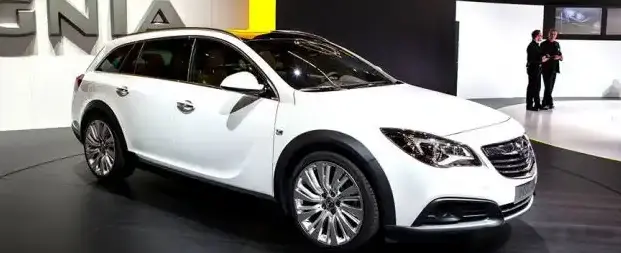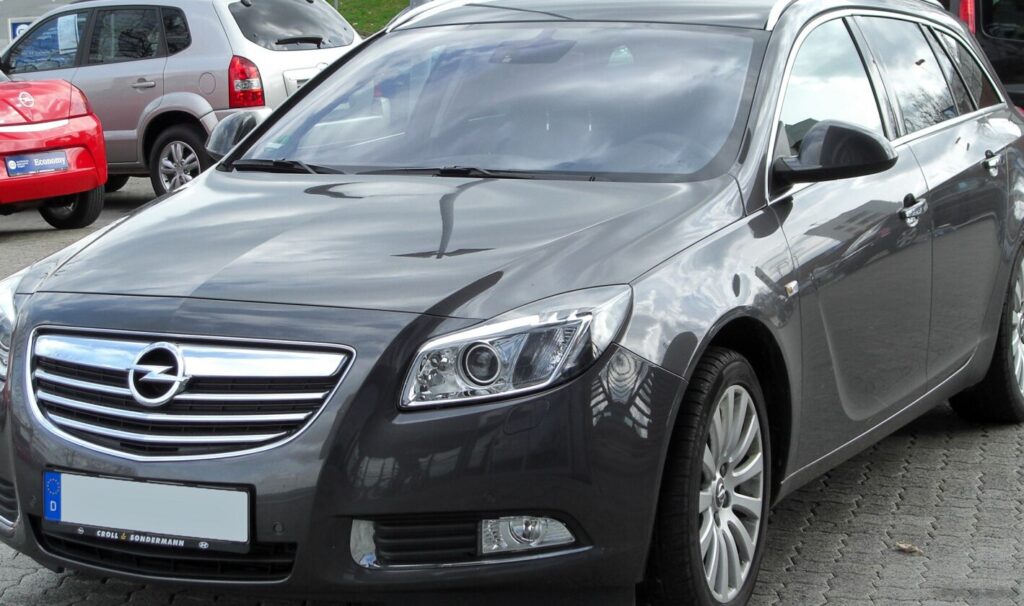
The Opel Insignia Sports Tourer (A) 1.8i (140 hp) was a station wagon produced between March 2009 and June 2013. It represented a key variant within the first generation (A) Insignia lineup, built on the GM Epsilon II platform – known internally as the 1HX0/A3 platform. Positioned as a mid-range offering, this model aimed to balance practicality, fuel efficiency, and affordability within the Insignia range, appealing to families and drivers seeking a spacious and comfortable vehicle. It was primarily marketed in Europe, where station wagons (or estates, as they are often called) held a significant market share.
Technical Specifications
| Brand | Opel |
| Model | Insignia |
| Generation | Insignia Sports Tourer (A) |
| Type (Engine) | 1.8i (140 Hp) |
| Start of production | March, 2009 |
| End of production | June, 2013 |
| Powertrain Architecture | Internal Combustion engine |
| Body type | Station wagon (estate) |
| Seats | 5 |
| Doors | 5 |
| Fuel consumption (urban) | 11 l/100 km (21.4 US mpg) |
| Fuel consumption (extra urban) | 6.1 l/100 km (38.6 US mpg) |
| Fuel consumption (combined) | 7.9 l/100 km (29.8 US mpg) |
| CO2 emissions | 184 g/km |
| Fuel Type | Petrol (Gasoline) |
| Acceleration 0 – 100 km/h | 12.2 sec |
| Acceleration 0 – 62 mph | 12.2 sec |
| Acceleration 0 – 60 mph | 11.6 sec |
| Maximum speed | 203 km/h (126.14 mph) |
| Emission standard | Euro 5 |
| Weight-to-power ratio | 10.8 kg/Hp |
| Weight-to-torque ratio | 8.6 kg/Nm |
| Power | 140 Hp @ 6300 rpm |
| Torque | 175 Nm @ 3800 rpm (129.07 lb.-ft. @ 3800 rpm) |
| Engine layout | Front, Transverse |
| Engine Model/Code | A18XER |
| Engine displacement | 1796 cm3 (109.6 cu. in.) |
| Number of cylinders | 4 |
| Engine configuration | Inline |
| Cylinder Bore | 80.5 mm (3.17 in.) |
| Piston Stroke | 88.2 mm (3.47 in.) |
| Compression ratio | 10.5:1 |
| Number of valves per cylinder | 4 |
| Fuel injection system | Multi-port manifold injection |
| Engine aspiration | Naturally aspirated engine |
| Valvetrain | DOHC |
| Engine oil capacity | 4.5 l (4.76 US qt | 3.96 UK qt) |
| Coolant capacity | 5.6 l (5.92 US qt | 4.93 UK qt) |
| Kerb Weight | 1513 kg (3335.59 lbs.) |
| Max. weight | 2170 kg (4784.03 lbs.) |
| Max load | 657 kg (1448.44 lbs.) |
| Trunk (boot) space – minimum | 540 l (19.07 cu. ft.) |
| Trunk (boot) space – maximum | 1530 l (54.03 cu. ft.) |
| Fuel tank capacity | 70 l (18.49 US gal | 15.4 UK gal) |
| Length | 4908 mm (193.23 in.) |
| Width | 1858 mm (73.15 in.) |
| Height | 1498 mm (58.98 in.) |
| Wheelbase | 2737 mm (107.76 in.) |
| Front track | 1585 mm (62.4 in.) |
| Rear track | 1587 mm (62.48 in.) |
| Ride height (ground clearance) | 160 mm (6.3 in.) |
| Drivetrain Architecture | Front wheel drive |
| Number of gears | 6 gears, manual transmission |
| Front brakes | Ventilated discs |
| Rear brakes | Disc |
| Assisting systems | ABS (Anti-lock braking system) |
| Tires size | 215/60 R16; 225/55 R17; 245/45R18 |
| Wheel rims size | 16; 17; 18 |
Powertrain & Engine Architecture
The heart of this Insignia variant was the Opel-designed A18XER engine, a 1.8-liter (1796 cc) inline-four cylinder gasoline engine. This engine featured a dual overhead camshaft (DOHC) valvetrain with four valves per cylinder, contributing to its relatively efficient breathing. Fuel delivery was handled by a multi-port fuel injection system, a common setup for engines of this era. The A18XER produced 140 horsepower at 6300 rpm and 175 Nm (129 lb-ft) of torque at 3800 rpm. The engine’s compression ratio was 10.5:1. The engine was transversely mounted in the front of the vehicle, driving the front wheels. The transmission was a six-speed manual gearbox, offering a balance between fuel economy and driver control. While an automatic transmission was available on other Insignia models, the 1.8i was primarily offered with the manual.
Driving Characteristics
The 1.8i Sports Tourer, with its 140 hp and manual transmission, provided adequate, but not exhilarating, performance. Acceleration from 0 to 62 mph (0-100 km/h) took around 12.2 seconds. The engine felt responsive enough for everyday driving, but overtaking maneuvers required downshifting. Compared to the more powerful 2.0 Turbo or the diesel variants, the 1.8i prioritized fuel economy over outright speed. The six-speed manual transmission offered precise shifts and allowed drivers to keep the engine in its optimal power band. The gear ratios were tuned for efficiency, rather than aggressive acceleration. The suspension, while comfortable, wasn’t particularly sporty, focusing on providing a smooth ride for passengers and cargo.
Equipment & Trim Levels
The 1.8i Sports Tourer typically came equipped with a respectable level of standard features. These included air conditioning, power windows, power mirrors, a CD/radio system, and ABS brakes. Higher trim levels, such as the ‘Edition’ or ‘Sport’, added features like alloy wheels, upgraded upholstery, a multi-function steering wheel, and parking sensors. Interior upholstery was typically cloth, with options for leather available on higher trims. The dashboard layout was functional and straightforward, with a focus on ergonomics. Optional extras included a sunroof, navigation system, and premium audio systems.
Chassis & Braking
The Insignia Sports Tourer’s chassis was designed to provide a comfortable and stable ride. The front suspension utilized MacPherson struts, while the rear suspension employed a multi-link setup. This configuration aimed to balance ride comfort with handling precision. Braking duties were handled by ventilated discs on the front wheels and solid discs on the rear. ABS (Anti-lock Braking System) was standard, enhancing safety during emergency braking situations. Stabilizer bars were fitted to both the front and rear axles to reduce body roll during cornering. The steering was power-assisted, providing light and easy maneuverability.
Market Reception & Comparison
The 1.8i Sports Tourer was generally well-received by automotive critics as a practical and affordable option within the Insignia range. It was praised for its spacious interior, comfortable ride, and reasonable fuel economy. However, it was often criticized for its lack of outright performance compared to the more powerful engine options. Compared to the 2.0 Turbo, the 1.8i offered significantly lower running costs but lacked the same level of driving excitement. The diesel variants, such as the 1.9 CDTI, provided even better fuel economy but were often more expensive to purchase. The 1.8i appealed to buyers who prioritized practicality and value over performance.
Legacy
The A18XER engine, while not known for being particularly groundbreaking, proved to be a relatively reliable unit when properly maintained. Common issues included occasional oil leaks and sensor failures, but these were generally not major concerns. Today, used examples of the Insignia Sports Tourer 1.8i are readily available and represent an affordable entry point into the Insignia model range. Its combination of practicality, space, and reasonable running costs continues to make it a viable option for budget-conscious buyers seeking a versatile family vehicle. The engine’s simplicity, compared to more modern turbocharged units, can also make it a more appealing option for those seeking a less complex and potentially more durable powertrain.