Technical Specifications
| Brand | Nissan |
| Model | March |
| Generation | March (K11) |
| Type (Engine) | 1.0i 16V (54 Hp) |
| Start of production | 1992 |
| End of production | 2000 |
| Powertrain Architecture | Internal Combustion engine |
| Body type | Hatchback |
| Seats | 5 |
| Doors | 3/5 |
| Fuel consumption (urban) | 7.1 l/100 km (33.1 US mpg, 39.8 UK mpg, 14.1 km/l) |
| Fuel consumption (extra urban) | 5.2 l/100 km (45.2 US mpg, 54.3 UK mpg, 19.2 km/l) |
| Fuel consumption (combined) | 6.1 l/100 km (38.6 US mpg, 46.3 UK mpg, 16.4 km/l) |
| Fuel Type | Petrol (Gasoline) |
| Acceleration 0 – 100 km/h | 16.4 sec |
| Acceleration 0 – 62 mph | 16.4 sec |
| Acceleration 0 – 60 mph | 15.6 sec |
| Maximum speed | 150 km/h (93.21 mph) |
| Weight-to-power ratio | 14.4 kg/Hp, 69.7 Hp/tonne |
| Weight-to-torque ratio | 9.8 kg/Nm, 101.9 Nm/tonne |
| Power | 54 Hp @ 6000 rpm |
| Power per litre | 54.1 Hp/l |
| Torque | 79 Nm @ 4000 rpm (58.27 lb.-ft. @ 4000 rpm) |
| Engine layout | Front, Transverse |
| Engine displacement | 998 cm3 (60.9 cu. in.) |
| Number of cylinders | 4 |
| Engine configuration | Inline |
| Cylinder Bore | 71 mm (2.8 in.) |
| Piston Stroke | 63 mm (2.48 in.) |
| Compression ratio | 9.5:1 |
| Number of valves per cylinder | 4 |
| Fuel injection system | Multi-port manifold injection |
| Engine aspiration | Naturally aspirated engine |
| Valvetrain | DOHC |
| Kerb Weight | 775 kg (1708.58 lbs.) |
| Max. weight | 1290 kg (2843.96 lbs.) |
| Max load | 515 kg (1135.38 lbs.) |
| Trunk (boot) space – minimum | 206 l (7.27 cu. ft.) |
| Trunk (boot) space – maximum | 960 l (33.9 cu. ft.) |
| Fuel tank capacity | 42 l (11.1 US gal | 9.24 UK gal) |
| Length | 3695 mm (145.47 in.) |
| Width | 1585 mm (62.4 in.) |
| Height | 1430 mm (56.3 in.) |
| Wheelbase | 2360 mm (92.91 in.) |
| Front track | 1360 mm (53.54 in.) |
| Rear (Back) track | 1325 mm (52.17 in.) |
| Drivetrain Architecture | The Internal combustion engine (ICE) drives the front wheels of the vehicle. |
| Drive wheel | Front wheel drive |
| Number of gears and type of gearbox | 5 gears, manual transmission |
| Front suspension | Wishbone |
| Rear suspension | Spring Strut |
| Front brakes | Disc |
| Rear brakes | Drum |
| Steering type | Steering rack and pinion |
| Tires size | 155/70 R13 |
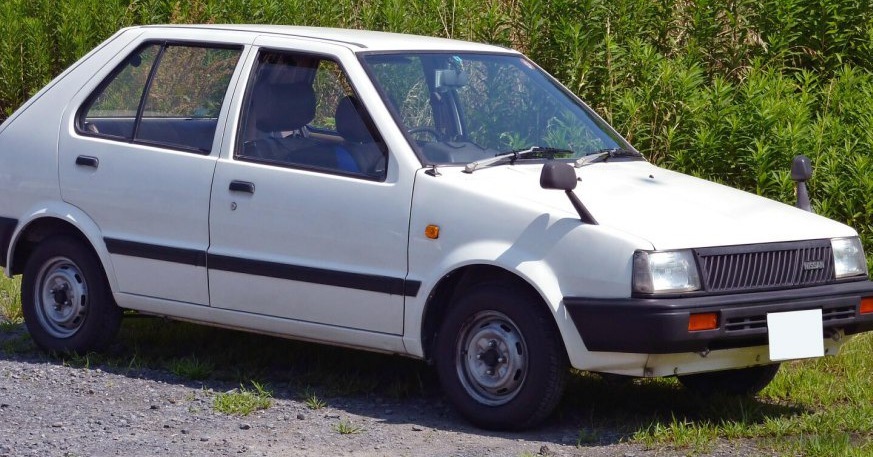
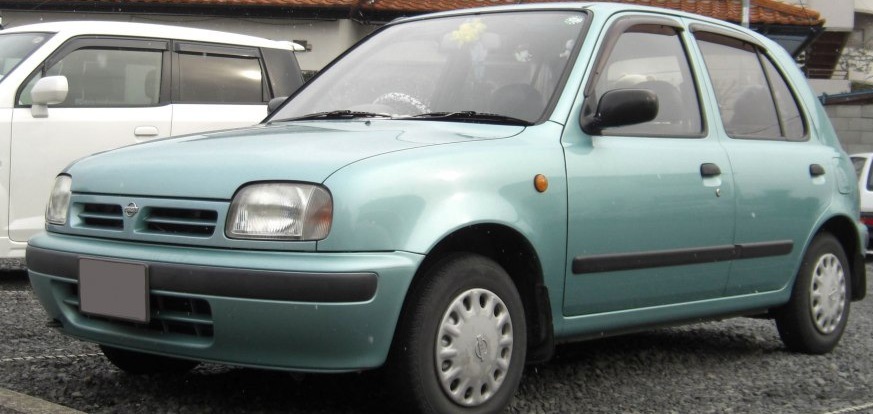
The K11 Nissan March, launched in 1992, represented a significant redesign for Nissan’s supermini. It moved away from the boxy styling of its predecessor, adopting a more rounded and modern aesthetic. The 1.0i 16V model, powered by the CG10DE engine, was a key component of the K11’s success, particularly in Europe and Asia. This variant was designed to appeal to budget-conscious buyers seeking a reliable and fuel-efficient city car. Production continued until 2000, with the K11 being offered in both 3-door and 5-door configurations. The 1.0i 16V was often considered the base model, serving as a stepping stone to the more powerful 1.3 and 1.4-liter options.
Powertrain & Engine Architecture
The heart of the 1.0i 16V March is the CG10DE engine, a 998cc inline-four cylinder petrol engine. This engine utilizes a multi-port fuel injection system, providing a reasonable balance between fuel economy and performance for its size. The ‘16V’ designation refers to the engine’s dual overhead camshaft (DOHC) valvetrain, which improves breathing and contributes to its modest power output. The CG10DE engine is known for its simplicity and relative reliability. The 5-speed manual transmission was the standard offering for this variant, providing adequate gear ratios for urban driving. The transmission itself is a conventional setup, prioritizing durability and ease of maintenance over sporty performance. The engine’s relatively low compression ratio of 9.5:1 contributes to its ability to run on lower octane fuel, further reducing running costs.
Driving Characteristics
The 1.0i 16V March is not a performance car. With only 54 horsepower, acceleration is leisurely, taking approximately 16.4 seconds to reach 62 mph. However, within the confines of city streets, the engine provides sufficient power for everyday driving. The 5-speed manual transmission allows drivers to keep the engine in its optimal power band, although frequent downshifting is often required for overtaking maneuvers. Compared to the 1.3 and 1.4-liter versions, the 1.0i feels noticeably slower, particularly when fully loaded. The gear ratios are tuned for economy rather than outright speed, resulting in a comfortable but uninspiring driving experience. The light weight of the vehicle (around 775 kg) helps to mitigate the lack of power to some extent.
Equipment & Trim Levels
The 1.0i 16V March typically came with a fairly basic level of equipment. Standard features generally included power steering, central locking, and a basic stereo system. Interior upholstery was typically cloth, with a simple dashboard layout. Optional extras included electric windows, air conditioning, and alloy wheels. The trim level was generally considered the entry point to the K11 range, focusing on affordability and practicality. Higher trim levels, such as the 1.3 and 1.4 models, offered more luxurious features like upgraded upholstery, more sophisticated audio systems, and additional safety equipment.
Chassis & Braking
The K11 March utilizes a front-wheel-drive layout with a relatively simple suspension setup. The front suspension consists of wishbones, while the rear utilizes a spring strut arrangement. This setup provides a comfortable ride quality, although it’s not particularly sporty. The braking system features disc brakes on the front wheels and drum brakes on the rear. This configuration was common for cars in this class at the time, prioritizing cost-effectiveness over ultimate stopping power. The steering is a rack and pinion system, providing reasonably precise control. The relatively narrow tires (155/70 R13) contribute to fuel efficiency but offer limited grip.
Market Reception & Comparison
The 1.0i 16V March was generally well-received as an affordable and economical city car. Critics praised its fuel efficiency and ease of driving, but noted its lack of performance. Compared to other superminis of the era, such as the Ford Fiesta and the Peugeot 205, the March offered a competitive price point and a reputation for reliability. The 1.3 and 1.4-liter versions offered significantly more performance, but at a higher cost. The 1.0i 16V appealed to buyers who prioritized fuel economy and low running costs over driving excitement. Its simplicity also made it relatively easy and inexpensive to maintain.
Legacy
The K11 Nissan March, particularly the 1.0i 16V variant, has proven to be a remarkably durable and reliable car. Many examples are still on the road today, testament to the quality of its engineering. The CG10DE engine is known for its longevity, and parts availability remains relatively good. In the used car market, the 1.0i 16V March represents an affordable and practical option for those seeking a basic, reliable city car. While it may not offer the performance or features of more modern vehicles, its simplicity and fuel efficiency continue to appeal to a niche market. Its enduring popularity is a testament to its original design brief: providing affordable and dependable transportation.