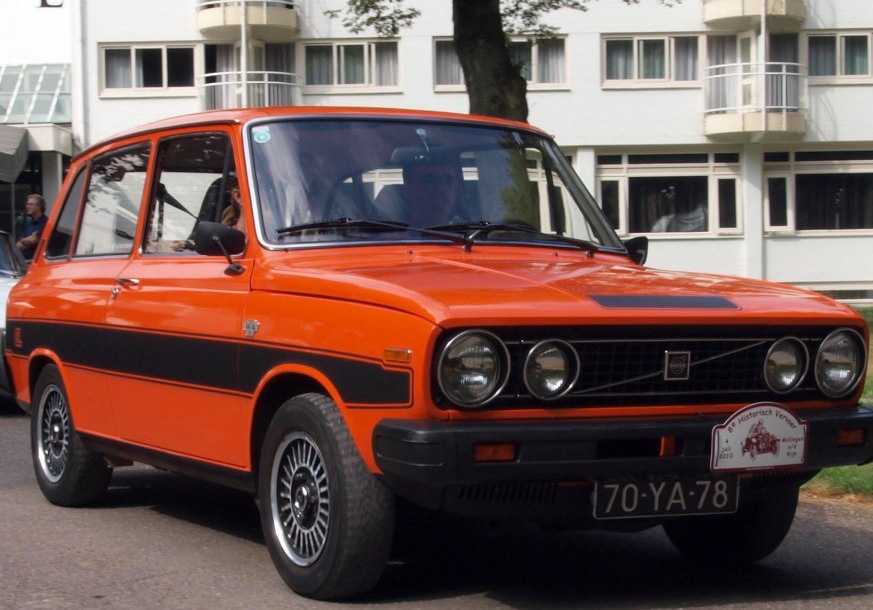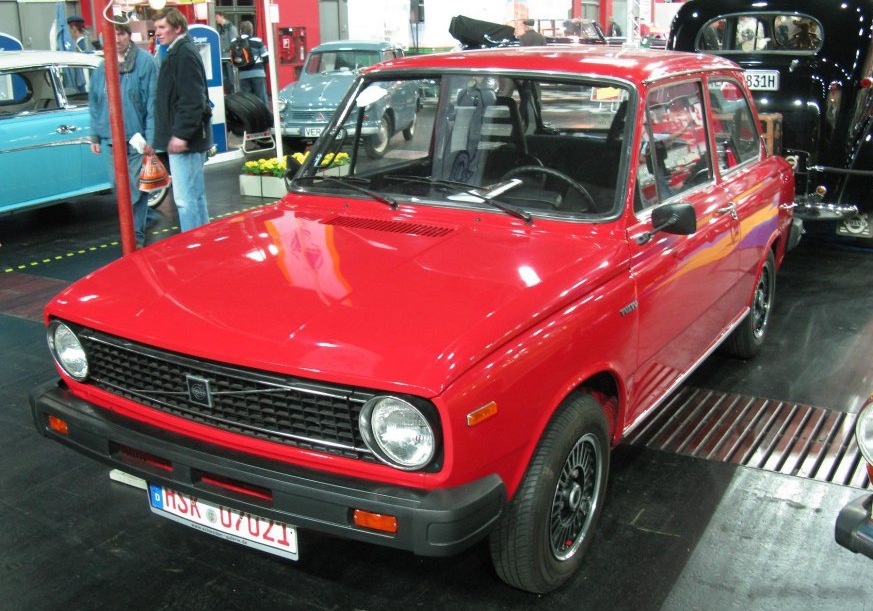
The Volvo 66 DL 1.1, producing 47 horsepower, represents a unique and often overlooked chapter in Volvo’s history. Produced between 1975 and 1978, this variant of the 66 series served as an entry-level offering, primarily aimed at markets where smaller, more economical vehicles were favored. It’s distinguished by its diminutive 1.1-liter engine paired with Volvo’s innovative Variornatic continuously variable transmission (CVT). The 66 series itself was a short-lived model, intended to fill a gap in Volvo’s lineup below the 140 series, and the DL 1.1 Variornatic occupied the base trim level.
Technical Specifications
| Brand | Volvo |
| Model | 66 |
| Generation | 66 |
| Type (Engine) | DL 1.1 (47 Hp) Variornatic |
| Start of production | 1975 |
| End of production | 1978 |
| Powertrain Architecture | Internal Combustion engine |
| Body type | Sedan |
| Seats | 4 |
| Doors | 2 |
| Fuel Type | Petrol (Gasoline) |
| Weight-to-power ratio | 17.4 kg/Hp, 57.5 Hp/tonne |
| Weight-to-torque ratio | 10.9 kg/Nm, 91.7 Nm/tonne |
| Power | 47 Hp @ 5000 rpm |
| Power per litre | 42.4 Hp/l |
| Torque | 75 Nm @ 2700 rpm, 55.32 lb.-ft. @ 2700 rpm |
| Engine Model/Code | B110E |
| Engine displacement | 1108 cm3, 67.61 cu. in. |
| Number of cylinders | 4 |
| Engine configuration | Inline |
| Cylinder Bore | 70 mm, 2.76 in. |
| Piston Stroke | 72 mm, 2.83 in. |
| Compression ratio | 8.5:1 |
| Engine aspiration | Naturally aspirated engine |
| Engine oil capacity | 3.3 l, 3.49 US qt | 2.9 UK qt |
| Coolant | 4.8 l, 5.07 US qt | 4.22 UK qt |
| Kerb Weight | 818 kg, 1803.38 lbs |
| Max. weight | 1200 kg, 2645.55 lbs |
| Max load | 382 kg, 842.17 lbs |
| Fuel tank capacity | 42 l, 11.1 US gal | 9.24 UK gal |
| Length | 3900 mm, 153.54 in |
| Width | 1540 mm, 60.63 in |
| Height | 1380 mm, 54.33 in |
| Wheelbase | 2250 mm, 88.58 in |
| Front track | 1310 mm, 51.57 in |
| Rear (Back) track | 1240 mm, 48.82 in |
| Minimum turning circle | 9.55 m, 31.33 ft |
| Drivetrain Architecture | The Internal combustion engine (ICE) drives the rear wheels of the vehicle. |
| Drive wheel | Rear wheel drive |
| Number of gears and type of gearbox | automatic transmission Variornatic |
| Rear suspension | Suspension De-Dion |
| Front brakes | Disc |
| Rear brakes | Drum |
| Wheel rims size | 4J x 14 |
Powertrain & Engine Architecture
The heart of the 66 DL 1.1 Variornatic is the B110E engine, a 1.1-liter inline-four cylinder gasoline engine. This engine, while modest in output, was designed for fuel efficiency and smooth operation. It featured a single overhead camshaft (SOHC) valvetrain and a two-barrel carburetor. The B110E produced 47 horsepower at 5000 rpm and 75 Nm (55.32 lb-ft) of torque at 2700 rpm. The engine’s relatively high compression ratio of 8.5:1 contributed to its efficiency, though it required premium fuel in some markets. What truly set this variant apart was the Variornatic transmission. This was Volvo’s early attempt at a continuously variable transmission, utilizing a belt-and-pulley system to provide a theoretically infinite number of gear ratios. The Variornatic aimed to deliver seamless acceleration and improved fuel economy compared to traditional automatic transmissions.
Driving Characteristics
The driving experience in the 66 DL 1.1 Variornatic was characterized by smoothness and ease of use, but not by outright performance. The 47 horsepower engine, coupled with the Variornatic transmission, provided adequate power for city driving and cruising on level roads. However, acceleration was slow, particularly when attempting to overtake or climb hills. The Variornatic transmission, while innovative, had a unique feel. It lacked the distinct gear changes of a conventional automatic, instead providing a constant, sometimes rubber-band-like sensation during acceleration. Compared to the more powerful 66 variants, such as those equipped with the 1.6-liter engine and a manual transmission, the DL 1.1 Variornatic felt significantly underpowered. The Variornatic’s ratios were geared towards economy, sacrificing responsiveness for fuel savings.
Equipment & Trim Levels
The 66 DL 1.1 Variornatic, as the entry-level trim, offered a relatively basic level of equipment. Standard features typically included cloth upholstery, basic instrumentation (speedometer, fuel gauge, temperature gauge), and a two-spoke steering wheel. The interior was functional and utilitarian, reflecting the car’s focus on affordability. Optional extras included a radio, heated seats, and upgraded interior trim. The exterior featured simple styling with chrome bumpers and relatively small hubcaps. The DL designation indicated a slightly higher level of trim than the base 66 model, but it still remained a fairly spartan offering compared to other Volvo models of the time.
Chassis & Braking
The Volvo 66 DL 1.1 Variornatic utilized a relatively simple chassis design. The front suspension consisted of independent coil springs and wishbones, while the rear suspension employed a De Dion axle with coil springs. This setup provided a comfortable ride, but handling was not particularly sporty. The braking system featured disc brakes on the front wheels and drum brakes on the rear wheels. The brakes were adequate for the car’s weight and performance, but lacked the stopping power of more modern systems. The car’s relatively light weight (818 kg or 1803.38 lbs) helped to mitigate the limitations of the braking system.
Market Reception & Comparison
The Volvo 66 DL 1.1 Variornatic received mixed reviews from automotive critics. While the Variornatic transmission was praised for its smoothness and fuel efficiency, the car’s lack of power and somewhat unusual driving characteristics were often criticized. Compared to other small cars of the era, such as the Ford Fiesta or the Renault 5, the Volvo 66 DL 1.1 Variornatic offered a more refined and comfortable ride, but at a higher price point. Within the Volvo lineup, the DL 1.1 Variornatic served as an affordable entry point, attracting buyers who prioritized fuel economy and ease of driving over performance. The higher-powered 66 variants, with their manual transmissions, appealed to drivers who desired a more engaging driving experience.
Legacy
The Volvo 66 DL 1.1 Variornatic, while not a commercial success, holds a unique place in Volvo’s history. It represents an early attempt at incorporating innovative technologies, such as the Variornatic transmission, into a mass-market vehicle. The B110E engine, while modest in output, proved to be a reliable and durable powerplant. Today, the 66 DL 1.1 Variornatic is a relatively rare and sought-after classic car, particularly among Volvo enthusiasts. The Variornatic transmission, while requiring specialized maintenance, remains a fascinating piece of automotive engineering. The car’s simple design and relatively low running costs make it an appealing option for classic car enthusiasts looking for a unique and affordable vintage Volvo.