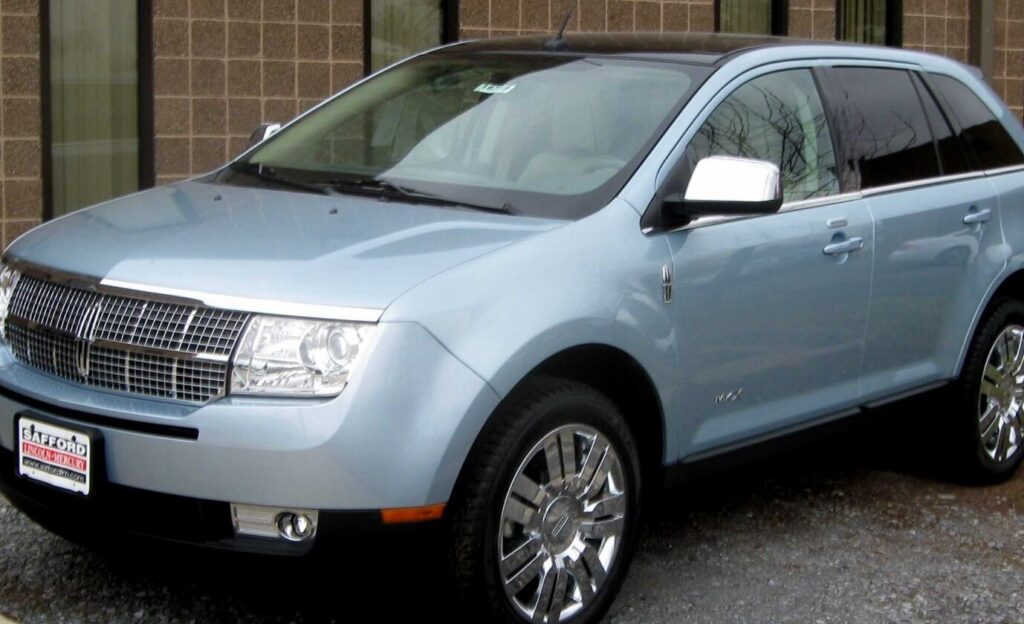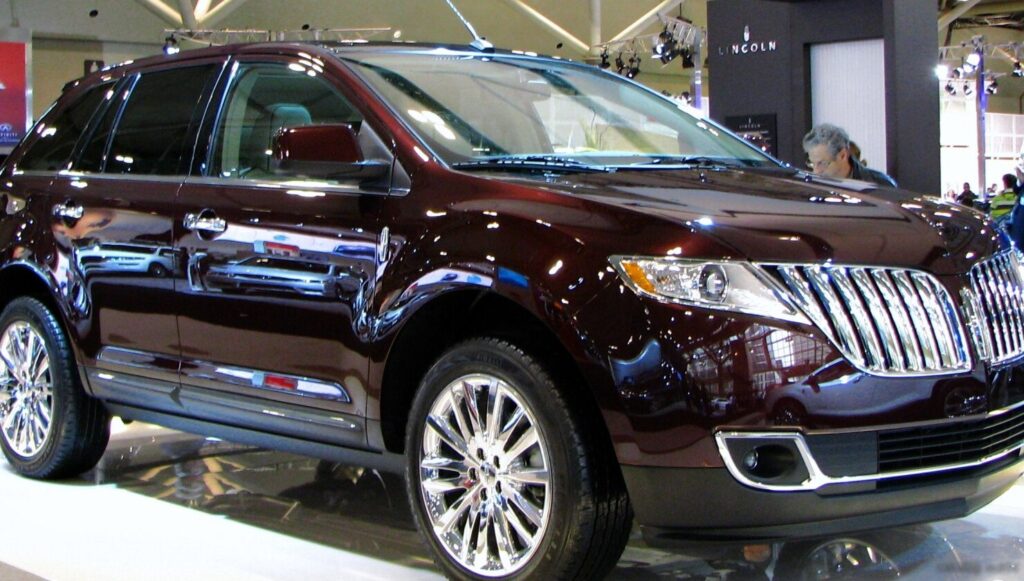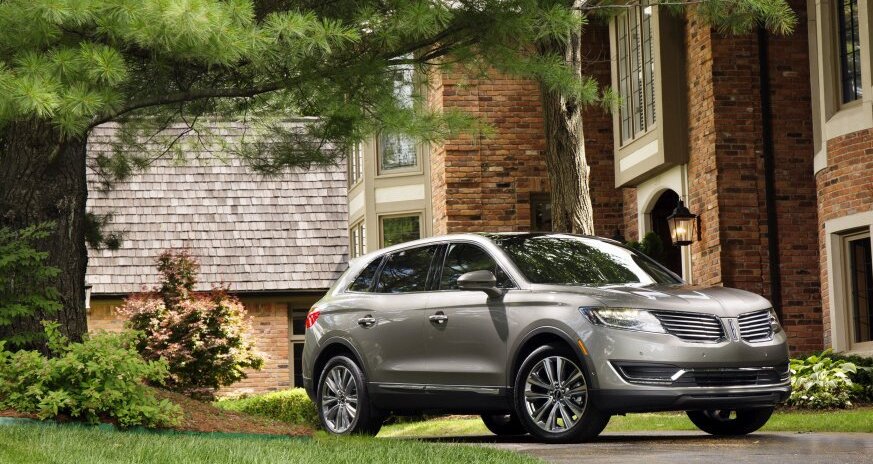
The Lincoln MKX II, specifically the 3.7 V6 variant with the SelectShift automatic transmission, represented a significant step forward for Lincoln in the mid-size luxury crossover segment. Produced from 2015 to 2018, this iteration of the MKX (the second generation, internally designated as the MKX II) aimed to blend American comfort and spaciousness with a more refined driving experience. Positioned as a mid-range offering within the MKX lineup, it slotted between the base 3.7L front-wheel drive model and the higher-end, turbocharged EcoBoost variants. The MKX II competed directly with vehicles like the Acura RDX, Audi Q5, and Cadillac SRX, seeking to attract buyers prioritizing a smooth ride and a well-appointed interior.
Technical Specifications
| Brand | Lincoln |
| Model | MKX |
| Generation | MKX II |
| Type (Engine) | 3.7 V6 (303 Hp) Automatic |
| Start of production | 2015 |
| End of production | 2018 |
| Powertrain Architecture | Internal Combustion engine |
| Body type | Crossover |
| Seats | 5 |
| Doors | 5 |
| Fuel consumption (urban) | 13.8 l/100 km (17 US mpg, 20.5 UK mpg, 7.2 km/l) |
| Fuel consumption (extra urban) | 9 l/100 km (26.1 US mpg, 31.4 UK mpg, 11.1 km/l) |
| Fuel consumption (combined) | 11.8 l/100 km (19.9 US mpg, 23.9 UK mpg, 8.5 km/l) |
| Fuel Type | Petrol (Gasoline) |
| Weight-to-power ratio | 6.2 kg/Hp, 160.2 Hp/tonne |
| Weight-to-torque ratio | 5 kg/Nm, 199.4 Nm/tonne |
| Power | 303 Hp @ 6500 rpm |
| Power per litre | 81.3 Hp/l |
| Torque | 377 Nm @ 4000 rpm (278.06 lb.-ft. @ 4000 rpm) |
| Maximum engine speed | 7000 rpm |
| Engine layout | Front, Transverse |
| Engine Model/Code | Cyclone |
| Engine displacement | 3726 cm3 (227.37 cu. in.) |
| Number of cylinders | 6 |
| Engine configuration | V-engine |
| Cylinder Bore | 95.5 mm (3.76 in.) |
| Piston Stroke | 86.7 mm (3.41 in.) |
| Compression ratio | 10.5:1 |
| Number of valves per cylinder | 4 |
| Fuel injection system | Multi-port manifold injection |
| Engine aspiration | Naturally aspirated engine |
| Valvetrain | DOHC, Ti-VCT |
| Engine oil capacity | 5.7 l (6.02 US qt | 5.02 UK qt) |
| Coolant capacity | 11.1 l (11.73 US qt | 9.77 UK qt) |
| Kerb Weight | 1891 kg (4168.94 lbs.) |
| Max. weight | 2299 kg (5068.43 lbs.) |
| Max load | 408 kg (899.49 lbs.) |
| Trunk (boot) space – minimum | 1053 l (37.19 cu. ft.) |
| Trunk (boot) space – maximum | 1948 l (68.79 cu. ft.) |
| Fuel tank capacity | 69 l (18.23 US gal | 15.18 UK gal) |
| Permitted trailer load with brakes (12%) | 1587 kg (3498.74 lbs.) |
| Permitted trailer load without brakes | 907 kg (1999.59 lbs.) |
| Length | 4826 mm (190 in.) |
| Width | 1933 mm (76.1 in.) |
| Width including mirrors | 2187 mm (86.1 in.) |
| Height | 1681 mm (66.18 in.) |
| Wheelbase | 2850 mm (112.2 in.) |
| Front track | 1646 mm (64.8 in.) |
| Rear (Back) track | 1644 mm (64.72 in.) |
| Ride height (ground clearance) | 198 mm (7.8 in.) |
| Drag coefficient (Cd) | 0.34 |
| Minimum turning circle (turning diameter) | 11.77 m (38.62 ft.) |
| Approach angle | 18° |
| Departure angle | 23.6° |
| Ramp-over (brakeover) angle | 16.4° |
| Drivetrain Architecture | The Internal combustion engine (ICE) drives the front wheels of the vehicle. |
| Drive wheel | Front wheel drive |
| Number of gears and type of gearbox | 6 gears, automatic transmission SelectShift |
| Front brakes | Ventilated discs |
| Rear brakes | Disc |
| Assisting systems | ABS (Anti-lock braking system), Electric Steering |
| Tires size | 245/60 R18 |
| Wheel rims size | 18 |
Powertrain & Engine Architecture
The heart of the MKX II 3.7 was Lincoln’s Cyclone 3.7-liter naturally aspirated V6 engine. This engine, part of Ford’s Cyclone family, featured a 60-degree V-angle and utilized a cast aluminum block with cast iron cylinder liners. The engine employed multi-port fuel injection and a double overhead camshaft (DOHC) valvetrain with variable valve timing (Ti-VCT) on both intake and exhaust valves. This technology helped optimize engine performance and fuel efficiency across a wider range of engine speeds. The engine produced 303 horsepower at 6500 rpm and 278 lb-ft of torque at 4000 rpm. The SelectShift 6-speed automatic transmission was specifically tuned for smooth and comfortable shifts, prioritizing a relaxed driving experience over outright performance. This transmission featured a manual shift mode, allowing drivers some control over gear selection, but it was primarily geared towards effortless cruising.
Driving Characteristics
The 3.7L V6 and 6-speed automatic combination in the MKX II delivered a comfortable and refined driving experience. Acceleration was adequate for everyday driving, with a 0-60 mph time estimated around 7.5-8 seconds. However, it wasn’t particularly sporty or quick compared to some of its turbocharged competitors. The automatic transmission’s gear ratios were optimized for fuel economy and smooth cruising, rather than aggressive acceleration. The front-wheel-drive configuration contributed to a comfortable ride, but it did limit traction in inclement weather compared to available all-wheel-drive models. Steering was light and easy, further emphasizing the MKX II’s focus on comfort and ease of use.
Equipment & Trim Levels
The MKX II 3.7 typically came standard with features like leather upholstery, heated front seats, a rearview camera, and Lincoln’s MyLincoln Touch infotainment system (later updated to SYNC 3). Optional extras included a panoramic sunroof, navigation system, premium sound system, and a suite of driver-assistance technologies such as blind-spot monitoring, lane-keeping assist, and adaptive cruise control. Interior trim levels varied, with options for wood or aluminum accents. The base MKX 3.7 offered a good level of standard equipment, while higher trims added more luxury features and technology.
Chassis & Braking
The MKX II utilized a front-wheel-drive platform with independent front and rear suspension. The front suspension featured MacPherson struts, while the rear employed a multi-link setup. This suspension configuration aimed to provide a comfortable ride while maintaining reasonable handling characteristics. Brakes consisted of ventilated discs up front and solid discs at the rear. Anti-lock brakes (ABS) were standard, along with electronic stability control. The MKX II’s chassis was tuned for comfort, prioritizing a smooth and quiet ride over sporty handling.
Market Reception & Comparison
Critics generally praised the MKX II 3.7 for its comfortable ride, spacious interior, and quiet cabin. However, some reviewers found the engine to be underpowered compared to the turbocharged options available in the lineup and from competitors. Fuel economy was considered average for the segment. Compared to the EcoBoost variants, the 3.7L offered a more affordable entry point into the MKX II range, but at the expense of performance. The 3.7L was often seen as a good choice for buyers prioritizing comfort and value over outright speed.
Legacy
The Lincoln MKX II 3.7 V6, while not the most powerful or technologically advanced version of the MKX, proved to be a reliable and comfortable crossover. The Cyclone 3.7L V6 engine is generally considered a durable powerplant, with few widespread mechanical issues reported. On the used car market, these models represent a good value for buyers seeking a spacious and well-equipped luxury crossover at a reasonable price. Maintenance costs are generally moderate, and parts availability is good. The MKX II 3.7 remains a viable option for those seeking a comfortable and dependable mid-size crossover.