
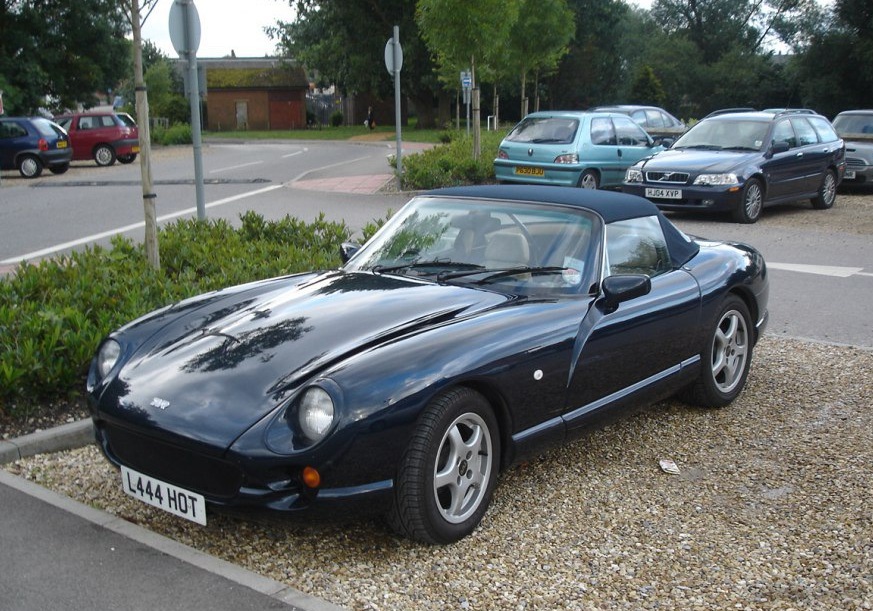
The TVR Chimaera 4.0, produced from 1992 to 2003, represents a pivotal model in the Blackpool-based manufacturer’s history. Positioned as a grand tourer, the Chimaera aimed to deliver a potent blend of performance and style at a relatively accessible price point, particularly within the UK market. It was built upon the backbone chassis TVR was known for, and shared many components with the Griffith model, but offered a more refined and luxurious experience. The 4.0-liter variant, producing 240 horsepower, was a mainstay of the Chimaera lineup, offering a compelling balance between power and usability. It was a direct competitor to cars like the Porsche 968 and BMW Z3, offering a more raw and visceral driving experience.
Technical Specifications
| Brand | TVR |
| Model | Chimaera |
| Generation | Chimaera |
| Type (Engine) | 4.0 (240 Hp) |
| Start of production | 1992 |
| End of production | 2003 |
| Powertrain Architecture | Internal Combustion engine |
| Body type | Cabriolet |
| Seats | 2 |
| Doors | 2 |
| Fuel consumption (economy) – urban | 17 l/100 km (13.8 US mpg, 16.6 UK mpg, 5.9 km/l) |
| Fuel consumption (economy) – extra urban | 10 l/100 km (23.5 US mpg, 28.2 UK mpg, 10 km/l) |
| Fuel Type | Petrol (Gasoline) |
| Acceleration 0 – 100 km/h | 5.2 sec |
| Acceleration 0 – 62 mph | 5.2 sec |
| Acceleration 0 – 60 mph | 4.9 sec |
| Maximum speed | 240 km/h (149.13 mph) |
| Weight-to-power ratio | 4.4 kg/Hp, 226.4 Hp/tonne |
| Weight-to-torque ratio | 2.8 kg/Nm, 352.8 Nm/tonne |
| Power | 240 Hp @ 5250 rpm |
| Power per litre | 60.8 Hp/l |
| Torque | 374 Nm @ 3850 rpm (275.85 lb.-ft. @ 3850 rpm) |
| Engine layout | Front, Longitudinal |
| Engine displacement | 3950 cm3 (241.04 cu. in.) |
| Number of cylinders | 8 |
| Engine configuration | V-engine |
| Cylinder Bore | 94 mm (3.7 in.) |
| Piston Stroke | 71.1 mm (2.8 in.) |
| Compression ratio | 9.8:1 |
| Number of valves per cylinder | 2 |
| Fuel injection system | Multi-port manifold injection |
| Engine aspiration | Naturally aspirated engine |
| Engine oil capacity | 5 l (5.28 US qt | 4.4 UK qt) |
| Coolant | 12 l (12.68 US qt | 10.56 UK qt) |
| Kerb Weight | 1060 kg (2336.9 lbs.) |
| Max. weight | 1280 kg (2821.92 lbs.) |
| Max load | 220 kg (485.02 lbs.) |
| Trunk (boot) space – minimum | 310 l (10.95 cu. ft.) |
| Fuel tank capacity | 57 l (15.06 US gal | 12.54 UK gal) |
| Length | 3965 mm (156.1 in.) |
| Width | 1730 mm (68.11 in.) |
| Height | 1223 mm (48.15 in.) |
| Wheelbase | 2282 mm (89.84 in.) |
| Front track | 1460 mm (57.48 in.) |
| Rear (Back) track | 1470 mm (57.87 in.) |
| Drivetrain Architecture | The Internal combustion engine (ICE) drives the rear wheels of the vehicle. |
| Drive wheel | Rear wheel drive |
| Number of gears and type of gearbox | 5 gears, manual transmission |
| Front suspension | Wishbone |
| Rear suspension | Wishbone |
| Front brakes | Ventilated discs |
| Rear brakes | Disc |
| Assisting systems | ABS (Anti-lock braking system) |
| Steering type | Steering rack and pinion |
| Tires size | 205/55 R16; 225/50 R16 |
| Wheel rims size | 7J x 16; 7.5J x 16 |
Powertrain & Engine Architecture
The heart of the Chimaera 4.0 is its 3,947cc Rover V8 engine. This engine, derived from the Buick-Oldsmobile-Pontiac 215 cubic inch V8, had a long and storied history, having been extensively developed by Rover over decades. The TVR application featured multi-port fuel injection and a compression ratio of 9.8:1. The engine’s architecture is a 90-degree V8, known for its inherent smoothness and potential for high output. The 240 horsepower version utilized a specific camshaft profile and ECU mapping to deliver a broad torque curve, making it well-suited for road use. The engine is longitudinally mounted, driving the rear wheels. The standard transmission for the 4.0-liter Chimaera was a five-speed manual gearbox, sourced from Ford. While an automatic transmission was offered, it was less common and generally considered to detract from the driving experience.
Driving Characteristics
The Chimaera 4.0, even with the manual transmission, delivers a raw and engaging driving experience. The 240 hp engine provides ample power for spirited driving, with a 0-60 mph time of around 4.9 seconds. The relatively light weight of the car (around 2337 lbs) contributes to its agility. The manual gearbox offers a direct connection to the engine, allowing for precise control. Compared to the higher-output 4.5-liter version, the 4.0 feels more manageable and less prone to oversteer, making it a more approachable option for less experienced drivers. The automatic transmission, while offering convenience, noticeably dulled the performance and responsiveness of the car, resulting in slower acceleration times and a less engaging driving experience. The suspension, while providing a comfortable ride, can feel somewhat dated by modern standards, with a tendency towards body roll in corners.
Equipment & Trim Levels
The Chimaera 4.0 was relatively sparsely equipped compared to contemporary grand tourers. Standard features typically included leather upholstery, power windows, and central locking. Air conditioning was often an optional extra. Interior trim levels varied, with different leather colors and wood veneer options available. The dashboard layout was functional but lacked the sophistication of more mainstream manufacturers. Optional extras included upgraded sound systems, alloy wheels, and a hardtop roof. The Chimaera was largely about the driving experience, and TVR prioritized performance over luxury.
Chassis & Braking
The Chimaera utilized TVR’s signature tubular steel backbone chassis, providing a rigid and lightweight platform. Suspension consisted of independent double wishbones at both the front and rear. Braking was initially equipped with ventilated discs at the front and solid discs at the rear, although later models often featured rear discs as well. ABS was standard, providing an added layer of safety. The relatively simple suspension setup, combined with the car’s light weight, contributed to its nimble handling. Stabilizer bars were fitted front and rear to reduce body roll.
Market Reception & Comparison
The TVR Chimaera 4.0 was generally well-received by automotive journalists, who praised its performance, handling, and distinctive styling. However, it was also criticized for its build quality, reliability, and lack of refinement compared to its rivals. Fuel economy was also a concern, with reported figures of around 17 l/100 km (13.8 US mpg) in urban driving. Compared to the 4.5-liter Chimaera, the 4.0 offered a more affordable entry point into the TVR lineup, but at the expense of outright performance. The 4.0 was also considered more reliable than the higher-output models, due to the lower stress placed on the engine.
Legacy
The TVR Chimaera 4.0 remains a popular choice among enthusiasts today. Its combination of performance, style, and relative affordability has made it a sought-after classic. However, potential buyers should be aware of the TVR’s reputation for requiring diligent maintenance. The Rover V8 engine is generally robust, but can be prone to overheating if not properly cared for. Parts availability can also be a challenge, although a dedicated network of specialists and suppliers exists. The Chimaera 4.0 represents a unique and exciting alternative to more mainstream sports cars of its era, offering a raw and visceral driving experience that is increasingly rare in modern automobiles.
