
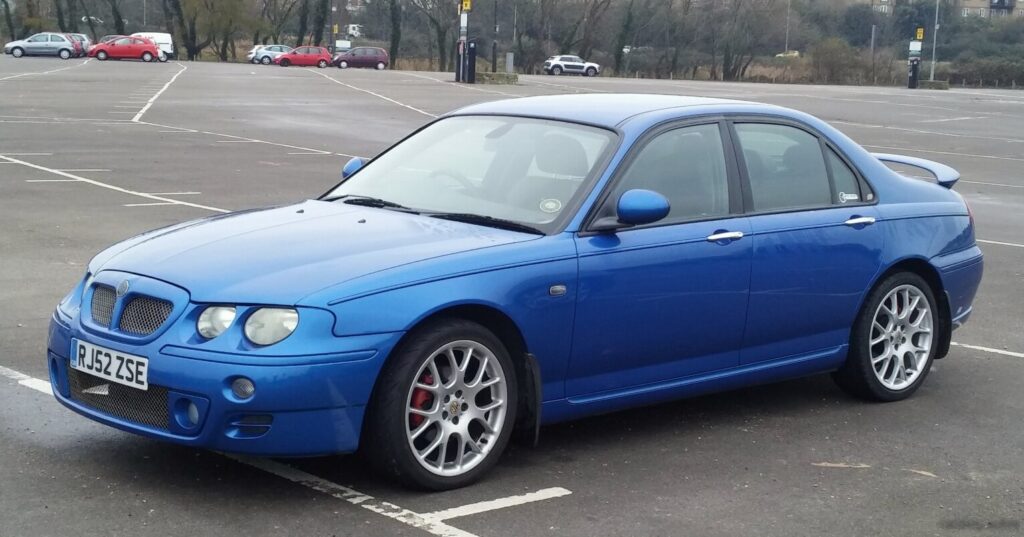
The MG ZT 1.8 i 16V, produced between 2003 and 2005, was a key variant within the Rover 75/MG ZT platform (designated X20 internally). Positioned as an entry-level offering in the MG ZT range, it aimed to provide a more affordable and fuel-efficient option compared to the higher-performance V6 models. The ZT was MG’s attempt to inject some sporting flair into the Rover 75, a large family saloon originally launched in 1998 following BMW’s divestment of the Rover Group. The 1.8L engine and 5-speed manual transmission combination represented a balance between usability and the MG brand’s sporting image, targeting buyers who desired a comfortable, yet reasonably engaging driving experience.
Technical Specifications
| Brand | MG |
| Model | ZT |
| Generation | ZT |
| Type (Engine) | 1.8 i 16V (120 Hp) |
| Start of production | 2003 |
| End of production | 2005 |
| Powertrain Architecture | Internal Combustion engine |
| Body type | Sedan |
| Seats | 5 |
| Doors | 4 |
| Fuel consumption (urban) | 10.6 l/100 km (22.2 US mpg) |
| Fuel consumption (extra urban) | 6.1 l/100 km (38.6 US mpg) |
| Fuel consumption (combined) | 7.8 l/100 km (30.2 US mpg) |
| Fuel Type | Petrol (Gasoline) |
| Acceleration 0 – 100 km/h | 11.6 sec |
| Acceleration 0 – 62 mph | 11.6 sec |
| Acceleration 0 – 60 mph | 11 sec |
| Maximum speed | 195 km/h (121.17 mph) |
| Weight-to-power ratio | 12.5 kg/Hp |
| Weight-to-torque ratio | 9.4 kg/Nm |
| Power | 120 Hp @ 5500 rpm |
| Torque | 160 Nm @ 4000 rpm (118.01 lb.-ft. @ 4000 rpm) |
| Engine layout | Front, Transverse |
| Engine Model/Code | 18K4F |
| Engine displacement | 1795 cm3 (109.54 cu. in.) |
| Number of cylinders | 4 |
| Engine configuration | Inline |
| Cylinder Bore | 80 mm (3.15 in.) |
| Piston Stroke | 89.3 mm (3.52 in.) |
| Compression ratio | 10.5:1 |
| Number of valves per cylinder | 4 |
| Fuel injection system | Multi-port manifold injection |
| Engine aspiration | Naturally aspirated engine |
| Valvetrain | DOHC |
| Engine oil capacity | 4.5 l (4.76 US qt | 3.96 UK qt) |
| Coolant capacity | 6.2 l (6.55 US qt | 5.46 UK qt) |
| Kerb Weight | 1500 kg (3306.93 lbs.) |
| Trunk (boot) space – minimum | 432 l (15.26 cu. ft.) |
| Fuel tank capacity | 65 l (17.17 US gal | 14.3 UK gal) |
| Length | 4740 mm (186.61 in.) |
| Width | 1780 mm (70.08 in.) |
| Height | 1410 mm (55.51 in.) |
| Wheelbase | 2746 mm (108.11 in.) |
| Front track | 1505 mm (59.25 in.) |
| Rear track | 1505 mm (59.25 in.) |
| Drivetrain Architecture | Front wheel drive |
| Number of gears and type of gearbox | 5 gears, manual transmission |
| Front suspension | Spring Strut |
| Rear suspension | Coil spring |
| Front brakes | Ventilated discs |
| Rear brakes | Disc |
| Assisting systems | ABS (Anti-lock braking system) |
| Steering type | Steering rack and pinion |
| Power steering | Hydraulic Steering |
| Tires size | 195/65 R15 |
Powertrain & Engine Architecture
The MG ZT 1.8 i 16V utilized the 18K4F engine, a 1.8-liter (1795 cc) inline-four cylinder powerplant. This engine was derived from the K-series engine family developed by Rover, and featured a dual overhead camshaft (DOHC) valvetrain with four valves per cylinder. It employed multi-point fuel injection for precise fuel delivery. The 18K4F produced 120 horsepower at 5500 rpm and 160 Nm (118 lb-ft) of torque at 4000 rpm. The engine’s design prioritized refinement and fuel efficiency over outright performance. The engine was mated to a five-speed manual transmission, providing a relatively conventional drivetrain setup. This transmission was known for its smooth operation, but wasn’t particularly sporty in its gearing.
Driving Characteristics
The 1.8L engine, coupled with the manual transmission, provided adequate, but not exhilarating, performance. Acceleration from 0-60 mph took around 11 seconds, and the top speed was approximately 121 mph. The engine felt relatively relaxed at cruising speeds, making it suitable for long journeys. However, it required frequent downshifts when overtaking or climbing hills. Compared to the 2.5L V6 models, the 1.8L felt noticeably less powerful, but offered better fuel economy. The gear ratios were spaced to prioritize fuel efficiency, rather than maximizing acceleration. The front-wheel-drive configuration contributed to a slight tendency for understeer during spirited driving.
Equipment & Trim Levels
The 1.8 i 16V typically came with a reasonable level of standard equipment. This included central locking, electric front windows, power steering, an RDS stereo, and ABS brakes. Interior upholstery was generally cloth, with a relatively simple dashboard layout. Optional extras included air conditioning, alloy wheels, and a sunroof. The trim level was generally considered the base model within the ZT range, offering a more affordable entry point into the MG brand. Higher trim levels, such as the 1.9 TDI and 2.5 V6, offered more luxurious appointments and additional features.
Chassis & Braking
The MG ZT utilized a MacPherson strut front suspension and a multi-link coil spring rear suspension. This setup aimed to provide a balance between comfort and handling. The front brakes were ventilated discs, while the rear brakes were solid discs. ABS was standard, providing enhanced braking performance in emergency situations. The suspension was tuned for a comfortable ride, but it wasn’t as firm or sporty as the suspension found in some of its competitors. The relatively modest weight of the 1.8L model (around 3307 lbs) helped to mitigate the effects of the front-wheel-drive layout and contribute to reasonably balanced handling.
Market Reception & Comparison
The MG ZT 1.8 i 16V received mixed reviews. Critics generally praised its comfortable ride and reasonable fuel economy, but criticized its lack of outright performance. It was often seen as a more sensible alternative to the more powerful V6 models, appealing to buyers who prioritized practicality and affordability. Compared to rivals like the Ford Mondeo and Vauxhall Vectra, the ZT offered a more distinctive styling and a slightly more engaging driving experience, but it often lagged behind in terms of refinement and technology. Fuel economy was competitive for its class, averaging around 30 mpg in combined driving.
Legacy
The MG ZT, and the 1.8 i 16V variant specifically, has developed a cult following among enthusiasts. The 18K4F engine is generally considered reliable, although it can be prone to head gasket issues if not properly maintained. Parts availability can be a challenge, as MG Rover went into administration in 2005. However, a dedicated network of specialists and enthusiasts continues to support the model. Today, well-maintained examples of the ZT 1.8 i 16V are sought after by collectors and enthusiasts who appreciate its unique styling and relatively affordable running costs. The car represents a final attempt by MG to create a genuinely sporting saloon, and it remains a distinctive and memorable vehicle.
