
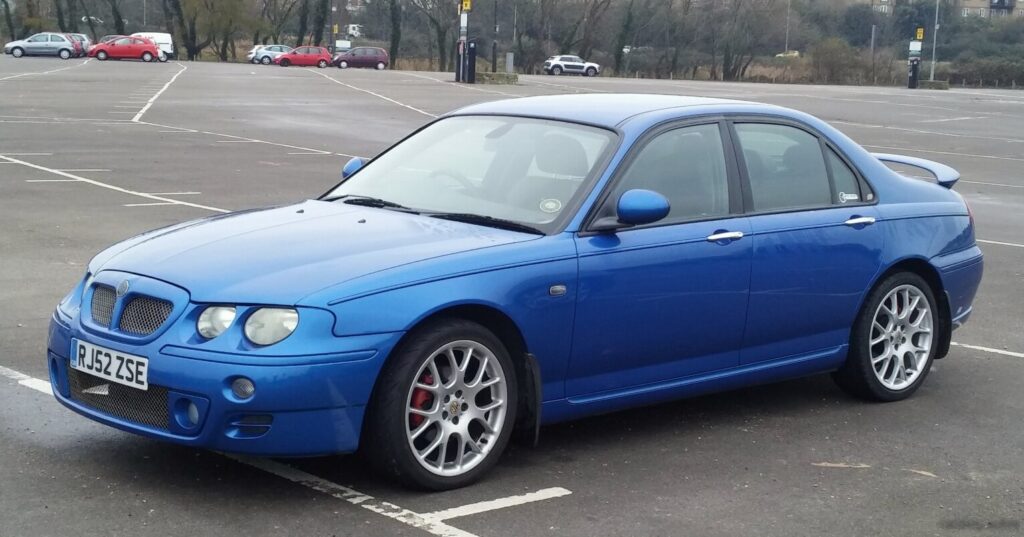
The MG ZT 1.8i 16V Automatic, produced between 2003 and 2005, was a key variant within the Rover 75/MG ZT platform (designated X10). Positioned as an entry-level to mid-range offering, it aimed to provide a more accessible price point for buyers interested in the ZT’s sporty styling and larger sedan dimensions. The ZT, launched after BMW’s divestment of Rover, represented MG’s attempt to inject performance and a more dynamic image into the traditionally conservative Rover lineup. This 1.8-liter variant, paired with an automatic transmission, catered to drivers prioritizing comfort and ease of use over outright performance, though it still offered a step up in driving experience compared to the standard Rover 75.
Technical Specifications
| Brand | MG |
| Model | ZT |
| Generation | ZT |
| Type (Engine) | 1.8 i 16V (120 Hp) Automatic |
| Start of production | 2003 |
| End of production | 2005 |
| Powertrain Architecture | Internal Combustion engine |
| Body type | Sedan |
| Seats | 5 |
| Doors | 4 |
| Fuel consumption (urban) | 12.6 l/100 km (18.7 US mpg, 22.4 UK mpg, 7.9 km/l) |
| Fuel consumption (extra urban) | 7.5 l/100 km (31.4 US mpg, 37.7 UK mpg, 13.3 km/l) |
| Fuel consumption (combined) | 9.4 l/100 km (25 US mpg, 30.1 UK mpg, 10.6 km/l) |
| Fuel Type | Petrol (Gasoline) |
| Acceleration 0 – 100 km/h | 13.2 sec |
| Acceleration 0 – 62 mph | 13.2 sec |
| Acceleration 0 – 60 mph | 12.5 sec |
| Maximum speed | 190 km/h (118.06 mph) |
| Weight-to-power ratio | 12.5 kg/Hp, 80 Hp/tonne |
| Weight-to-torque ratio | 9.4 kg/Nm, 106.7 Nm/tonne |
| Power | 120 Hp @ 5500 rpm |
| Power per litre | 66.9 Hp/l |
| Torque | 160 Nm @ 4000 rpm (118.01 lb.-ft. @ 4000 rpm) |
| Engine layout | Front, Transverse |
| Engine Model/Code | 18K4F |
| Engine displacement | 1795 cm3 (109.54 cu. in.) |
| Number of cylinders | 4 |
| Engine configuration | Inline |
| Cylinder Bore | 80 mm (3.15 in.) |
| Piston Stroke | 89.3 mm (3.52 in.) |
| Compression ratio | 10.5:1 |
| Number of valves per cylinder | 4 |
| Fuel injection system | Multi-port manifold injection |
| Engine aspiration | Naturally aspirated engine |
| Valvetrain | DOHC |
| Engine oil capacity | 4.5 l (4.76 US qt | 3.96 UK qt) |
| Coolant capacity | 6.2 l (6.55 US qt | 5.46 UK qt) |
| Kerb Weight | 1500 kg (3306.93 lbs.) |
| Trunk (boot) space – minimum | 432 l (15.26 cu. ft.) |
| Fuel tank capacity | 65 l (17.17 US gal | 14.3 UK gal) |
| Length | 4740 mm (186.61 in.) |
| Width | 1780 mm (70.08 in.) |
| Height | 1410 mm (55.51 in.) |
| Wheelbase | 2746 mm (108.11 in.) |
| Front track | 1505 mm (59.25 in.) |
| Rear track | 1505 mm (59.25 in.) |
| Drivetrain Architecture | Front wheel drive |
| Number of gears | 5 |
| Gearbox type | Automatic transmission |
| Front suspension | Spring Strut |
| Rear suspension | Coil spring |
| Front brakes | Ventilated discs |
| Rear brakes | Disc |
| Assisting systems | ABS (Anti-lock braking system) |
| Steering type | Steering rack and pinion |
| Power steering | Hydraulic Steering |
| Tires size | 195/65 R15 |
| Wheel rims size | 6J x 15 |
Powertrain & Engine Architecture
The MG ZT 1.8i Automatic utilized the 18K4F engine, a 1.8-liter, inline-four cylinder powerplant. This engine was derived from the K-series engine family developed by Rover, and had been updated with a 16-valve cylinder head. It featured multi-port fuel injection and a double overhead camshaft (DOHC) valvetrain. The engine produced 120 horsepower at 5500 rpm and 160 Nm (118 lb-ft) of torque at 4000 rpm. The automatic transmission was a five-speed unit, providing smooth shifts but at the expense of some performance compared to the available manual gearbox. This transmission was chosen to appeal to buyers seeking a more relaxed driving experience.
Driving Characteristics
The 1.8i Automatic ZT offered a comfortable, if not particularly exhilarating, driving experience. Acceleration from 0-60 mph took around 12.5 seconds, and top speed was limited to 118 mph. The automatic transmission, while convenient, resulted in a noticeable reduction in responsiveness compared to the manual versions. Gear ratios were tuned for fuel efficiency and smooth cruising rather than aggressive acceleration. The engine felt adequate for everyday driving, but could feel strained when attempting quicker overtakes or climbing hills. Compared to the higher-performance ZT 2.5 V6 or ZT 190 models, the 1.8i Automatic was significantly less powerful, but offered a more economical and accessible entry point into the ZT range.
Equipment & Trim Levels
The 1.8i Automatic typically came equipped with a reasonable level of standard features. These included central locking, electric front windows, power steering, an RDS stereo, and ABS brakes. Interior upholstery was generally cloth, with options for leather upgrades. Dashboard trim was typically wood veneer or metallic finish. Optional extras included air conditioning, alloy wheels, a sunroof, and upgraded audio systems. The trim level often dictated the availability of these options, with higher trims offering more standard equipment.
Chassis & Braking
The MG ZT featured a front-wheel-drive chassis with independent suspension at the front (using MacPherson struts) and a multi-link setup at the rear. The 1.8i Automatic models typically used ventilated disc brakes at the front and solid disc brakes at the rear. The suspension was tuned for a balance between comfort and handling, providing a reasonably composed ride. Stabilizer bars were fitted front and rear to reduce body roll during cornering. The weight distribution, however, was slightly front-biased due to the engine and transmission layout.
Market Reception & Comparison
The MG ZT 1.8i Automatic received mixed reviews. Critics generally praised the car’s styling and spacious interior, but found the performance of the 1.8-liter engine and automatic transmission to be underwhelming. Fuel economy was considered average for its class. Compared to rivals like the Ford Mondeo or Vauxhall/Opel Vectra, the ZT offered a more distinctive design and a more premium feel, but often at a higher price point. The 1.8i Automatic was often seen as a compromise – offering the ZT’s styling and comfort without the higher running costs of the more powerful engines.
Legacy
The MG ZT, and the 1.8i Automatic variant specifically, has developed a modest following among enthusiasts. While not known for exceptional reliability, the 18K4F engine is generally considered durable if properly maintained. Common issues include oil leaks and occasional problems with the cooling system. The automatic transmission, while generally reliable, can be expensive to repair if it fails. Today, the MG ZT 1.8i Automatic represents an affordable entry point into classic British motoring, offering a unique blend of style, comfort, and practicality. Its relative rarity and distinctive design are contributing to its increasing appeal in the used car market.
