
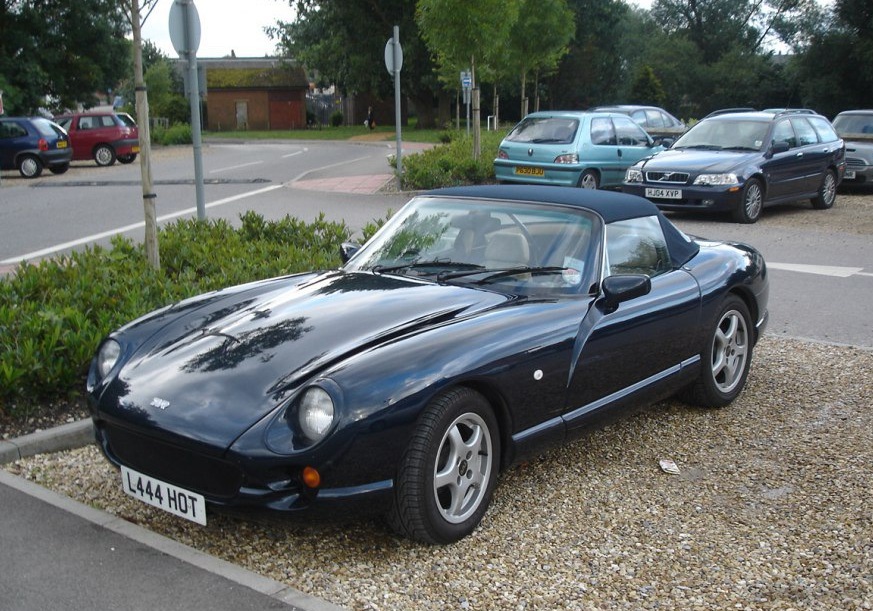
The TVR Chimaera 4.6, produced between 1997 and 2003, represents a pivotal point in the British sports car manufacturer’s history. Positioned as the more powerful sibling to the Griffith, the Chimaera aimed to deliver a grand touring experience with a distinctly raw and visceral character. It was built upon TVR’s steel spaceframe chassis, a design philosophy that prioritized lightweight construction and driver engagement. The 4.6-liter variant, producing 288 horsepower, was the top-tier engine option for the Chimaera, solidifying its place as the performance flagship of the range. The Chimaera, along with the Griffith, helped to revitalize TVR in the late 1990s, offering a compelling alternative to more established European sports cars.
Technical Specifications
| Brand | TVR |
| Model | Chimaera |
| Generation | Chimaera |
| Type (Engine) | 4.6 (288 Hp) |
| Start of production | 1997 |
| End of production | 2003 |
| Powertrain Architecture | Internal Combustion engine |
| Body type | Cabriolet |
| Seats | 2 |
| Doors | 2 |
| Fuel consumption (combined) | 13.5 l/100 km (17.4 US mpg, 20.9 UK mpg, 7.4 km/l) |
| Fuel Type | Petrol (Gasoline) |
| Acceleration 0 – 100 km/h | 4.7 sec |
| Acceleration 0 – 62 mph | 4.7 sec |
| Acceleration 0 – 60 mph | 4.5 sec |
| Maximum speed | 257 km/h (159.69 mph) |
| Weight-to-power ratio | 3.7 kg/Hp, 271.7 Hp/tonne |
| Weight-to-torque ratio | 2.6 kg/Nm, 384 Nm/tonne |
| Power | 288 Hp @ 5500 rpm |
| Power per litre | 63.4 Hp/l |
| Torque | 407 Nm @ 4500 rpm (300.19 lb.-ft. @ 4500 rpm) |
| Engine layout | Front, Longitudinal |
| Engine displacement | 4546 cm3 (277.41 cu. in.) |
| Number of cylinders | 8 |
| Engine configuration | V-engine |
| Cylinder Bore | 94 mm (3.7 in.) |
| Piston Stroke | 82 mm (3.23 in.) |
| Compression ratio | 9.5:1 |
| Number of valves per cylinder | 2 |
| Fuel injection system | Multi-port manifold injection |
| Engine aspiration | Naturally aspirated engine |
| Engine oil capacity | 5 l (5.28 US qt | 4.4 UK qt) |
| Coolant | 12 l (12.68 US qt | 10.56 UK qt) |
| Kerb Weight | 1060 kg (2336.9 lbs.) |
| Max. weight | 1280 kg (2821.92 lbs.) |
| Max load | 220 kg (485.02 lbs.) |
| Trunk (boot) space – minimum | 310 l (10.95 cu. ft.) |
| Fuel tank capacity | 57 l (15.06 US gal | 12.54 UK gal) |
| Length | 3965 mm (156.1 in.) |
| Width | 1730 mm (68.11 in.) |
| Height | 1223 mm (48.15 in.) |
| Wheelbase | 2282 mm (89.84 in.) |
| Front track | 1460 mm (57.48 in.) |
| Rear (Back) track | 1470 mm (57.87 in.) |
| Drivetrain Architecture | The Internal combustion engine (ICE) drives the rear wheels of the vehicle. |
| Drive wheel | Rear wheel drive |
| Number of gears and type of gearbox | 5 gears, manual transmission |
| Front suspension | Wishbone |
| Rear suspension | Wishbone |
| Front brakes | Ventilated discs |
| Rear brakes | Disc |
| Assisting systems | ABS (Anti-lock braking system) |
| Steering type | Steering rack and pinion |
| Tires size | 225/55 R16 |
Powertrain & Engine Architecture
The heart of the Chimaera 4.6 is its 4.6-liter Rover V8 engine. This engine, derived from the Buick-Oldsmobile-Pontiac 3.5-liter V8, was extensively modified by TVR. The engine featured a cast iron block and aluminum cylinder heads. The 288 horsepower output was achieved through a combination of increased displacement, optimized cylinder heads, and a high-performance camshaft. Fuel delivery was managed by a multi-port fuel injection system, ensuring precise fuel metering for optimal performance and efficiency. The engine’s character was defined by its strong low-end torque and a willingness to rev, delivering a classic V8 soundtrack. The Chimaera exclusively used a five-speed manual transmission, providing a direct connection between the driver and the engine’s power. This transmission was chosen to complement the car’s sporting intentions and deliver a more engaging driving experience.
Driving Characteristics
The Chimaera 4.6 offered a thrilling, albeit demanding, driving experience. The combination of the powerful V8 engine and the lightweight chassis resulted in impressive acceleration – 0 to 60 mph in around 4.5 seconds. The manual transmission allowed for precise control over the engine’s power, but required a skilled driver to fully exploit its potential. The car’s handling was characterized by its responsiveness and direct steering, but also by a tendency towards oversteer, particularly when pushed to its limits. The suspension, while providing a reasonably comfortable ride, was firm enough to maintain body control during spirited driving. Compared to the earlier 4.0-liter Chimaeras, the 4.6 offered a noticeable increase in power and torque, resulting in stronger acceleration and improved overall performance. It was a significant step up from the four-cylinder Griffith models, offering a more refined and powerful grand touring experience.
Equipment & Trim Levels
The Chimaera 4.6 was relatively sparsely equipped by modern standards, reflecting TVR’s focus on driving experience over luxury. Standard features included leather upholstery, power windows, and central locking. Air conditioning was often an optional extra, as were features like heated seats and upgraded audio systems. Interior trim options were limited, with a focus on providing a functional and driver-focused environment. The dashboard layout was simple and straightforward, with clearly visible gauges for essential information. The Chimaera’s interior was characterized by its hand-built quality and attention to detail, although material quality could vary. Exterior options were also limited, with a range of paint colors available, but few significant styling modifications.
Chassis & Braking
The Chimaera’s chassis was a steel spaceframe, designed and built in-house by TVR. This construction method provided a high degree of rigidity while keeping weight to a minimum. The suspension utilized independent wishbones at both the front and rear, providing a good balance between ride comfort and handling performance. Braking duties were handled by ventilated discs at the front and solid discs at the rear, assisted by an anti-lock braking system (ABS). While the braking system was adequate for most driving situations, it could feel overwhelmed during prolonged or aggressive use. The car’s relatively low weight helped to mitigate the limitations of the braking system. The steering was a rack and pinion system, providing precise and responsive control.
Market Reception & Comparison
The TVR Chimaera 4.6 was generally well-received by automotive critics, who praised its performance, handling, and distinctive styling. However, it was also criticized for its lack of refinement, build quality issues, and limited practicality. Compared to other sports cars of the era, such as the Porsche 911 and the BMW Z8, the Chimaera offered a more raw and visceral driving experience at a significantly lower price point. Its fuel economy was relatively poor, averaging around 17.4 US mpg. Reliability was also a concern, with some owners reporting issues with the engine, electrical system, and cooling system. However, the Chimaera’s unique character and engaging driving experience made it a popular choice among enthusiasts.
Legacy
The TVR Chimaera 4.6 remains a highly sought-after sports car among collectors and enthusiasts. Its combination of performance, styling, and rarity has ensured its enduring appeal. The Rover V8 engine, while known for its potential reliability issues, is relatively easy to maintain and repair, thanks to its simple design and readily available parts. Today, well-maintained Chimaera 4.6 models command premium prices in the used car market. The Chimaera represents a high point in TVR’s history, showcasing the company’s engineering prowess and commitment to building exciting and engaging sports cars. It stands as a testament to a bygone era of British automotive engineering, where passion and individuality were valued above all else.
