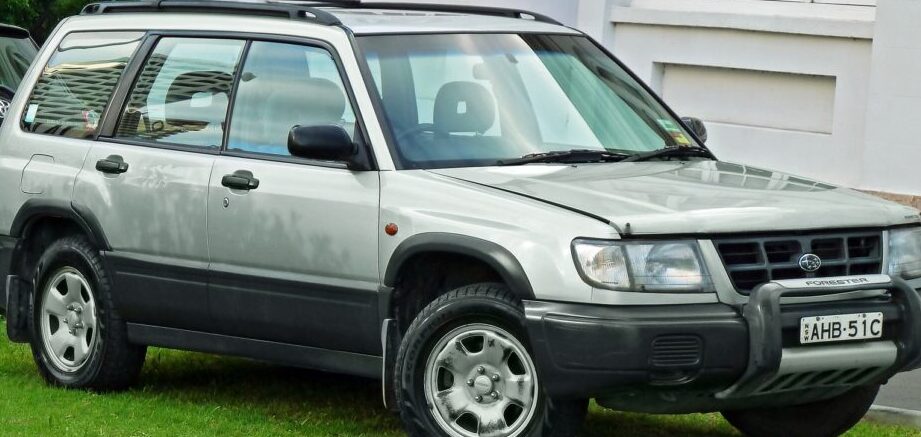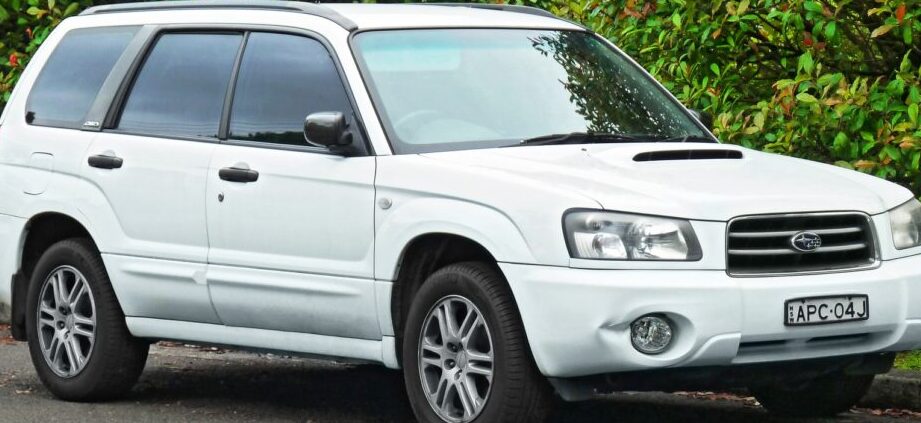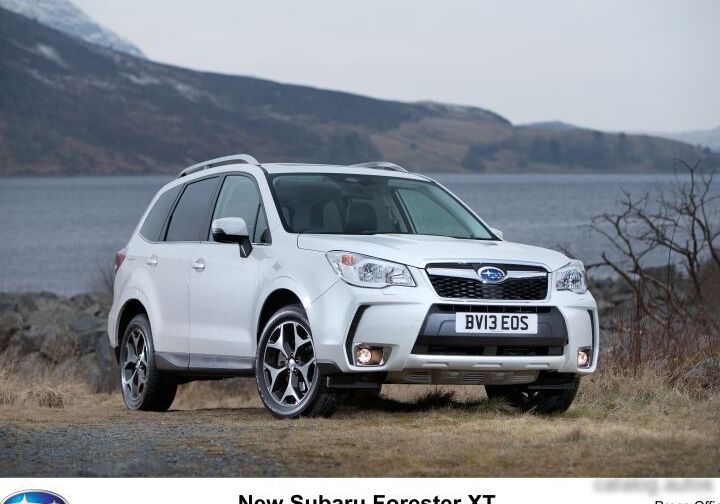
The Subaru Forester IV (facelift 2016) Sport 2.0d AWD Lineartronic represents a mid-cycle refresh of the fourth-generation Forester, produced from 2016 to 2018. Positioned as a sporty, diesel-powered variant within the Forester lineup, it aimed to appeal to buyers seeking enhanced performance and fuel efficiency combined with Subaru’s renowned symmetrical all-wheel drive system. This particular configuration, featuring the 2.0-liter diesel engine producing 147 horsepower paired with a Lineartronic continuously variable transmission (CVT), was primarily sold in European and Asian markets, offering a balance between practicality and driving dynamics. It sat in the mid-range of the Forester offerings, above the base models but below the more comprehensively equipped trims.
Technical Specifications
| Brand | Subaru |
| Model | Forester |
| Generation | Forester IV (facelift 2016) |
| Type | Sport 2.0d (147 Hp) AWD Lineartronic |
| Start of production | 2016 |
| End of production | 2018 |
| Powertrain Architecture | Internal Combustion engine |
| Body type | SUV, Crossover |
| Seats | 5 |
| Doors | 5 |
| Fuel consumption (urban) | 7.5 l/100 km (31.4 US mpg) |
| Fuel consumption (extra urban) | 5.5 l/100 km (42.8 US mpg) |
| Fuel consumption (combined) | 6.3 l/100 km (37.3 US mpg) |
| CO2 emissions | 163 g/km |
| Fuel Type | Diesel |
| Acceleration 0 – 100 km/h | 9.9 sec |
| Acceleration 0 – 62 mph | 9.9 sec |
| Acceleration 0 – 60 mph | 9.4 sec |
| Maximum speed | 188 km/h (116.82 mph) |
| Emission standard | Euro 6 |
| Weight-to-power ratio | 11.4 kg/Hp |
| Weight-to-torque ratio | 4.8 kg/Nm |
| Power | 147 Hp @ 3600 rpm |
| Torque | 350 Nm @ 1600-2800 rpm (258.15 lb.-ft.) |
| Engine layout | Front, Longitudinal |
| Engine Model/Code | EE20 |
| Engine displacement | 1998 cm3 (121.93 cu. in.) |
| Number of cylinders | 4 |
| Engine configuration | Boxer |
| Cylinder Bore | 86 mm (3.39 in.) |
| Piston Stroke | 86 mm (3.39 in.) |
| Compression ratio | 15.2:1 |
| Number of valves per cylinder | 4 |
| Fuel injection system | Diesel Commonrail |
| Engine aspiration | Turbocharger, Intercooler |
| Valvetrain | DOHC |
| Engine oil capacity | 5.9 l (6.23 US qt | 5.19 UK qt) |
| Coolant capacity | 9 l (9.51 US qt | 7.92 UK qt) |
| Kerb Weight | 1670 kg (3681.72 lbs.) |
| Max. weight | 2080 kg (4585.62 lbs.) |
| Max load | 410 kg (903.9 lbs.) |
| Trunk (boot) space – minimum | 505 l (17.83 cu. ft.) |
| Trunk (boot) space – maximum | 1557 l (54.98 cu. ft.) |
| Fuel tank capacity | 60 l (15.85 US gal | 13.2 UK gal) |
| Max. roof load | 80 kg (176.37 lbs.) |
| Permitted trailer load with brakes (12%) | 2000 kg (4409.25 lbs.) |
| Permitted trailer load without brakes | 750 kg (1653.47 lbs.) |
| Length | 4595 mm (180.91 in.) |
| Width | 1795 mm (70.67 in.) |
| Height | 1735 mm (68.31 in.) |
| Wheelbase | 2640 mm (103.94 in.) |
| Front track | 1545 mm (60.83 in.) |
| Rear track | 1555 mm (61.22 in.) |
| Ride height (ground clearance) | 220 mm (8.66 in.) |
| Minimum turning circle | 11.4 m (37.4 ft.) |
| Front suspension | Independent type McPherson |
| Rear suspension | Double wishbone |
| Front brakes | Ventilated discs |
| Rear brakes | Ventilated discs |
| Gearbox | automatic transmission Lineartronic |
| Tires size | 225/55 R18 |
| Wheel rims size | 7J x 18 |
Powertrain & Engine Architecture
The heart of the Forester Sport 2.0d is the EE20 diesel engine, a 2.0-liter horizontally opposed (Boxer) four-cylinder unit. This engine is a hallmark of Subaru’s engineering, known for its low center of gravity and inherent balance. The EE20 utilizes a common-rail direct injection system, delivering fuel at extremely high pressure for optimized combustion. A turbocharger with an intercooler is employed to boost power output, generating 147 horsepower at 3600 rpm and a substantial 350 Nm (258 lb-ft) of torque between 1600 and 2800 rpm. The Lineartronic CVT, Subaru’s implementation of a continuously variable transmission, is paired with the engine. Unlike traditional automatic transmissions with fixed gear ratios, the Lineartronic utilizes a belt and pulley system to provide a virtually infinite number of ratios, optimizing engine efficiency and responsiveness. The engine also incorporates a diesel particulate filter (DPF) to meet stringent Euro 6 emission standards.
Driving Characteristics
The 2.0d Lineartronic powertrain delivers a smooth and refined driving experience. While not as overtly sporty as some of its gasoline-powered siblings, the diesel engine’s ample torque provides strong acceleration, particularly in the mid-range. The Lineartronic CVT contributes to seamless gear changes, although some drivers may find it lacks the direct feel of a traditional automatic. Acceleration from 0 to 100 km/h (0-62 mph) takes approximately 9.9 seconds. The symmetrical all-wheel drive system provides excellent traction and stability in various road conditions, a key attribute of the Forester. The CVT is programmed to mimic stepped gear changes under hard acceleration, providing a more engaging feel. However, the CVT’s emphasis on efficiency means that the engine can sometimes feel strained during aggressive driving.
Equipment & Trim Levels
The Sport 2.0d trim typically included features such as alloy wheels, roof rails, automatic climate control, a touchscreen infotainment system with Bluetooth connectivity, and a suite of safety features including ABS, stability control, and multiple airbags. Interior upholstery was generally cloth or a combination of cloth and leather. Optional extras could include a sunroof, navigation system, and premium audio system. The “Sport” designation often included unique styling elements, such as distinctive badging and interior trim.
Chassis & Braking
The Forester IV utilizes a McPherson strut front suspension and a double-wishbone rear suspension, providing a comfortable ride and predictable handling. The chassis is reinforced to handle the increased weight of the diesel engine and all-wheel drive system. Braking duties are handled by ventilated discs on all four wheels, providing ample stopping power. The steering is a rack-and-pinion system, offering precise control and a reasonable level of feedback.
Market Reception & Comparison
The Forester 2.0d Lineartronic was generally well-received by automotive critics, who praised its fuel efficiency, comfortable ride, and all-weather capability. Compared to the gasoline-powered Forester variants, the diesel offered significantly better fuel economy, making it an attractive option for drivers covering long distances. However, some reviewers noted that the diesel engine was noisier than the gasoline engines, and the CVT transmission lacked the responsiveness of a traditional automatic. Compared to other diesel SUVs in its class, the Forester offered a unique combination of practicality, safety, and off-road capability.
Legacy
The EE20 diesel engine, while robust, has been known to require diligent maintenance, particularly regarding the DPF system. Regular servicing and the use of high-quality diesel fuel are crucial for long-term reliability. The Lineartronic CVT, when properly maintained, is generally reliable, but can be expensive to repair if it fails. Today, used examples of the Forester 2.0d Lineartronic represent a relatively affordable and practical option for buyers seeking a capable and fuel-efficient SUV. Its reputation for reliability and all-weather performance continues to make it a popular choice in the used car market.