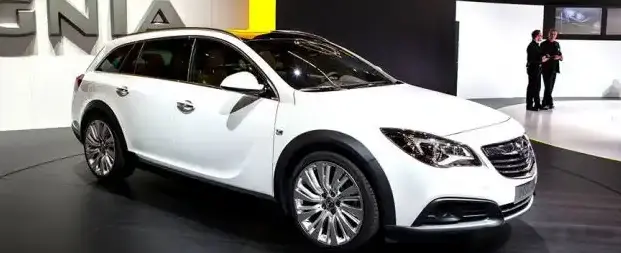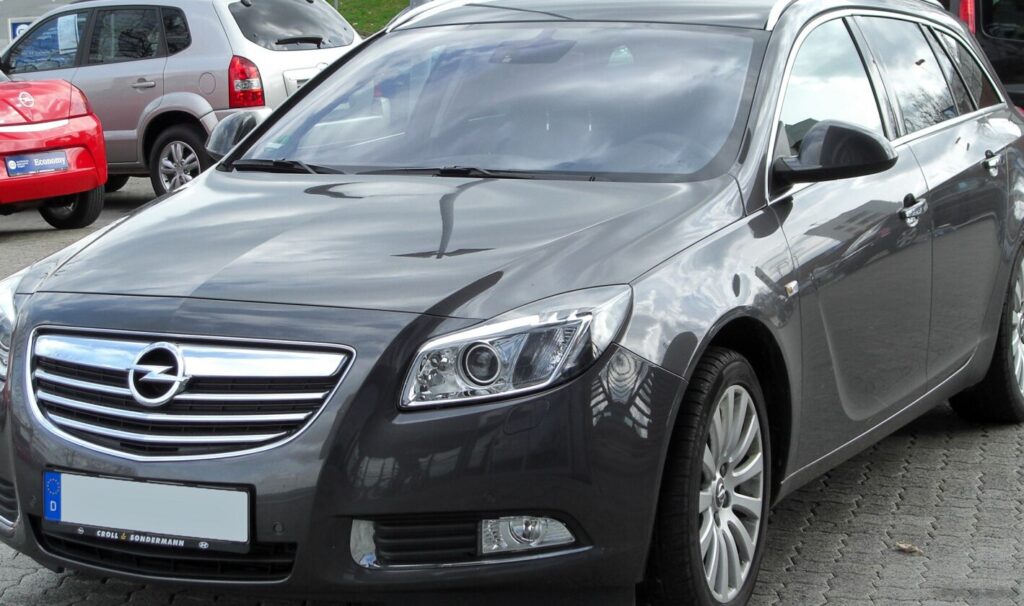
The Opel Insignia Sports Tourer (A) 2.0 CDTI (110 hp) Ecoflex start/stop was a station wagon produced from July 2011 to June 2013. It represented a key variant within the broader Insignia A range (2008-2017), specifically the Sports Tourer – Opel’s designation for its wagon body style. Positioned as an economy-focused option, this model aimed to deliver reasonable performance with enhanced fuel efficiency, appealing to buyers prioritizing practicality and lower running costs. It was built on the GM Delta II platform, also known as the 1HX0/A3 platform, shared with other vehicles like the Chevrolet Malibu and Saab 9-3.
Technical Specifications
| Brand | Opel |
| Model | Insignia |
| Generation | Insignia Sports Tourer (A) |
| Type (Engine) | 2.0 CDTI (110 Hp) Ecoflex start/stop |
| Start of production | July, 2011 |
| End of production | June, 2013 |
| Powertrain Architecture | Internal Combustion engine |
| Body type | Station wagon (estate) |
| Seats | 5 |
| Doors | 5 |
| Fuel consumption (urban) | 5.3 l/100 km (44.4 US mpg, 53.3 UK mpg, 18.9 km/l) |
| Fuel consumption (extra urban) | 4 l/100 km (58.8 US mpg, 70.6 UK mpg, 25 km/l) |
| Fuel consumption (combined) | 4.5 l/100 km (52.3 US mpg, 62.8 UK mpg, 22.2 km/l) |
| CO2 emissions | 119 g/km |
| Fuel Type | Diesel |
| Acceleration 0 – 100 km/h | 12.6 sec |
| Acceleration 0 – 62 mph | 12.6 sec |
| Acceleration 0 – 60 mph | 12 sec |
| Maximum speed | 185 km/h (114.95 mph) |
| Emission standard | Euro 5 |
| Weight-to-power ratio | 14.8 kg/Hp, 67.7 Hp/tonne |
| Weight-to-torque ratio | 6.3 kg/Nm, 159.9 Nm/tonne |
| Power | 110 Hp @ 4000 rpm |
| Power per litre | 56.2 Hp/l |
| Torque | 260 Nm @ 1750-2500 rpm (191.77 lb.-ft. @ 1750-2500 rpm) |
| Engine layout | Front, Transverse |
| Engine Model/Code | A20DTL |
| Engine displacement | 1956 cm3 (119.36 cu. in.) |
| Number of cylinders | 4 |
| Engine configuration | Inline |
| Cylinder Bore | 83 mm (3.27 in.) |
| Piston Stroke | 90.4 mm (3.56 in.) |
| Compression ratio | 16.5:1 |
| Fuel injection system | Diesel Commonrail |
| Engine aspiration | Turbocharger, Intercooler |
| Engine oil capacity | 4.5 l (4.76 US qt | 3.96 UK qt) |
| Coolant | 9 l (9.51 US qt | 7.92 UK qt) |
| Kerb Weight | 1626-1655 kg (3584.72 – 3648.65 lbs.) |
| Max. weight | 2290 kg (5048.59 lbs.) |
| Max load | 635-664 kg (1399.94 – 1463.87 lbs.) |
| Trunk (boot) space – minimum | 540 l (19.07 cu. ft.) |
| Trunk (boot) space – maximum | 1530 l (54.03 cu. ft.) |
| Fuel tank capacity | 70 l (18.49 US gal | 15.4 UK gal) |
| Max. roof load | 100 kg (220.46 lbs.) |
| Permitted trailer load with brakes (8%) | 1800 kg (3968.32 lbs.) |
| Permitted trailer load with brakes (12%) | 1600 kg (3527.4 lbs.) |
| Permitted trailer load without brakes | 750 kg (1653.47 lbs.) |
| Length | 4908 mm (193.23 in.) |
| Width | 1856 mm (73.07 in.) |
| Width including mirrors | 2084 mm (82.05 in.) |
| Height | 1520 mm (59.84 in.) |
| Wheelbase | 2737 mm (107.76 in.) |
| Front track | 1585 mm (62.4 in.) |
| Rear (Back) track | 1587 mm (62.48 in.) |
| Minimum turning circle | 11.9 m (39.04 ft.) |
| Drivetrain Architecture | The Internal combustion engine (ICE) drives the front wheels. |
| Drive wheel | Front wheel drive |
| Number of gears and type of gearbox | 6 gears, manual transmission |
| Front brakes | Ventilated discs |
| Assisting systems | ABS (Anti-lock braking system) |
| Steering type | Steering rack and pinion |
| Power steering | Electric Steering |
| Tires size | 215/60 R16 |
| Wheel rims size | 6.5J x 16 |
Powertrain & Engine Architecture
The heart of this Insignia variant is the A20DTL 2.0-liter four-cylinder diesel engine. This engine belongs to the GM/Opel family of common rail direct injection diesels. The A20DTL utilizes a turbocharger with an intercooler to boost power and efficiency. The common rail direct injection system, operating at very high pressures, ensures precise fuel delivery and optimized combustion. The engine features a 16.5:1 compression ratio, typical for diesel engines, and utilizes a single overhead camshaft (SOHC) valvetrain. The 110 horsepower and 260 Nm (192 lb-ft) of torque are delivered between 1750 and 2500 rpm, providing a usable powerband for everyday driving. The engine is paired with a six-speed manual transmission, chosen for its efficiency and cost-effectiveness. The Ecoflex designation indicates the inclusion of start/stop technology, which automatically shuts off the engine when the vehicle is stationary to reduce fuel consumption and emissions.
Driving Characteristics
The 110 hp 2.0 CDTI with a manual transmission in the Insignia Sports Tourer delivers adequate, but not exhilarating, performance. Acceleration from 0-62 mph takes around 12.6 seconds, and the top speed is 185 km/h (115 mph). The focus is on fuel economy rather than outright speed. The engine provides sufficient torque for comfortable cruising and overtaking, but requires downshifts for quicker acceleration. Compared to the more powerful 160 hp or 195 hp versions of the 2.0 CDTI, this variant feels noticeably slower. The six-speed manual transmission is well-matched to the engine’s characteristics, offering smooth gear changes and a reasonable spread of ratios. The gear ratios are tuned for economy, with a taller final drive contributing to lower fuel consumption at highway speeds. The suspension is tuned for comfort, providing a relatively smooth ride, although it may feel slightly less composed in corners compared to sportier Insignia models.
Equipment & Trim Levels
The 2.0 CDTI (110 hp) Ecoflex typically represented an entry-level or mid-range trim within the Insignia Sports Tourer lineup. Standard equipment generally included air conditioning, electric front windows, a CD/radio system, and basic safety features like ABS, ESP (Electronic Stability Program), and multiple airbags. Interior upholstery was typically cloth, and the dashboard featured a functional, if not luxurious, design. Optional extras available for this trim level included alloy wheels, a more advanced infotainment system with navigation, parking sensors, and heated seats. The specific trim level (e.g., Expression, Edition, Sport) determined the exact level of standard equipment.
Chassis & Braking
The Insignia Sports Tourer’s chassis features a MacPherson strut front suspension and a multi-link rear suspension. The suspension setup is designed to provide a balance between comfort and handling. Braking duties are handled by ventilated front discs and solid rear discs. ABS (Anti-lock Braking System) and ESP (Electronic Stability Program) are standard features, enhancing safety and stability. The steering is electric power-assisted, providing a light and responsive feel. Stabilizer bars are fitted to both the front and rear axles to reduce body roll during cornering. The weight distribution is fairly balanced, contributing to predictable handling characteristics.
Market Reception & Comparison
The 1.8 CDTI (110 hp) Ecoflex start/stop variant of the Insignia Sports Tourer was generally well-received by critics as a practical and economical option. Its fuel economy of around 52.3 US mpg combined was a major selling point. However, some reviewers noted that the engine lacked the punch of the more powerful alternatives. Compared to the 160 hp or 195 hp versions, this variant offered lower performance but significantly better fuel economy and a lower purchase price. Reliability was generally considered good, although, like all diesel engines, it was susceptible to issues with the diesel particulate filter (DPF) if not driven on longer journeys regularly.
Legacy
The Opel Insignia Sports Tourer 2.0 CDTI (110 hp) Ecoflex start/stop remains a relatively common sight on the used car market. The A20DTL engine is known for its durability, provided it has been properly maintained. Regular servicing, including oil changes and DPF regeneration, is crucial for long-term reliability. The combination of practicality, fuel efficiency, and reasonable running costs makes it an attractive option for buyers seeking an affordable and economical station wagon. While not a performance car, it provides a comfortable and reliable driving experience for everyday use.