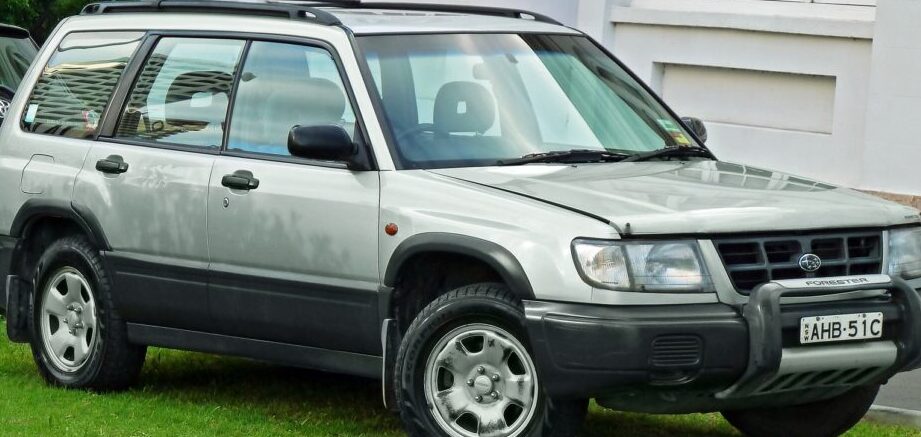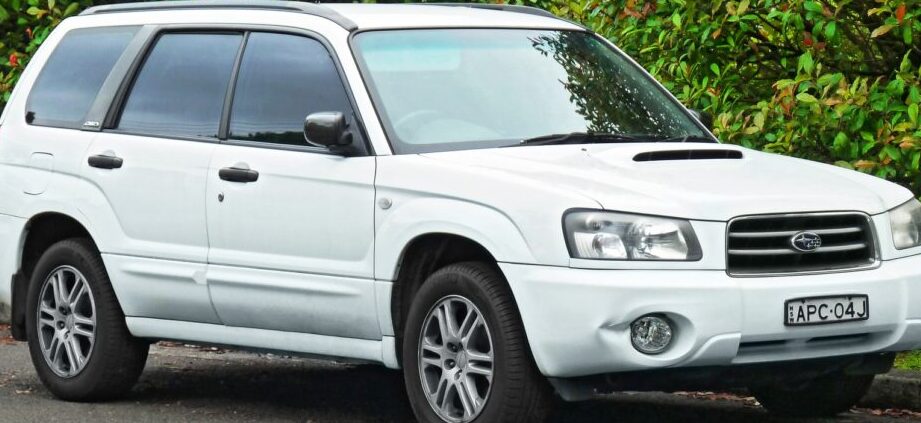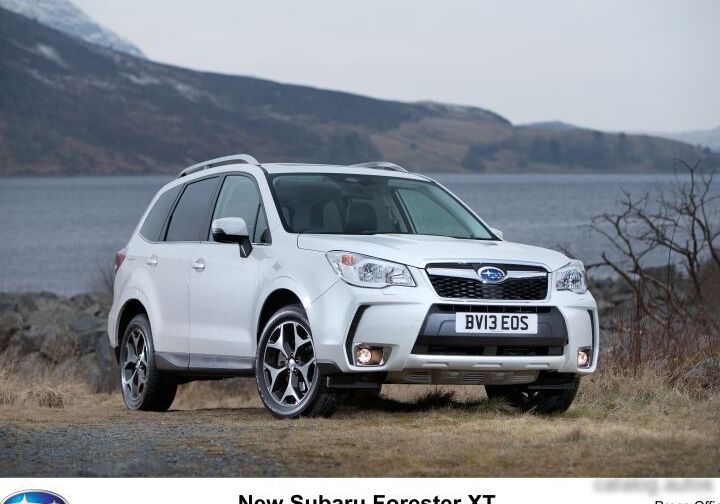
The Subaru Forester IV (facelift, introduced in 2016) Trend 2.0i, producing 150 horsepower, represents a significant iteration of Subaru’s popular compact SUV. Produced from 2016 through 2018, this variant occupied a middle ground within the Forester IV lineup, offering a balance between affordability, fuel efficiency, and Subaru’s renowned symmetrical all-wheel drive system. It was primarily marketed towards families and individuals seeking a practical and reliable vehicle with all-weather capability. This model year saw a refresh of the fourth-generation Forester (SJ platform), incorporating styling updates and minor technological improvements.
Technical Specifications
| Brand | Subaru |
| Model | Forester |
| Generation | Forester IV (facelift 2016) |
| Type (Engine) | Trend 2.0i (150 Hp) AWD |
| Start of production | 2016 |
| End of production | 2018 |
| Powertrain Architecture | Internal Combustion engine |
| Body type | SUV, Crossover |
| Seats | 5 |
| Doors | 5 |
| Fuel consumption (urban) | 8.5 l/100 km (27.7 US mpg, 33.2 UK mpg, 11.8 km/l) |
| Fuel consumption (extra urban) | 6 l/100 km (39.2 US mpg, 47.1 UK mpg, 16.7 km/l) |
| Fuel consumption (combined) | 6.9 l/100 km (34.1 US mpg, 40.9 UK mpg, 14.5 km/l) |
| CO2 emissions | 160 g/km |
| Fuel Type | Petrol (Gasoline) |
| Acceleration 0 – 100 km/h | 10.6 sec |
| Acceleration 0 – 62 mph | 10.6 sec |
| Acceleration 0 – 60 mph | 10.1 sec |
| Maximum speed | 190 km/h (118.06 mph) |
| Emission standard | Euro 6 |
| Weight-to-power ratio | 10 kg/Hp, 100.4 Hp/tonne |
| Weight-to-torque ratio | 7.5 kg/Nm, 132.5 Nm/tonne |
| Power | 150 Hp @ 6200 rpm |
| Power per litre | 75.2 Hp/l |
| Torque | 198 Nm @ 4200 rpm (146.04 lb.-ft. @ 4200 rpm) |
| Engine layout | Front, Longitudinal |
| Engine Model/Code | FB20 |
| Engine displacement | 1995 cm3 (121.74 cu. in.) |
| Number of cylinders | 4 |
| Engine configuration | Boxer |
| Cylinder Bore | 84 mm (3.31 in.) |
| Piston Stroke | 90 mm (3.54 in.) |
| Compression ratio | 10.5:1 |
| Number of valves per cylinder | 4 |
| Fuel injection system | Multi-port manifold injection |
| Engine aspiration | Naturally aspirated engine |
| Valvetrain | DOHC |
| Engine oil capacity | 4.8 l (5.07 US qt | 4.22 UK qt) |
| Kerb Weight | 1494 kg (3293.71 lbs.) |
| Max. weight | 2015 kg (4442.31 lbs.) |
| Max load | 521 kg (1148.61 lbs.) |
| Trunk (boot) space – minimum | 505 l (17.83 cu. ft.) |
| Trunk (boot) space – maximum | 1564 l (55.23 cu. ft.) |
| Fuel tank capacity | 60 l (15.85 US gal | 13.2 UK gal) |
| Max. roof load | 80 kg (176.37 lbs.) |
| Permitted trailer load with brakes (12%) | 1800 kg (3968.32 lbs.) |
| Permitted trailer load without brakes | 750 kg (1653.47 lbs.) |
| Length | 4610 mm (181.5 in.) |
| Width | 1795 mm (70.67 in.) |
| Height | 1715 mm (67.52 in.) |
| Wheelbase | 2640 mm (103.94 in.) |
| Front track | 1545 mm (60.83 in.) |
| Rear (Back) track | 1555 mm (61.22 in.) |
| Ride height (ground clearance) | 220 mm (8.66 in.) |
| Minimum turning circle (turning diameter) | 11.4 m (37.4 ft.) |
| Approach angle | 23° |
| Departure angle | 25° |
| Ramp-over (brakeover) angle | 23° |
| Drive wheel | All wheel drive (4×4) |
| Number of gears and type of gearbox | 6 gears, manual transmission |
| Front suspension | Independent type McPherson |
| Rear suspension | Double wishbone |
| Front brakes | Ventilated discs |
| Rear brakes | Disc |
| Assisting systems | ABS (Anti-lock braking system) |
| Steering type | Steering rack and pinion |
| Tires size | 225/60 R17 |
| Wheel rims size | 7J x 17 |
Powertrain & Engine Architecture
The heart of the 2016-2018 Forester Trend 2.0i is the FB20 2.0-liter naturally aspirated boxer engine. This engine is a hallmark of Subaru engineering, known for its low center of gravity which contributes to the vehicle’s balanced handling. The FB20 utilizes multi-point fuel injection and a double overhead camshaft (DOHC) valvetrain. The boxer configuration, with horizontally opposed pistons, minimizes vibrations and enhances smoothness. The engine produces 150 horsepower at 6,200 rpm and 198 Nm (146 lb-ft) of torque at 4,200 rpm. This power is delivered to all four wheels via a six-speed manual transmission. The symmetrical all-wheel drive system is a key feature, providing enhanced traction and stability in various driving conditions. The FB20 engine is known for its relatively simple design, contributing to its overall reliability.
Driving Characteristics
The 150 hp 2.0i Forester offers adequate, but not exhilarating, performance. Acceleration from 0-60 mph takes around 10.1 seconds, making it suitable for everyday commuting and highway driving. The manual transmission provides a more engaging driving experience compared to the optional continuously variable transmission (CVT) offered on other Forester trims. The gear ratios are tuned for fuel efficiency and usability, rather than outright speed. The symmetrical all-wheel drive system provides confident handling in inclement weather, and the low center of gravity contributes to a stable and predictable feel. Compared to the more powerful 2.5-liter engine available in higher trims, the 2.0i feels less responsive, particularly when fully loaded or climbing hills. However, the lighter engine weight contributes to slightly improved fuel economy.
Equipment & Trim Levels
The Trend trim level, positioned as a mid-range offering, included standard features such as air conditioning, power windows and locks, a basic audio system with Bluetooth connectivity, and Subaru’s EyeSight driver assist technology (depending on market). Interior upholstery was typically cloth, and the dashboard featured a functional, if somewhat utilitarian, design. Optional extras included a sunroof, upgraded audio system, leather upholstery, and navigation system. The Trend trim aimed to provide a good balance of features and value, appealing to buyers who didn’t require the luxury appointments of the higher-spec trims.
Chassis & Braking
The Forester IV utilizes a McPherson strut front suspension and a double-wishbone rear suspension, providing a comfortable ride and predictable handling. The front brakes are ventilated discs, while the rear brakes are solid discs. Anti-lock braking system (ABS) is standard. The suspension is tuned for a balance between comfort and handling, prioritizing ride quality over sporty responsiveness. The relatively high ground clearance (220 mm / 8.66 inches) enhances off-road capability, allowing the Forester to tackle moderate trails and unpaved roads. The vehicle’s weight of approximately 1494 kg (3294 lbs) influences its handling characteristics, requiring a slightly more deliberate steering input compared to lighter vehicles.
Market Reception & Comparison
The 2016-2018 Subaru Forester Trend 2.0i was generally well-received by automotive critics. It was praised for its practicality, safety features, and all-weather capability. However, some reviewers noted that the 2.0-liter engine felt underpowered, particularly when compared to the 2.5-liter option. Fuel economy was considered respectable, averaging around 34.1 US mpg in combined driving. Compared to competitors like the Honda CR-V and Toyota RAV4, the Forester offered a unique combination of standard all-wheel drive and a spacious interior. The manual transmission was appreciated by driving enthusiasts, but the CVT was more popular among buyers seeking convenience.
Legacy
The FB20 engine, in general, has proven to be a reliable powerplant, with relatively few major issues reported. The 2016-2018 Forester Trend 2.0i continues to be a popular choice in the used car market, offering a good value proposition for buyers seeking a practical and dependable SUV. Regular maintenance, including oil changes and timing belt replacements (as per Subaru’s recommended schedule), is crucial for ensuring long-term reliability. The Forester’s reputation for safety and durability has contributed to its strong resale value. While not the fastest or most luxurious SUV in its class, the 2016-2018 Forester Trend 2.0i remains a capable and well-rounded vehicle.