
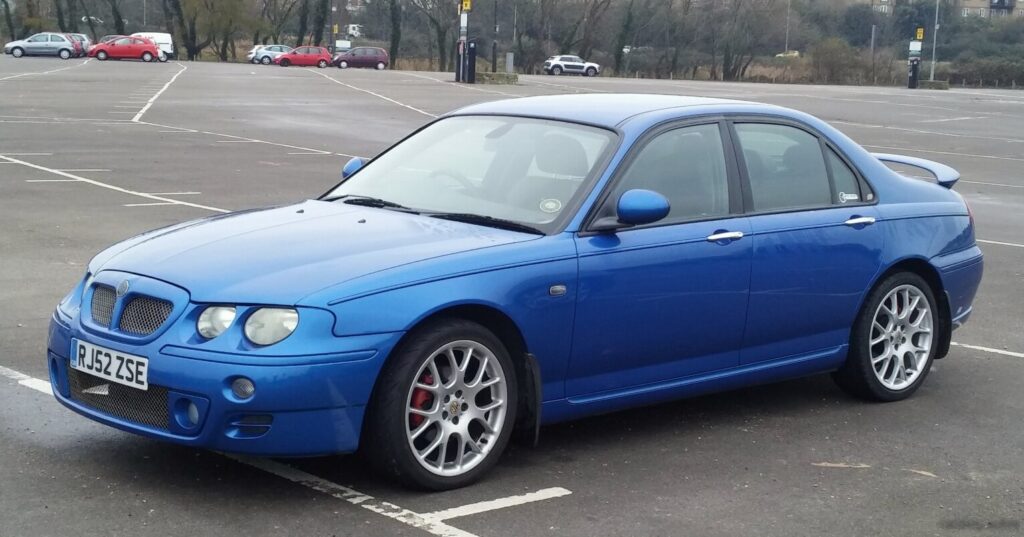
The MG ZT 2.0 CDTi Automatic, produced between 2003 and 2005, represented a significant offering in the British marque’s attempt to recapture a foothold in the executive car segment. Positioned as a more affordable and practical alternative to larger, more prestigious rivals, the ZT was based on the Rover 75 platform (internally designated X20), itself a derivative of the Honda Accord. The 2.0 CDTi Automatic variant occupied a mid-range position within the ZT lineup, offering a balance between performance, fuel economy, and equipment levels. It aimed to appeal to buyers seeking a comfortable and well-equipped saloon with the efficiency of a modern diesel engine and the convenience of an automatic transmission.
Technical Specifications
| Brand | MG |
| Model | ZT |
| Generation | ZT |
| Type (Engine) | 2.0 CDTi (116 Hp) Automatic |
| Start of production | 2003 |
| End of production | 2005 |
| Powertrain Architecture | Internal Combustion engine |
| Body type | Sedan |
| Seats | 5 |
| Doors | 4 |
| Fuel consumption (urban) | 10 l/100 km (23.5 US mpg) |
| Fuel consumption (extra urban) | 5.2 l/100 km (45.2 US mpg) |
| Fuel consumption (combined) | 6.9 l/100 km (34.1 US mpg) |
| Fuel Type | Diesel |
| Acceleration 0 – 100 km/h | 13.2 sec |
| Acceleration 0 – 62 mph | 13.2 sec |
| Acceleration 0 – 60 mph | 12.5 sec |
| Maximum speed | 180 km/h (111.85 mph) |
| Weight-to-power ratio | 13.2 kg/Hp |
| Weight-to-torque ratio | 5.9 kg/Nm |
| Power | 116 Hp @ 4000 rpm |
| Power per litre | 59.5 Hp/l |
| Torque | 260 Nm @ 2000 rpm (191.77 lb.-ft. @ 2000 rpm) |
| Engine layout | Front, Transverse |
| Engine Model/Code | M47R / 204D2 |
| Engine displacement | 1951 cm3 (119.06 cu. in.) |
| Number of cylinders | 4 |
| Engine configuration | Inline |
| Cylinder Bore | 84 mm (3.31 in.) |
| Piston Stroke | 88 mm (3.46 in.) |
| Compression ratio | 18:1 |
| Number of valves per cylinder | 4 |
| Fuel injection system | Diesel Commonrail |
| Engine aspiration | Turbocharger, Intercooler |
| Engine oil capacity | 6.8 l (7.19 US qt | 5.98 UK qt) |
| Coolant | 8.2 l (8.66 US qt | 7.21 UK qt) |
| Kerb Weight | 1535 kg (3384.1 lbs.) |
| Max. weight | 2030 kg (4475.38 lbs.) |
| Max load | 495 kg (1091.29 lbs.) |
| Trunk (boot) space – minimum | 432 l (15.26 cu. ft.) |
| Fuel tank capacity | 65 l (17.17 US gal | 14.3 UK gal) |
| Length | 4740 mm (186.61 in.) |
| Width | 1780 mm (70.08 in.) |
| Height | 1410 mm (55.51 in.) |
| Wheelbase | 2746 mm (108.11 in.) |
| Front track | 1505 mm (59.25 in.) |
| Rear (Back) track | 1505 mm (59.25 in.) |
| Drivetrain Architecture | Front wheel drive |
| Drive wheel | Front wheel drive |
| Number of gears and type of gearbox | 5 gears, automatic transmission |
| Front suspension | Spring Strut |
| Rear suspension | Coil spring |
| Front brakes | Ventilated discs |
| Rear brakes | Disc |
| Assisting systems | ABS (Anti-lock braking system) |
| Steering type | Steering rack and pinion |
| Power steering | Hydraulic Steering |
| Tires size | 225/45 R18 |
| Wheel rims size | 18 |
Powertrain & Engine Architecture
The heart of the ZT 2.0 CDTi Automatic is the M47R 204D2 engine, a 1.951-liter inline-four cylinder diesel. This engine was sourced from BMW, a result of the collaboration between BMW and Rover during the late 1990s. It features a common rail direct injection system, delivering fuel at extremely high pressure for improved combustion efficiency and reduced emissions. A turbocharger with an intercooler further enhances performance, boosting power output to 116 horsepower at 4000 rpm and 260 Nm (191.77 lb-ft) of torque at 2000 rpm. The engine utilizes four valves per cylinder and a compression ratio of 18:1. The automatic transmission is a Jatco unit, a five-speed torque converter automatic, chosen for its smoothness and reliability. While not known for particularly rapid shifts, it provided a comfortable driving experience suited to the ZT’s grand touring aspirations.
Driving Characteristics
The 2.0 CDTi Automatic offered a relaxed and refined driving experience. Acceleration from 0-60 mph took around 12.5 to 13.2 seconds, making it noticeably slower than the higher-powered ZT 1.8T or V6 models. However, the engine’s strong low-end torque made it perfectly adequate for everyday driving and overtaking maneuvers. The automatic transmission, while smooth, could feel somewhat hesitant at times, particularly when attempting quick downshifts. The gear ratios were geared towards fuel efficiency rather than outright performance. Compared to the manual version of the 2.0 CDTi, the automatic sacrificed some responsiveness, but gained in ease of use, especially in urban traffic. The front-wheel-drive configuration provided predictable handling, although it lacked the dynamic sharpness of rear-wheel-drive alternatives.
Equipment & Trim Levels
The ZT 2.0 CDTi Automatic typically came equipped with a reasonable level of standard features. This included air conditioning, electric front windows, central locking, an RDS stereo, and alloy wheels. Higher trim levels, such as the SE, offered additional features like leather upholstery, climate control, and upgraded audio systems. Optional extras included a sunroof, parking sensors, and heated front seats. Interior upholstery was generally cloth on the base models, with leather available as an upgrade. The dashboard layout was functional and well-built, reflecting the Rover 75’s origins, with a focus on ergonomics and ease of use.
Chassis & Braking
The ZT’s chassis utilized a MacPherson strut front suspension and a coil spring rear suspension. The suspension setup was tuned for comfort, providing a relatively smooth ride, although it could feel somewhat soft in the corners. Front brakes were ventilated discs, while rear brakes were solid discs. Anti-lock Braking System (ABS) was standard. The ZT 2.0 CDTi, being a mid-range model, typically featured a smaller stabilizer bar compared to the more performance-oriented variants. The steering was hydraulic power-assisted rack and pinion, offering a reasonable level of feel and precision.
Market Reception & Comparison
The MG ZT 2.0 CDTi Automatic received mixed reviews from automotive critics. While praised for its comfortable ride, spacious interior, and fuel efficiency, it was often criticized for its relatively slow acceleration and somewhat uninspiring handling. Compared to rivals like the Ford Mondeo and Vauxhall Vectra, the ZT offered a more premium feel but lacked the dynamic prowess of some competitors. The 2.0 CDTi Automatic offered better fuel economy than the petrol-powered ZT 1.8T, but the latter provided significantly more performance. Reliability was generally considered average, with some owners reporting issues with the BMW-sourced engine components and the automatic transmission.
Legacy
The MG ZT, and particularly the 2.0 CDTi Automatic variant, has developed a modest following among enthusiasts. The BMW-derived engine is generally considered robust, although regular maintenance is crucial. Parts availability can be a challenge, as MG Rover went into administration in 2005. Today, well-maintained examples of the ZT 2.0 CDTi Automatic can be found on the used car market at relatively affordable prices. They appeal to buyers seeking a comfortable, spacious, and reasonably economical saloon with a touch of British character. While not a performance icon, the ZT 2.0 CDTi Automatic represents a unique and interesting chapter in MG’s history, showcasing the brand’s attempt to compete in the modern executive car market.
