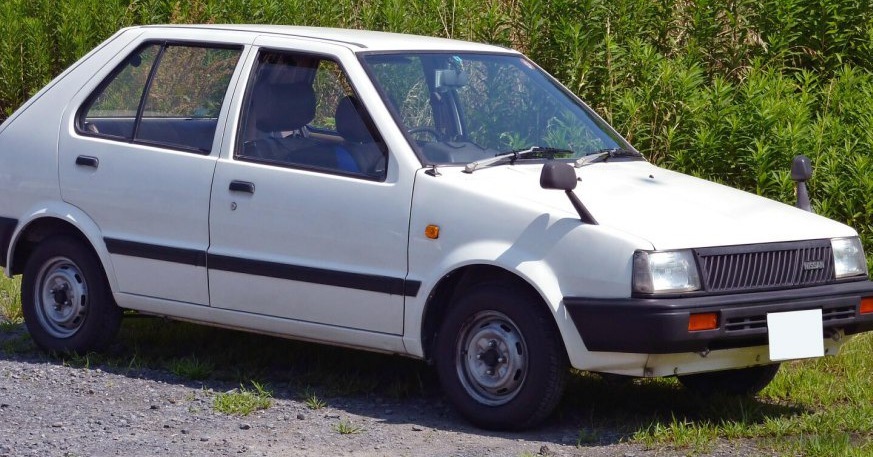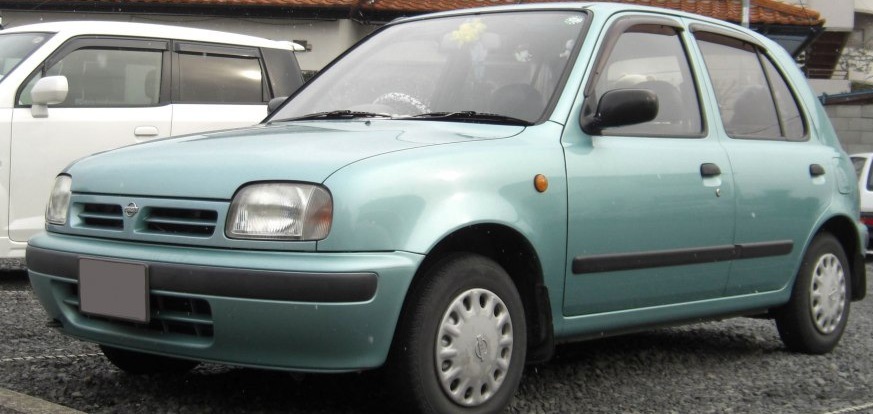
The Nissan March, known as the Micra in many markets, is a supermini car produced by the Japanese automaker Nissan. The K11 series, manufactured from 1992 to 2002, represented a significant step forward in design and practicality for Nissan’s entry-level offering. The 1.5 D variant, introduced in 1998 and continuing through 2002, was a diesel-powered version primarily aimed at European markets where fuel economy and low running costs were highly valued. This model offered a more economical alternative to the gasoline-powered versions, though with a noticeable trade-off in performance. It occupied the lower end of the K11 lineup, positioned as the most affordable option for buyers prioritizing efficiency over outright speed.
Technical Specifications
| Brand | Nissan |
| Model | March |
| Generation | March (K11) |
| Type (Engine) | 1.5 D (57 Hp) |
| Start of production | 1998 |
| End of production | 2002 |
| Powertrain Architecture | Internal Combustion engine |
| Body type | Hatchback |
| Seats | 5 |
| Doors | 3/5 |
| Fuel consumption (urban) | 6.4 l/100 km (36.8 US mpg, 44.1 UK mpg, 15.6 km/l) |
| Fuel consumption (extra urban) | 4.2 l/100 km (56 US mpg, 67.3 UK mpg, 23.8 km/l) |
| Fuel Type | Diesel |
| Acceleration 0 – 100 km/h | 18 sec |
| Acceleration 0 – 62 mph | 18 sec |
| Acceleration 0 – 60 mph | 17.1 sec |
| Maximum speed | 146 km/h (90.72 mph) |
| Weight-to-power ratio | 15.8 kg/Hp, 63.3 Hp/tonne |
| Weight-to-torque ratio | 9.5 kg/Nm, 105.6 Nm/tonne |
| Power | 57 Hp @ 5000 rpm |
| Power per litre | 37.3 Hp/l |
| Torque | 95 Nm @ 2250 rpm (70.07 lb.-ft. @ 2250 rpm) |
| Engine layout | Front, Transverse |
| Engine displacement | 1527 cm3 (93.18 cu. in.) |
| Number of cylinders | 4 |
| Engine configuration | Inline |
| Cylinder Bore | 77 mm (3.03 in.) |
| Piston Stroke | 82 mm (3.23 in.) |
| Compression ratio | 23:1 |
| Number of valves per cylinder | 2 |
| Fuel injection system | Precombustion chamber injection |
| Engine aspiration | Naturally aspirated engine |
| Valvetrain | OHC |
| Kerb Weight | 900 kg (1984.16 lbs.) |
| Max. weight | 1390 kg (3064.43 lbs.) |
| Max load | 490 kg (1080.27 lbs.) |
| Trunk (boot) space – minimum | 206 l (7.27 cu. ft.) |
| Trunk (boot) space – maximum | 960 l (33.9 cu. ft.) |
| Fuel tank capacity | 42 l (11.1 US gal | 9.24 UK gal) |
| Length | 3695 mm (145.47 in.) |
| Width | 1585 mm (62.4 in.) |
| Height | 1430 mm (56.3 in.) |
| Wheelbase | 2360 mm (92.91 in.) |
| Front track | 1360 mm (53.54 in.) |
| Rear (Back) track | 1325 mm (52.17 in.) |
| Drivetrain Architecture | The Internal combustion engine (ICE) drives the front wheels of the vehicle. |
| Drive wheel | Front wheel drive |
| Number of gears and type of gearbox | 5 gears, manual transmission |
| Front suspension | Wishbone |
| Rear suspension | Spring Strut |
| Front brakes | Disc |
| Rear brakes | Drum |
| Steering type | Steering rack and pinion |
| Power steering | Hydraulic Steering |
| Tires size | 165/60R13 |
Powertrain & Engine Architecture
The heart of the K11 1.5 D is a 1.5-liter inline-four diesel engine. This engine, often identified by internal codes depending on the specific market, utilized a precombustion chamber injection system. This system, common in older diesel engines, involves injecting fuel into a small pre-chamber within the cylinder head, where it partially combusts before igniting the main charge. This design aids in smoother combustion and reduced engine noise compared to direct injection systems of the time. The engine produced 57 horsepower at 5000 rpm and 95 Nm (70 lb-ft) of torque at 2250 rpm. The engine featured an overhead camshaft (OHC) valvetrain with two valves per cylinder. The engine was paired with a five-speed manual transmission, as an automatic transmission was not offered with this engine configuration. The transverse engine layout contributed to maximizing interior space within the compact March chassis.
Driving Characteristics
The 1.5 D variant of the K11 March offered a distinctly different driving experience compared to its gasoline-powered siblings. While the gasoline engines prioritized responsiveness, the diesel focused on fuel efficiency. Acceleration was leisurely, taking approximately 18 seconds to reach 62 mph (100 km/h). The engine’s torque peak at 2250 rpm provided adequate pulling power for everyday driving, but overtaking maneuvers required careful planning. The five-speed manual transmission allowed drivers to keep the engine within its optimal operating range, but the lack of an automatic option meant a more involved driving experience. The gear ratios were tuned for economy, resulting in a relatively high final drive ratio. Compared to the more powerful gasoline versions, the 1.5 D felt noticeably slower, but its fuel economy was a significant advantage.
Equipment & Trim Levels
The 1.5 D trim level of the K11 March was generally considered the base model, focusing on providing essential transportation at a low cost. Standard equipment typically included power steering, central locking, and basic instrumentation. Interior upholstery was typically a durable cloth material. Optional extras, depending on the market, could include air conditioning, electric windows, and a radio/cassette player. The dashboard layout was functional and straightforward, prioritizing ease of use over aesthetic flair. The 3 or 5-door body style was available, offering varying levels of practicality. The overall interior ambiance was simple and utilitarian, reflecting the car’s budget-oriented positioning.
Chassis & Braking
The K11 March utilized a front-wheel-drive layout with a relatively simple suspension setup. The front suspension employed a wishbone configuration, while the rear suspension featured a spring strut design. This setup provided a comfortable ride quality, although it wasn’t particularly sporty. The braking system consisted of disc brakes on the front wheels and drum brakes on the rear wheels. This configuration was typical for cars in this price range during the late 1990s and early 2000s. The steering was rack and pinion, providing reasonably precise control. The relatively lightweight construction of the K11 helped to offset the modest power output of the 1.5 D engine.
Market Reception & Comparison
The Nissan March 1.5 D was well-received in European markets as an affordable and economical city car. Critics praised its fuel efficiency and low running costs, but noted its lack of performance. Compared to the gasoline-powered versions, the 1.5 D offered significantly better fuel economy, but at the expense of acceleration and refinement. It competed with other superminis such as the Peugeot 206, Renault Clio, and Ford Fiesta, often undercutting them in price. The diesel engine’s longevity and reliability were also positive points, making it an attractive option for buyers seeking a dependable and cost-effective vehicle.
Legacy
The K11 Nissan March 1.5 D has developed a reputation for being a reliable and durable vehicle. The diesel engine, while not particularly powerful, is known for its longevity if properly maintained. Today, these cars are relatively rare, but those that remain are often sought after by enthusiasts looking for a simple and economical classic. Parts availability can be a challenge, but many components are still available through specialist suppliers. The K11 March 1.5 D represents a practical and affordable option for those seeking a basic, no-frills city car with a focus on fuel efficiency and reliability.