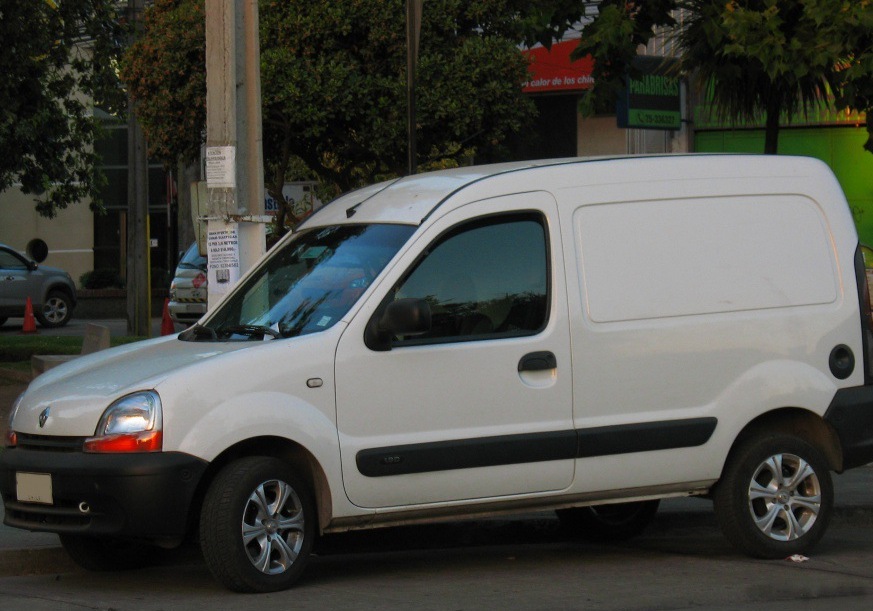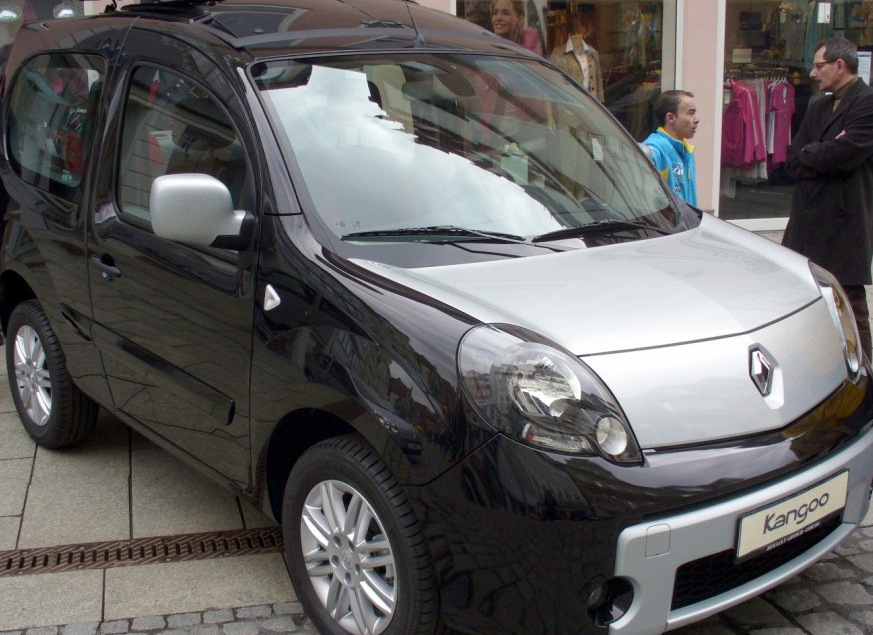
The Renault Kangoo Be Bop 1.5 dCi, producing 103 horsepower, was a short-wheelbase, three-door variant of the second-generation Renault Kangoo, manufactured between 2009 and 2010. Positioned as a more lifestyle-oriented and youthful version of the standard Kangoo, the Be Bop aimed to appeal to buyers seeking a compact, practical, and somewhat quirky vehicle. It was primarily sold in European markets, offering a blend of van-like utility with a more car-like driving experience. This particular engine and configuration represented a mid-range offering within the Be Bop lineup, balancing fuel efficiency with adequate performance for everyday use.
Technical Specifications
| Brand | Renault |
| Model | Kangoo |
| Generation | Kangoo Be Bop |
| Type (Engine) | 1.5 dCi (103 Hp) |
| Start of production | 2009 |
| End of production | 2010 |
| Powertrain Architecture | Internal Combustion engine |
| Body type | Hatchback |
| Seats | 4 |
| Doors | 3 |
| Fuel consumption (urban) | 6.4 l/100 km (36.8 US mpg, 44.1 UK mpg, 15.6 km/l) |
| Fuel consumption (extra urban) | 5.3 l/100 km (44.4 US mpg, 53.3 UK mpg, 18.9 km/l) |
| Fuel consumption (combined) | 5.7 l/100 km (41.3 US mpg, 49.6 UK mpg, 17.5 km/l) |
| CO2 emissions | 151 g/km |
| Fuel Type | Diesel |
| Acceleration 0 – 100 km/h | 12.6 sec |
| Acceleration 0 – 62 mph | 12.6 sec |
| Acceleration 0 – 60 mph | 12 sec |
| Maximum speed | 169 km/h (105.01 mph) |
| Emission standard | Euro 4 |
| Weight-to-power ratio | 14.4 kg/Hp, 69.3 Hp/tonne |
| Weight-to-torque ratio | 6.2 kg/Nm, 161.5 Nm/tonne |
| Power | 103 Hp @ 4000 rpm |
| Power per litre | 70.5 Hp/l |
| Torque | 240 Nm @ 2000 rpm (177.01 lb.-ft. @ 2000 rpm) |
| Engine layout | Front, Transverse |
| Engine Model/Code | K9K |
| Engine displacement | 1461 cm3 (89.16 cu. in.) |
| Number of cylinders | 4 |
| Engine configuration | Inline |
| Cylinder Bore | 76 mm (2.99 in.) |
| Piston Stroke | 80.5 mm (3.17 in.) |
| Compression ratio | 15.6:1 |
| Number of valves per cylinder | 2 |
| Fuel injection system | Diesel Commonrail |
| Engine aspiration | Turbocharger, Intercooler |
| Engine oil capacity | 4.5 l (4.76 US qt | 3.96 UK qt) |
| Coolant | 7.2 l (7.61 US qt | 6.34 UK qt) |
| Kerb Weight | 1486 kg (3276.07 lbs.) |
| Max. weight | 1888 kg (4162.33 lbs.) |
| Max load | 402 kg (886.26 lbs.) |
| Trunk (boot) space – minimum | 214 l (7.56 cu. ft.) |
| Trunk (boot) space – maximum | 1462 l (51.63 cu. ft.) |
| Fuel tank capacity | 60 l (15.85 US gal | 13.2 UK gal) |
| Permitted trailer load with brakes (12%) | 1050 kg (2314.85 lbs.) |
| Permitted trailer load without brakes | 697 kg (1536.62 lbs.) |
| Permitted towbar download | 75 kg (165.35 lbs.) |
| Length | 3871 mm (152.4 in.) |
| Width including mirrors | 2133 mm (83.98 in.) |
| Height | 1847 mm (72.72 in.) |
| Wheelbase | 2313 mm (91.06 in.) |
| Front track | 1519 mm (59.8 in.) |
| Rear (Back) track | 1533 mm (60.35 in.) |
| Front overhang | 826 mm (32.52 in.) |
| Rear overhang | 732 mm (28.82 in.) |
| Ride height (ground clearance) | 215 mm (8.46 in.) |
| Minimum turning circle (turning diameter) | 9.6 m (31.5 ft.) |
| Drivetrain Architecture | The Internal combustion engine (ICE) drives the front wheels of the vehicle. |
| Drive wheel | Front wheel drive |
| Number of gears and type of gearbox | 6 gears, manual transmission |
| Front suspension | Independent coil spring |
| Front brakes | Ventilated discs |
| Rear brakes | Disc |
| Steering type | Steering rack and pinion |
| Tires size | 205/60 R16 |
| Wheel rims size | 16 |
Powertrain & Engine Architecture
The Renault Kangoo Be Bop 1.5 dCi was powered by the K9K engine, a member of Renault’s widely used family of small-displacement diesel engines. This 1461cc, inline-four cylinder engine featured a turbocharger with an intercooler, boosting power output to 103 horsepower at 4000 rpm and 240 Nm (177 lb-ft) of torque at 2000 rpm. The engine employed a diesel commonrail direct injection system, contributing to improved fuel efficiency and reduced emissions. The K9K engine is known for its relatively simple design and robust construction. The Be Bop utilized a 6-speed manual transmission, chosen for its balance of fuel economy and drivability. While an automated manual transmission was available on some Kangoo models, it wasn’t typically paired with this specific engine and trim level.
Driving Characteristics
The 1.5 dCi engine in the Kangoo Be Bop provided adequate, though not exhilarating, performance. Acceleration from 0 to 100 km/h (0-62 mph) took around 12.6 seconds, and the top speed was approximately 169 km/h (105 mph). The engine’s torque peak at 2000 rpm meant that it felt reasonably responsive in everyday driving situations, particularly for overtaking and navigating urban traffic. Compared to higher-output versions of the Kangoo, such as those with the 1.6 petrol engine, the 1.5 dCi offered significantly better fuel economy but lacked the same level of outright performance. The 6-speed manual transmission allowed drivers to keep the engine in its optimal power band, maximizing efficiency and responsiveness. The gear ratios were well-suited for both city and highway driving.
Equipment & Trim Levels
The Kangoo Be Bop 1.5 dCi typically came equipped with a reasonable level of standard features. These included power steering, central locking, electric front windows, and an audio system with CD player. Safety features included ABS brakes, driver and passenger airbags, and seatbelt pretensioners. The interior featured durable cloth upholstery and a functional dashboard layout. Optional extras included air conditioning, alloy wheels, and a panoramic sunroof. The Be Bop trim generally offered a more stylish and youthful interior compared to the base Kangoo models, with unique seat fabrics and dashboard trim.
Chassis & Braking
The Kangoo Be Bop utilized a front-wheel-drive layout with an independent coil spring suspension at the front and a twist beam suspension at the rear. The front brakes were ventilated discs, providing good stopping power, while the rear brakes were discs. The suspension setup was tuned for comfort and practicality, offering a reasonably smooth ride on most road surfaces. The steering was a rack and pinion system, providing precise and responsive handling. The vehicle’s relatively short wheelbase contributed to its maneuverability in tight spaces.
Market Reception & Comparison
The Renault Kangoo Be Bop 1.5 dCi was generally well-received by critics for its practicality, fuel efficiency, and quirky styling. However, some reviewers noted that the engine could feel underpowered when fully loaded or when tackling steep hills. Compared to other small MPVs and light commercial vehicles in its class, the Kangoo Be Bop offered a unique blend of style and functionality. Its fuel economy was competitive, and its reliability was generally considered to be good. The 1.5 dCi engine proved to be a reliable unit, although regular maintenance was essential to ensure long-term durability.
Legacy
The Renault Kangoo Be Bop 1.5 dCi, while a relatively short-lived model, has gained a following among enthusiasts who appreciate its unique character and practicality. The K9K engine has proven to be a durable and reliable powertrain, and many examples are still on the road today. In the used car market, the Be Bop 1.5 dCi represents a relatively affordable and economical option for buyers seeking a compact and versatile vehicle. Its blend of van-like utility and car-like comfort continues to appeal to a wide range of drivers.