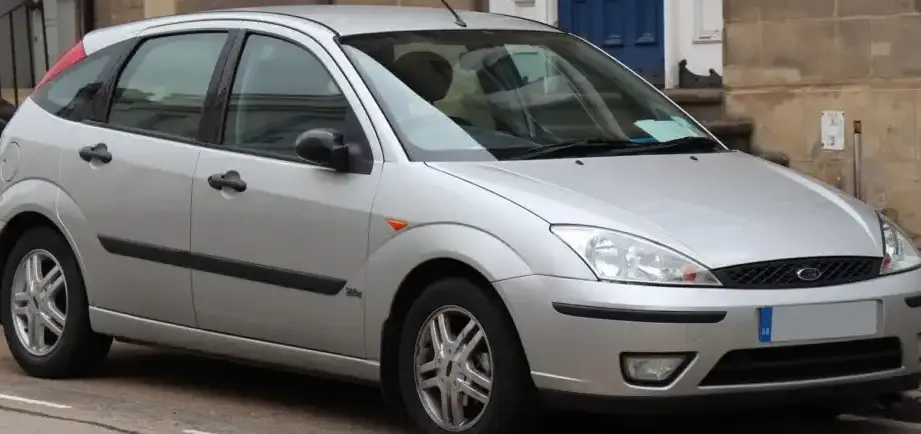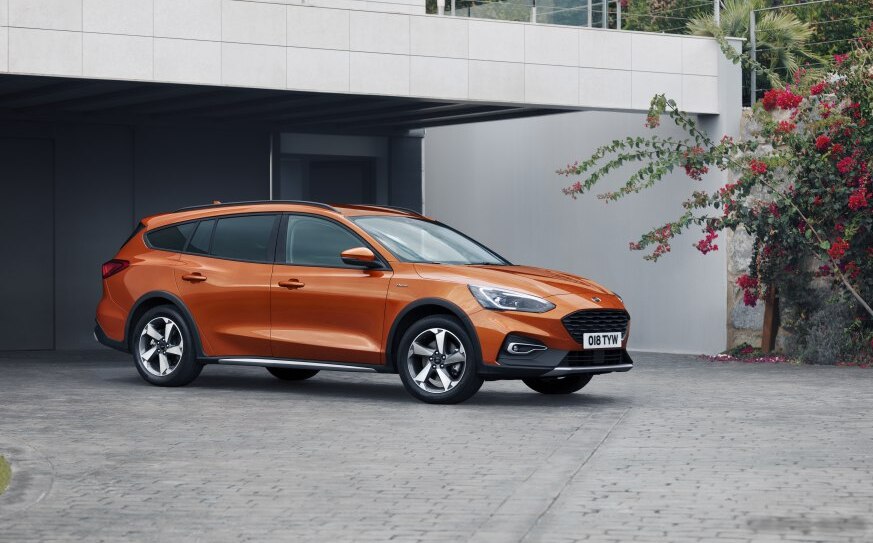
The Ford Focus IV Active Wagon 1.5 EcoBoost, produced from 2019 to 2021, represents a specific configuration within the fourth generation of Ford’s globally successful Focus compact. This variant, characterized by its crossover-inspired styling and 150 horsepower engine, aimed to bridge the gap between traditional hatchback practicality and the growing demand for vehicles with a more rugged aesthetic. It was positioned as a mid-range offering within the Active Wagon lineup, appealing to buyers seeking a blend of fuel efficiency, reasonable performance, and enhanced versatility. The Active Wagon itself was primarily marketed in Europe, offering a slightly raised ride height and protective cladding compared to the standard Focus Wagon.
Technical Specifications
| Brand | Ford |
| Model | Focus |
| Generation | Focus IV Active Wagon |
| Type (Engine) | 1.5 EcoBoost (150 Hp) |
| Start of production | 2019 |
| End of production | 2021 |
| Powertrain Architecture | Internal Combustion engine |
| Body type | Crossover |
| Seats | 5 |
| Doors | 5 |
| Fuel consumption (urban) | 7.0-7.2 l/100 km (33.6 – 32.7 US mpg) |
| Fuel consumption (extra urban) | 4.7-4.8 l/100 km (50 – 49 US mpg) |
| Fuel consumption (combined) | 5.5-5.7 l/100 km (42.8 – 41.3 US mpg) |
| CO2 emissions | 125-129 g/km |
| Fuel Type | Petrol (Gasoline) |
| Acceleration 0 – 100 km/h | 9.9 sec |
| Acceleration 0 – 62 mph | 9.9 sec |
| Acceleration 0 – 60 mph | 9.4 sec |
| Maximum speed | 203 km/h (126.14 mph) |
| Emission standard | Euro 6d-Temp |
| Weight-to-power ratio | 8.9 kg/Hp |
| Weight-to-torque ratio | 5.6 kg/Nm |
| Power | 150 Hp |
| Torque | 240 Nm (177.01 lb.-ft.) |
| Engine Model/Code | YZDA |
| Engine displacement | 1497 cm3 (91.35 cu. in.) |
| Number of cylinders | 3 |
| Engine configuration | Inline |
| Fuel injection system | Direct injection |
| Engine oil capacity | 5.05 l (5.34 US qt | 4.44 UK qt) |
| Coolant capacity | 5.55 l (5.86 US qt | 4.88 UK qt) |
| Kerb Weight | 1333 kg (2938.76 lbs.) |
| Max. weight | 1950 kg (4299.01 lbs.) |
| Max load | 617 kg (1360.25 lbs.) |
| Trunk (boot) space – minimum | 541 l (19.11 cu. ft.) |
| Trunk (boot) space – maximum | 1620 l (57.21 cu. ft.) |
| Fuel tank capacity | 52 l (13.74 US gal | 11.44 UK gal) |
| Permitted trailer load with brakes (12%) | 1500 kg (3306.93 lbs.) |
| Permitted trailer load without brakes | 700 kg (1543.24 lbs.) |
| Permitted towbar download | 90 kg (198.42 lbs.) |
| Length | 4693 mm (184.76 in.) |
| Width | 1844 mm (72.6 in.) |
| Width including mirrors | 1979 mm (77.91 in.) |
| Height | 1504 mm (59.21 in.) |
| Wheelbase | 2700 mm (106.3 in.) |
| Minimum turning circle | 10.7 m (35.1 ft.) |
| Drivetrain Architecture | Front wheel drive |
| Number of gears | 6 |
| Gearbox type | Manual transmission |
| Front brakes | Disc |
| Rear brakes | Disc |
| Tires size | 215/55 R17 |
| Wheel rims size | 7J x 17 |
Introduction
The Ford Focus IV Active Wagon 1.5 EcoBoost, launched in 2019, is a member of the fourth-generation Focus range (Mk4), built on the C2 platform. The Active Wagon variant specifically aimed to capitalize on the growing popularity of crossover vehicles, offering a slightly more rugged appearance and increased ground clearance compared to the standard Focus Wagon. This model year saw a continuation of Ford’s efforts to offer a diverse range of Focus models, catering to various customer preferences. The 1.5 EcoBoost engine, a three-cylinder turbocharged unit, was a key component of Ford’s powertrain strategy, emphasizing fuel efficiency and reduced emissions.
Powertrain & Engine Architecture
The heart of the Focus Active Wagon 1.5 EcoBoost is the YZDA engine code, a 1.5-liter inline three-cylinder gasoline engine. This engine utilizes direct fuel injection and is coupled with a single turbocharger and intercooler to enhance performance. The direct injection system allows for precise fuel delivery, optimizing combustion efficiency and reducing emissions. The engine’s aluminum block and head contribute to weight reduction. The 150 horsepower output is achieved through careful tuning of the turbocharger and engine management system. The engine is paired with a six-speed manual transmission, delivering power to the front wheels. This transmission was chosen for its balance of efficiency and driver engagement. The engine’s relatively small displacement and turbocharging contribute to its responsiveness and fuel economy.
Driving Characteristics
The 1.5 EcoBoost engine in the Focus Active Wagon provides a respectable level of performance for everyday driving. While not as overtly powerful as the larger 1.5 EcoBoost with 182 hp or the diesel variants, the 150 hp version offers a good balance of power and fuel efficiency. Acceleration from 0-60 mph takes approximately 9.4 seconds, and the car has a top speed of 126 mph. The turbocharger provides a noticeable boost in power during acceleration, but there is some turbo lag at lower engine speeds. The six-speed manual transmission allows for precise gear selection, and the gear ratios are well-matched to the engine’s power delivery. Compared to the higher-output versions, this variant feels less urgent in its acceleration, but it offers a more relaxed and fuel-efficient driving experience. The Active Wagon’s slightly raised suspension provides a more comfortable ride over uneven surfaces, but it also results in a bit more body roll in corners.
Equipment & Trim Levels
The Active Wagon 1.5 EcoBoost typically came equipped with a reasonable level of standard features. These included air conditioning, a touchscreen infotainment system with Bluetooth connectivity, alloy wheels, and a suite of safety features such as ABS, electronic stability control, and multiple airbags. Higher trim levels offered additional features such as a larger touchscreen display, navigation system, parking sensors, and a rearview camera. Interior upholstery was typically cloth, with options for leather upgrades. The dashboard layout was modern and functional, with a focus on ergonomics. Optional extras included a panoramic sunroof, heated seats, and a premium sound system.
Chassis & Braking
The Focus Active Wagon utilizes a MacPherson strut front suspension and a multi-link rear suspension. The Active Wagon variant features a slightly raised ride height compared to the standard Focus Wagon, providing increased ground clearance. The braking system consists of disc brakes on all four wheels, providing adequate stopping power. ABS (Anti-lock Braking System) and Electronic Stability Control (ESC) are standard features, enhancing safety and control. The steering is precise and responsive, providing a good level of feedback to the driver. The suspension is tuned to provide a comfortable ride while maintaining reasonable handling characteristics.
Market Reception & Comparison
The Ford Focus IV Active Wagon 1.5 EcoBoost was generally well-received by automotive critics. It was praised for its fuel efficiency, comfortable ride, and practical interior. However, some critics noted that the 1.5 EcoBoost engine could feel a bit underpowered, especially when fully loaded. Compared to the 1.0 EcoBoost engine, the 1.5 offered a noticeable improvement in performance. Compared to the diesel variants, the 1.5 EcoBoost offered a quieter and smoother driving experience, but it lacked the diesel’s low-end torque and fuel economy. The Active Wagon’s slightly higher price compared to the standard Focus Wagon was also a consideration for some buyers.
Legacy
The 1.5 EcoBoost engine has proven to be a relatively reliable powertrain, although some owners have reported issues with the timing belt and water pump. Regular maintenance, including oil changes and timing belt replacements, is crucial for ensuring long-term reliability. The Focus IV Active Wagon 1.5 EcoBoost remains a popular choice in the used car market, offering a good balance of practicality, fuel efficiency, and affordability. Its crossover-inspired styling and comfortable ride continue to appeal to buyers seeking a versatile and economical compact vehicle. The engine’s relatively simple design and readily available parts contribute to its maintainability.