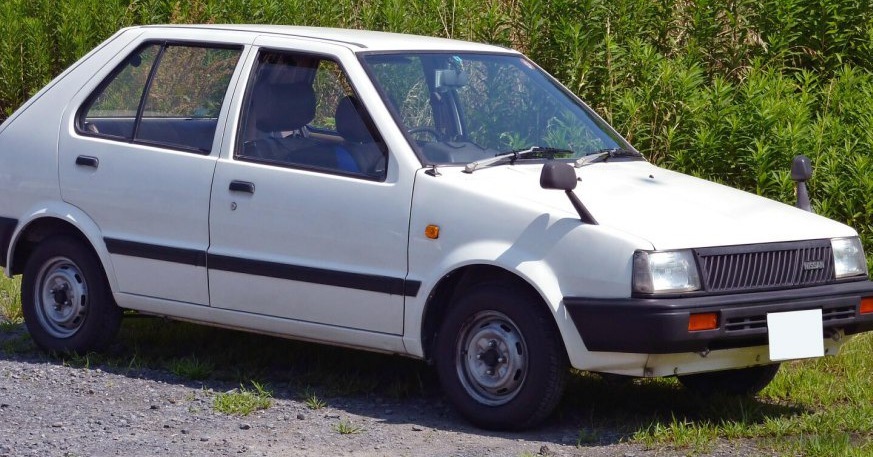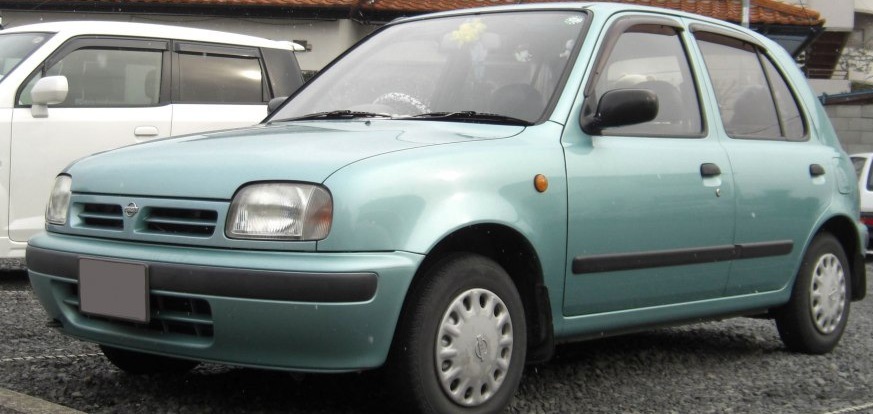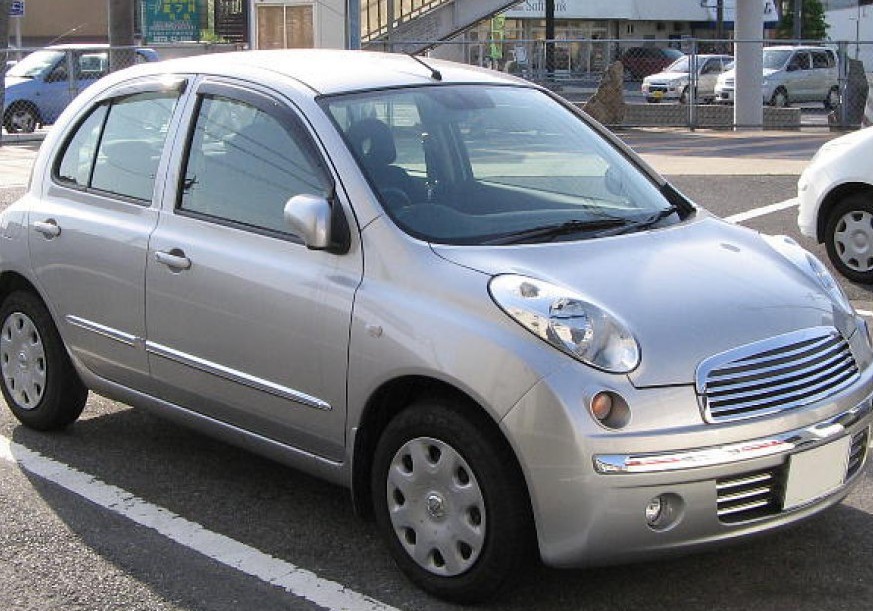
The Nissan March, known as the Micra in many markets, is a supermini car produced by the Japanese automaker Nissan since 1982. The K12 series, manufactured from 2003 to 2010, represented a significant redesign and a move towards a more contemporary aesthetic. Within the K12 generation, the 1.2 i 16V variant, producing 80 horsepower, served as a key entry point into the range, particularly in European and Asian markets. This model aimed to provide affordable and efficient transportation, appealing to first-time car buyers and those seeking a practical city vehicle. Production of this specific configuration ran from 2003 to 2005, before being superseded by minor revisions within the K12 lifecycle.
Technical Specifications
| Brand | Nissan |
| Model | March |
| Generation | March (K12) |
| Type (Engine) | 1.2 i 16V (80 Hp) |
| Start of production | 2003 |
| End of production | 2005 |
| Powertrain Architecture | Internal Combustion engine |
| Body type | Hatchback |
| Seats | 5 |
| Doors | 3/5 |
| Fuel consumption (urban) | 7.4 l/100 km (31.8 US mpg) |
| Fuel consumption (extra urban) | 5.1 l/100 km (46.1 US mpg) |
| Fuel consumption (combined) | 5.9 l/100 km (39.9 US mpg) |
| Fuel Type | Petrol (Gasoline) |
| Acceleration 0 – 100 km/h | 13.9 sec |
| Acceleration 0 – 62 mph | 13.9 sec |
| Acceleration 0 – 60 mph | 13.2 sec |
| Maximum speed | 167 km/h (103.77 mph) |
| Weight-to-power ratio | 12.1 kg/Hp |
| Weight-to-torque ratio | 8.8 kg/Nm |
| Power | 80 Hp @ 3600 rpm |
| Torque | 110 Nm @ 3600 rpm (81.13 lb.-ft. @ 3600 rpm) |
| Engine layout | Front, Transverse |
| Engine displacement | 1240 cm3 (75.67 cu. in.) |
| Number of cylinders | 4 |
| Engine configuration | Inline |
| Cylinder Bore | 71 mm (2.8 in.) |
| Piston Stroke | 78.3 mm (3.08 in.) |
| Compression ratio | 9.8:1 |
| Number of valves per cylinder | 4 |
| Fuel injection system | Multi-port manifold injection |
| Engine aspiration | Naturally aspirated engine |
| Valvetrain | DOHC |
| Kerb Weight | 970 kg (2138.48 lbs.) |
| Max. weight | 1475 kg (3251.82 lbs.) |
| Max load | 505 kg (1113.33 lbs.) |
| Trunk (boot) space – minimum | 371 l (13.1 cu. ft.) |
| Trunk (boot) space – maximum | 584 l (20.62 cu. ft.) |
| Fuel tank capacity | 46 l (12.15 US gal) |
| Length | 3715 mm (146.26 in.) |
| Width | 1660 mm (65.35 in.) |
| Height | 1525 mm (60.04 in.) |
| Wheelbase | 2430 mm (95.67 in.) |
| Front track | 1470 mm (57.87 in.) |
| Rear track | 1445 mm (56.89 in.) |
| Minimum turning circle | 9.8 m (32.15 ft.) |
| Drivetrain Architecture | Front wheel drive |
| Number of gears | 5 |
| Gearbox type | Manual transmission |
| Front suspension | Spring Strut |
| Rear suspension | Torsion |
| Front brakes | Ventilated discs |
| Rear brakes | Disc |
| Assisting systems | ABS (Anti-lock braking system) |
| Steering type | Steering rack and pinion |
| Tires size | 165/70 R14 |
INTRODUCTION
The K12 Nissan March, launched in 2003, represented a departure from its predecessors with a more rounded and modern design. The 1.2 i 16V 80 hp model was a cornerstone of the lineup, particularly in Europe and Asia, where smaller, fuel-efficient vehicles are highly sought after. Positioned as the entry-level engine option, it offered a balance between affordability and usability. Available in both three and five-door configurations, the K12 March aimed to appeal to a broad demographic, from young drivers to urban commuters. It was built on Nissan’s ‘V’ platform, also known as the 1HX0/A3 platform, shared with the Renault Clio II and other compact vehicles.
Powertrain & Engine Architecture
The heart of this March variant is the CR12DE engine, a 1.2-liter inline-four cylinder gasoline engine. This engine utilizes a multi-point fuel injection system, delivering fuel directly to the intake ports. The engine features a double overhead camshaft (DOHC) valvetrain, operating 16 valves (four per cylinder) to optimize airflow and combustion efficiency. The CR12DE is a naturally aspirated engine, meaning it doesn’t rely on a turbocharger or supercharger for increased power. The 80 horsepower output is achieved at 3600 rpm, while peak torque of 110 Nm (81.13 lb-ft) arrives at 3600 rpm. Paired with a five-speed manual transmission, the powertrain was designed for efficiency rather than outright performance. The engine code ‘CR12DE’ is crucial for identifying specific parts and maintenance requirements.
Driving Characteristics
The 1.2L 80 hp March, with its five-speed manual transmission, offered a predictable and undemanding driving experience. Acceleration was modest, taking approximately 13.9 seconds to reach 62 mph (100 km/h). The engine felt most comfortable in the mid-range, providing adequate power for city driving and moderate highway speeds. Compared to higher-output versions, such as the 1.5-liter engine available in some markets, the 1.2L felt noticeably less responsive. However, this trade-off was offset by improved fuel economy. The gear ratios were tuned for efficiency, with a relatively tall fifth gear designed to reduce engine speed at cruising speeds. The light weight of the vehicle (around 970 kg) helped to mitigate the lack of raw power, making it feel nimble in urban environments.
Equipment & Trim Levels
The 1.2 i 16V March typically came with a basic but functional equipment list. Standard features generally included power steering, central locking, and an immobilizer system. Interior upholstery was typically cloth, with a simple dashboard layout. Depending on the market and optional packages, features like air conditioning, electric windows, and a radio/CD player could be added. Higher trim levels, such as the ‘S’ or ‘SE’ variants, offered additional features like alloy wheels, body-colored bumpers, and upgraded interior trim. The base 1.2L model was often targeted at budget-conscious buyers, prioritizing practicality over luxury.
Chassis & Braking
The K12 March utilized a front-wheel-drive layout with a MacPherson strut suspension in the front and a torsion beam suspension in the rear. This setup provided a comfortable ride quality, suitable for everyday driving. Braking consisted of ventilated discs on the front wheels and solid discs on the rear. Anti-lock Braking System (ABS) was standard, enhancing safety by preventing wheel lockup during hard braking. The relatively lightweight construction of the vehicle contributed to its agile handling. Stabilizer bars were fitted to both the front and rear axles to reduce body roll during cornering.
Market Reception & Comparison
The 1.2L March was generally well-received as an affordable and economical city car. Critics praised its fuel efficiency and ease of driving, but noted its lack of outright performance. Compared to other superminis in its class, such as the Ford Fiesta or Volkswagen Polo, the March offered a more budget-friendly option, albeit with a less refined driving experience. The 1.5-liter engine variant offered a noticeable performance upgrade, but at the cost of increased fuel consumption. The 1.2L model’s fuel economy – around 39.9 US mpg combined – was a key selling point, particularly in markets with high fuel prices. Reliability was generally good, although some owners reported minor issues with the engine’s cooling system.
Legacy
The Nissan March K12, particularly the 1.2 i 16V variant, remains a relatively common sight on used car markets today. The CR12DE engine is known for its durability and relatively low maintenance costs, making it a popular choice for first-time car owners and those seeking a reliable and affordable vehicle. While not a performance icon, the K12 March carved a niche for itself as a practical and economical supermini, offering a sensible transportation solution for a wide range of drivers. Parts availability remains good, and the simple mechanical design makes it relatively easy to repair and maintain, contributing to its continued presence on the roads.