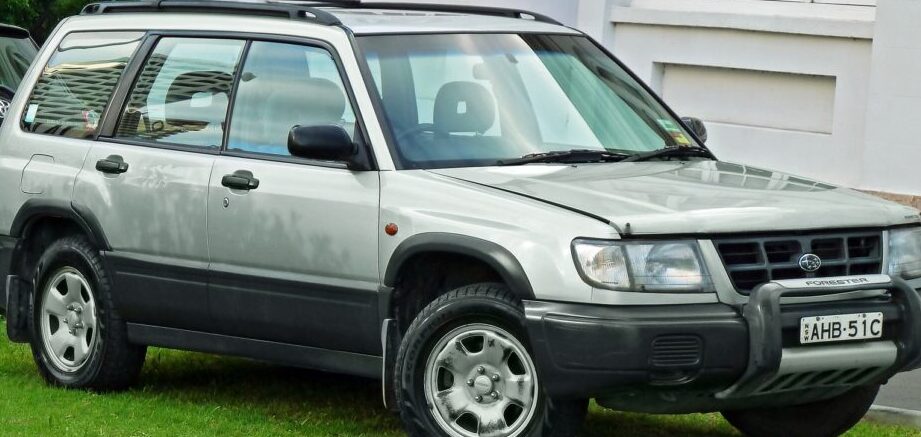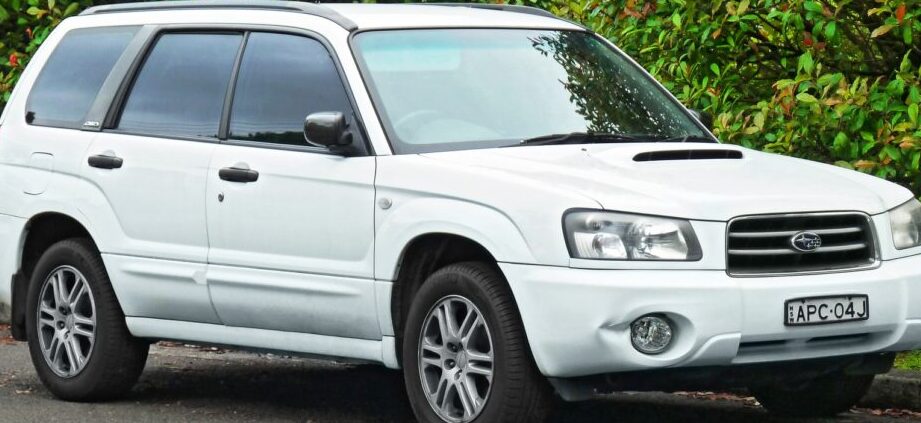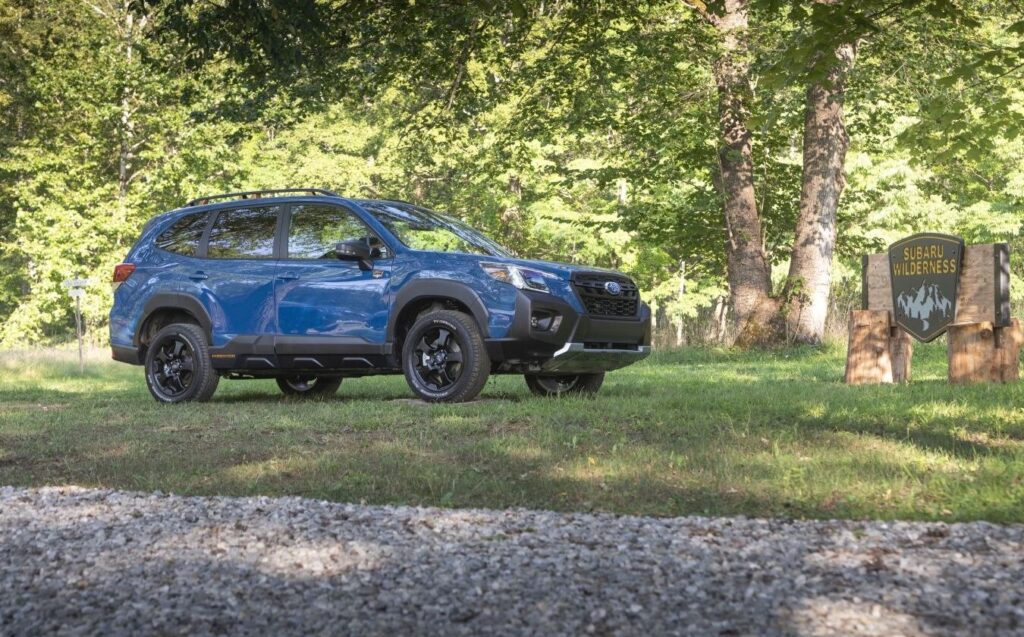
The Subaru Forester V, specifically the 2.0ie e-BOXER variant with the Lineartronic continuously variable transmission (CVT) and all-wheel drive, represents a significant iteration of Subaru’s popular compact SUV. Introduced with the facelift in 2021 and continuing through the 2024 model year, this version blends Subaru’s renowned symmetrical all-wheel-drive system with a mild-hybrid powertrain. It occupies a middle ground within the Forester V lineup, offering a balance between fuel efficiency, practicality, and affordability, positioned below the more powerful turbocharged options. This model was primarily aimed at the European and Asian markets, with a focus on providing a comfortable and economical driving experience for families and individuals alike.
Technical Specifications
| Brand | Subaru |
| Model | Forester |
| Generation | Forester V (facelift 2021) |
| Type (Engine) | 2.0ie e-BOXER (150 Hp) AWD Lineartronic |
| Start of production | 2021 |
| End of production | 2024 |
| Powertrain Architecture | MHEV (Mild Hybrid Electric Vehicle) |
| Body type | SUV, Crossover |
| Seats | 5 |
| Doors | 5 |
| Fuel consumption at Low speed (WLTP) | 8.8 l/100 km (26.7 US mpg) |
| Fuel consumption at Medium speed (WLTP) | 7.5 l/100 km (31.4 US mpg) |
| Fuel consumption at high speed (WLTP) | 6.7 l/100 km (35.1 US mpg) |
| Fuel consumption at very high speed (WLTP) | 9.5 l/100 km (24.8 US mpg) |
| Combined fuel consumption (WLTP) | 8.1 l/100 km (29 US mpg) |
| CO2 emissions (WLTP) | 185 g/km |
| Fuel Type | Petrol (Gasoline) |
| Acceleration 0 – 100 km/h | 11.8 sec |
| Acceleration 0 – 62 mph | 11.8 sec |
| Acceleration 0 – 60 mph | 11.2 sec |
| Maximum speed | 188 km/h (116.82 mph) |
| Emission standard | Euro 6d-ISC-FCM |
| Weight-to-power ratio | 11.1 kg/Hp |
| Weight-to-torque ratio | 8.5 kg/Nm |
| Net (usable) battery capacity | 0.6 kWh |
| Battery voltage | 118.4 V |
| Battery technology | Lithium-ion (Li-Ion) |
| Electric motor power | 17 Hp |
| Electric motor Torque | 66 Nm (48.68 lb.-ft.) |
| Power | 150 Hp @ 5600-6000 rpm |
| Torque | 194 Nm @ 4000 rpm (143.09 lb.-ft. @ 4000 rpm) |
| Engine displacement | 1995 cm3 (121.74 cu. in.) |
| Number of cylinders | 4 |
| Engine configuration | Boxer |
| Kerb Weight | 1658-1686 kg (3655.26 – 3716.99 lbs.) |
| Max. weight | 2185 kg (4817.1 lbs.) |
| Trunk (boot) space – minimum | 509 l (17.98 cu. ft.) |
| Trunk (boot) space – maximum | 1779 l (62.82 cu. ft.) |
| Fuel tank capacity | 48 l (12.68 US gal) |
| Length | 4640 mm (182.68 in.) |
| Width | 1815 mm (71.46 in.) |
| Height | 1730 mm (68.11 in.) |
| Wheelbase | 2670 mm (105.12 in.) |
Powertrain & Engine Architecture
At the heart of the 2.0ie e-BOXER Forester lies the FB20 2.0-liter naturally aspirated four-cylinder boxer engine. Subaru’s horizontally opposed “boxer” configuration is known for its inherent balance, contributing to reduced vibrations and a lower center of gravity. This engine utilizes direct fuel injection to optimize combustion efficiency and power delivery. The ‘e-BOXER’ designation signifies the integration of a mild-hybrid system. This system comprises a compact electric motor integrated with the Lineartronic CVT, and a 0.6 kWh lithium-ion battery located under the trunk floor. The electric motor provides supplemental power during acceleration and assists with engine start/stop functionality, improving fuel economy. The Lineartronic CVT, while offering smooth and stepless gear changes, is programmed to simulate traditional gear shifts for a more familiar driving experience. The engine produces 150 horsepower at 5600-6000 rpm and 194 Nm (143 lb-ft) of torque at 4000 rpm.
Driving Characteristics
The 2.0ie e-BOXER Forester delivers a comfortable and predictable driving experience. The Lineartronic CVT, while efficient, doesn’t offer the sporty responsiveness of a traditional automatic or manual transmission. Acceleration from 0-60 mph takes approximately 11.2 seconds, making it adequate for everyday driving but not particularly quick. The mild-hybrid system provides a subtle boost during initial acceleration, smoothing out the power delivery. Subaru’s symmetrical all-wheel-drive system provides excellent traction in various weather conditions. Compared to the higher-output turbocharged Forester variants, the 2.0ie e-BOXER feels less powerful, especially when fully loaded or tackling steep inclines. However, its fuel efficiency is noticeably better, making it a more economical choice for drivers prioritizing practicality over outright performance.
Equipment & Trim Levels
The 2.0ie e-BOXER Forester typically came well-equipped, even in base trim levels. Standard features generally included automatic climate control, a touchscreen infotainment system with Apple CarPlay and Android Auto compatibility, Subaru’s EyeSight driver-assist technology (including adaptive cruise control, lane departure warning, and automatic emergency braking), and a suite of safety features like seven airbags. Interior upholstery was typically cloth, with options for leather upgrades. Higher trim levels added features such as a power driver’s seat, heated front seats, a premium audio system, and a sunroof. Optional extras included navigation, and various styling packages.
Chassis & Braking
The Forester V utilizes a McPherson strut front suspension and a double-wishbone rear suspension, providing a comfortable ride and predictable handling. Stabilizer bars are fitted to both axles to reduce body roll during cornering. Braking duties are handled by ventilated discs on all four wheels, providing ample stopping power. The braking system is assisted by ABS (Anti-lock Braking System) and electronic brake-force distribution. The ride height of 220mm (8.66 inches) provides good ground clearance for navigating rough terrain and inclement weather.
Market Reception & Comparison
The 2.0ie e-BOXER Forester was generally well-received by automotive critics. It was praised for its fuel efficiency, comfortable ride, spacious interior, and standard safety features. However, some reviewers noted the lack of excitement in its driving dynamics compared to more powerful rivals. Compared to other Forester trims, the 2.0ie e-BOXER offered the best fuel economy but the slowest acceleration. It positioned itself as a practical and economical choice for buyers who didn’t require the extra performance of the turbocharged models. Its fuel economy figures of around 29 US mpg combined were competitive within its class.
Legacy
The FB20 engine, in its various iterations, has proven to be a reliable and durable powerplant. The addition of the mild-hybrid system in the 2.0ie e-BOXER variant further enhances its efficiency and longevity. On the used car market, these Foresters are generally considered a good value, offering a blend of practicality, reliability, and affordability. Regular maintenance, including oil changes and timely servicing of the CVT, is crucial for ensuring long-term reliability. The Forester V, and specifically the 2.0ie e-BOXER, continues to be a popular choice for buyers seeking a capable and dependable compact SUV.