
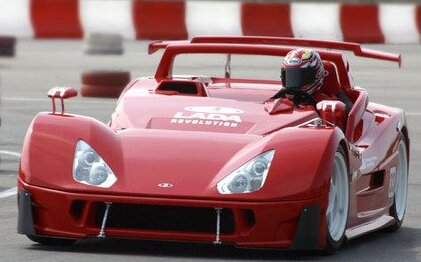
The Lada Revolution I 1.6i, produced briefly between 2004 and 2005, represents a unique and ambitious attempt by AvtoVAZ, the Russian automaker, to enter the affordable sports car market. This rear-wheel-drive roadster was a departure from Lada’s traditionally utilitarian vehicles, aiming to offer a more engaging driving experience. The Revolution I was based on a heavily modified version of the Lada 110 platform, though it shared very little visually with its more practical sibling. Production numbers were limited, making it a relatively rare vehicle today, primarily sought after by enthusiasts and collectors. It was intended to modernize Lada’s image and demonstrate the company’s engineering capabilities, though financial constraints and market realities ultimately led to its short lifespan.
Technical Specifications
| Brand | Lada |
| Model | Revolution |
| Generation | Revolution I |
| Type (Engine) | 1.6i (165 Hp) |
| Start of production | 2004 |
| End of production | 2005 |
| Powertrain Architecture | Internal Combustion engine |
| Body type | Roadster |
| Fuel Type | Petrol (Gasoline) |
| Weight-to-power ratio | 4.1 kg/Hp, 246.3 Hp/tonne |
| Weight-to-torque ratio | 4.2 kg/Nm, 238.8 Nm/tonne |
| Power | 165 Hp @ 7600 rpm |
| Power per litre | 103.4 Hp/l |
| Torque | 160 Nm @ 6200 rpm (118.01 lb.-ft. @ 6200 rpm) |
| Engine layout | Rear, Transverse |
| Engine displacement | 1596 cm3 (97.39 cu. in.) |
| Number of cylinders | 4 |
| Engine configuration | Inline |
| Number of valves per cylinder | 4 |
| Fuel injection system | Multi-port manifold injection |
| Engine aspiration | Naturally aspirated engine |
| Kerb Weight | 670 kg (1477.1 lbs) |
| Length | 3650 mm (143.7 in) |
| Width | 1750 mm (68.9 in) |
| Height | 1200 mm (47.24 in) |
| Wheelbase | 2400 mm (94.49 in) |
| Front track | 1545 mm (60.83 in) |
| Rear (Back) track | 1502 mm (59.13 in) |
| Drivetrain Architecture | The Internal combustion engine (ICE) drives the rear wheels of the vehicle. |
| Drive wheel | Rear wheel drive |
| Number of gears and type of gearbox | 5 gears, manual transmission |
| Front brakes | Ventilated discs |
| Rear brakes | Ventilated discs |
Powertrain & Engine Architecture
The heart of the Lada Revolution I 1.6i is a 1.6-liter inline-four cylinder engine, designated as a modified version of the Lada 110 series engine. While sharing a basic architecture with the 110’s powerplant, the Revolution’s engine received significant upgrades to achieve its 165 horsepower output. These included a revised cylinder head with larger valves, a higher compression ratio, and a tuned exhaust system. The engine utilizes a multi-port fuel injection system, a common setup for the era, providing adequate fuel delivery for its performance aspirations. The engine’s 160 Nm (118 lb-ft) of torque is delivered at 6200 rpm, requiring the engine to be revved to produce optimal power. The engine is transversely mounted at the rear of the vehicle, contributing to a unique weight distribution. The Revolution I was exclusively offered with a five-speed manual transmission, chosen to maximize driver engagement and performance. The transmission was a reinforced version of the unit found in the Lada 110, adapted to handle the increased power output.
Driving Characteristics
The rear-wheel-drive configuration of the Lada Revolution I 1.6i provides a distinctly different driving experience compared to the front-wheel-drive Lada 110. The car is relatively lightweight at 670 kg (1477 lbs), resulting in a respectable power-to-weight ratio of 4.1 kg/hp. This translates to lively acceleration, though the engine’s peak power is relatively high in the rev range. The five-speed manual transmission is well-matched to the engine’s characteristics, allowing drivers to keep the engine within its power band. Handling is generally considered nimble, but the suspension, while upgraded from the standard Lada 110, is relatively basic. The rear-wheel-drive layout can make the car prone to oversteer if pushed hard, requiring a skilled driver to maintain control. Compared to hypothetical higher-output versions, the 1.6i engine provides a good balance between performance and affordability. A more powerful engine would have likely required further chassis and suspension upgrades to manage the increased power effectively.
Equipment & Trim Levels
The Lada Revolution I 1.6i was relatively sparsely equipped, reflecting its positioning as an affordable sports car. Standard features included basic instrumentation, cloth upholstery, and manually adjustable seats. Power steering was included, but air conditioning and other comfort features were typically optional extras. The interior design was a step up from other Lada models of the time, with a more modern dashboard layout and improved materials. Exterior features included a distinctive roadster body style with a removable hardtop, alloy wheels, and sporty body kit. Optional extras included upgraded audio systems, leather upholstery, and various cosmetic enhancements.
Chassis & Braking
The chassis of the Lada Revolution I was based on a modified version of the Lada 110 platform, with significant reinforcement to improve rigidity. The suspension system consisted of independent front suspension with MacPherson struts and a multi-link rear suspension. The braking system featured ventilated disc brakes on all four wheels, providing adequate stopping power for the car’s weight and performance. The car lacked advanced safety features such as ABS or traction control, which were not common on vehicles in its price range at the time.
Market Reception & Comparison
The Lada Revolution I 1.6i received mixed reviews from automotive critics. While praised for its unique styling and engaging driving experience, it was also criticized for its relatively basic interior, lack of refinement, and limited practicality. Compared to other trims in the Lada lineup, the Revolution I was significantly more expensive and targeted a different audience. Its fuel economy was comparable to other 1.6-liter gasoline engines of the time, but its reliability was questioned due to the limited production run and potential for quality control issues. In the broader market, the Revolution I competed with other affordable sports cars such as the Mazda MX-5 (Miata), but it lacked the established reputation and refinement of its Japanese rival.
Legacy
The Lada Revolution I 1.6i, despite its short production run, has gained a cult following among Lada enthusiasts. Its rarity and unique design have made it a desirable collectible. The powertrain, while not particularly sophisticated, has proven to be reasonably reliable, although parts availability can be a challenge. Today, the Revolution I represents a fascinating chapter in Lada’s history, demonstrating the company’s ambition to move beyond its traditional image. The car’s legacy lies in its bold design and its attempt to offer an affordable and engaging sports car experience to a wider audience. Well-maintained examples command a premium in the used car market, appealing to collectors and enthusiasts seeking a unique and unconventional vehicle.
