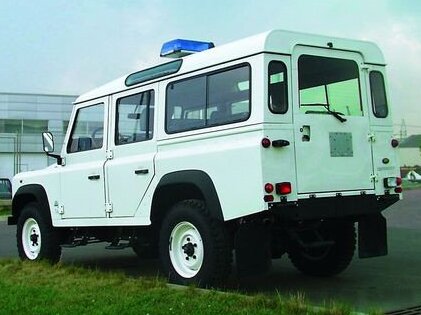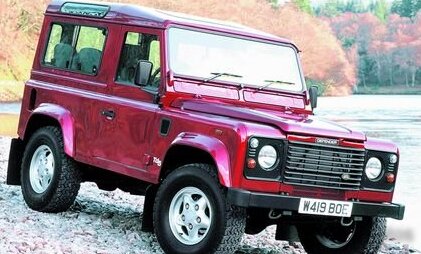
The Land Rover Defender 90 2.5 TDi, produced between 1990 and 1996, represents a pivotal point in the evolution of the iconic Defender lineage. Falling within the first generation of the Defender (launched as a replacement for the original Series Land Rover), the 90 – denoting its approximate wheelbase length in inches – was the shortest wheelbase version, prioritizing maneuverability and off-road capability. This particular 2.5 TDi variant, equipped with a turbocharged diesel engine producing 107 horsepower, served as a workhorse option, appealing to agricultural users, explorers, and those requiring a robust, no-frills 4×4. It occupied a middle ground in the Defender 90 lineup, positioned below the petrol-powered models and above the naturally aspirated diesel versions in terms of performance and price.
Technical Specifications
| Brand | Land Rover |
| Model | Defender |
| Generation | Defender 90 |
| Type (Engine) | 2.5 TDi (107 Hp) |
| Start of production | 1990 |
| End of production | 1996 |
| Powertrain Architecture | Internal Combustion engine |
| Body type | Off-road vehicle |
| Seats | 6 |
| Doors | 2 |
| Fuel consumption (combined) | 10.7 l/100 km (22 US mpg, 26.4 UK mpg, 9.3 km/l) |
| Fuel Type | Diesel |
| Maximum speed | 125 km/h (77.67 mph) |
| Weight-to-power ratio | 15.8 kg/Hp, 63.1 Hp/tonne |
| Weight-to-torque ratio | 6.6 kg/Nm, 150.4 Nm/tonne |
| Power | 107 Hp @ 3800 rpm |
| Power per litre | 42.9 Hp/l |
| Torque | 255 Nm @ 1800 rpm (188.08 lb.-ft. @ 1800 rpm) |
| Engine layout | Front, Longitudinal |
| Engine displacement | 2495 cm3 (152.25 cu. in.) |
| Number of cylinders | 4 |
| Engine configuration | Inline |
| Cylinder Bore | 90.5 mm (3.56 in.) |
| Piston Stroke | 97 mm (3.82 in.) |
| Compression ratio | 19.5:1 |
| Number of valves per cylinder | 2 |
| Fuel injection system | Diesel Commonrail |
| Engine aspiration | Turbocharger |
| Engine oil capacity | 6.65 l (7.03 US qt | 5.85 UK qt) |
| Coolant | 11.5 l (12.15 US qt | 10.12 UK qt) |
| Kerb Weight | 1695 kg (3736.84 lbs.) |
| Max. weight | 2400 kg (5291.09 lbs.) |
| Max load | 705 kg (1554.26 lbs.) |
| Trunk (boot) space – minimum | 1600 l (56.5 cu. ft.) |
| Fuel tank capacity | 55 l (14.53 US gal | 12.1 UK gal) |
| Length | 3722 mm (146.54 in.) |
| Width | 1790 mm (70.47 in.) |
| Height | 2000 mm (78.74 in.) |
| Wheelbase | 2360 mm (92.91 in.) |
| Front track | 1486 mm (58.5 in.) |
| Rear (Back) track | 1486 mm (58.5 in.) |
| Drive wheel | All wheel drive (4×4) |
| Number of gears and type of gearbox | 5 gears, manual transmission |
| Front suspension | Rigid axle suspension |
| Rear suspension | Rigid axle suspension |
| Front brakes | Disc |
| Rear brakes | Drum |
| Assisting systems | ABS (Anti-lock braking system) |
| Tires size | 205/80 R16 S |
Powertrain & Engine Architecture
The heart of the Defender 90 2.5 TDi is the 2.5-liter four-cylinder diesel engine, typically identified by engine codes like 200Tdi or 300Tdi depending on the specific iteration. This engine represented a significant upgrade over the earlier naturally aspirated diesel options, offering improved power and torque. The 2.5 TDi utilizes a direct injection system, coupled with a turbocharger and intercooler, to enhance combustion efficiency and boost output. The engine features a robust cast iron block and a simple, yet durable, valvetrain with two valves per cylinder. The five-speed manual transmission, a Land Rover staple, was the standard gearbox for this variant. The transmission’s gear ratios were geared towards low-speed torque, essential for off-road driving and towing, rather than outright acceleration.
Driving Characteristics
The 2.5 TDi engine in the Defender 90 provided a noticeable improvement in performance compared to the non-turbocharged diesels. While not a fast vehicle by modern standards, the 107 horsepower and 255 Nm (188 lb-ft) of torque delivered adequate power for on-road driving and excellent low-end grunt for tackling challenging terrain. The manual transmission allowed for precise control, but the gear ratios were relatively widely spaced, requiring frequent shifting. Compared to the later 300Tdi engine, the 200Tdi/early 300Tdi versions felt less refined and produced more engine noise. The Defender 90’s short wheelbase contributed to a somewhat choppy ride on paved roads, but it also made it exceptionally maneuverable in tight spaces and over rough ground.
Equipment & Trim Levels
The Defender 90 2.5 TDi was known for its utilitarian nature. Standard equipment was minimal, reflecting its intended purpose as a functional work vehicle. Typically, it included basic steel wheels, vinyl upholstery, and a simple dashboard layout. Optional extras, such as upgraded seating, a heater, and additional sound deadening, were available, but were often specified by commercial buyers or those intending to use the vehicle for more demanding tasks. The interior was spartan, prioritizing durability and ease of cleaning over luxury.
Chassis & Braking
The Defender 90’s chassis was a traditional ladder frame construction, renowned for its strength and rigidity. Suspension consisted of robust coil springs and dampers, providing a reasonable level of comfort considering the vehicle’s off-road focus. The front brakes were discs, offering good stopping power, while the rear brakes were drums, a cost-saving measure common at the time. Anti-lock braking systems (ABS) were becoming increasingly common during this period and were often included as an option, enhancing safety on slippery surfaces. The relatively high weight of the vehicle, combined with its off-road tires, meant that braking distances were longer than those of more modern vehicles.
Market Reception & Comparison
The Defender 90 2.5 TDi was well-received by those who needed a tough, reliable, and capable 4×4. Critics praised its off-road performance and durability, but noted its lack of refinement and relatively slow on-road speed. Compared to the petrol-powered Defender 90s, the 2.5 TDi offered significantly better fuel economy, making it a more practical choice for high-mileage users. Against the naturally aspirated diesel versions, the turbocharging provided a substantial performance boost. The 2.5 TDi represented a sweet spot in the Defender 90 range, balancing performance, economy, and affordability.
Legacy
The Land Rover Defender 90 2.5 TDi has become a highly sought-after vehicle among enthusiasts and collectors. The 200Tdi and early 300Tdi engines are particularly prized for their simplicity and reliability. While maintenance can be demanding due to the vehicle’s age and mechanical complexity, parts availability remains relatively good. Today, these Defenders are often restored and modified for off-road adventures or preserved as classic vehicles. The 2.5 TDi engine, while no longer in production, continues to be regarded as a robust and capable powerplant, cementing the Defender 90’s reputation as an iconic and enduring 4×4.