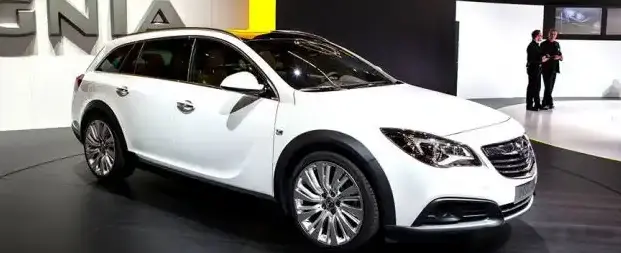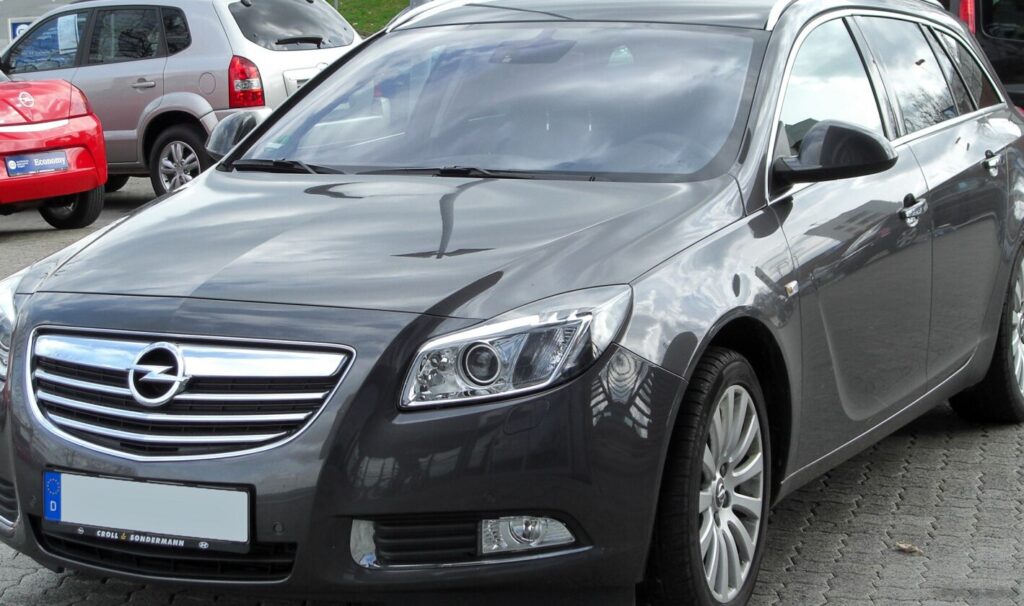
The Opel Insignia Sports Tourer (A) 2.0 Turbo (220 Hp) Ethanol, produced from October 2010 to November 2011, represented a significant offering in the European D-segment station wagon market. Positioned as a higher-performance variant within the Insignia range, it catered to buyers seeking a blend of practicality, driving enjoyment, and the flexibility of alternative fuel capability. This model was part of the first generation (A) Insignia, built on the GM Delta II platform, also known internally as the 1HX0/A3 platform. The availability of an ethanol-compatible engine was a notable feature, particularly in markets with established E85 infrastructure.
Technical Specifications
| Brand | Opel |
| Model | Insignia |
| Generation | Insignia Sports Tourer (A) |
| Type (Engine) | 2.0 Turbo (220 Hp) Ethanol |
| Start of production | October, 2010 |
| End of production | November, 2011 |
| Powertrain Architecture | Internal Combustion engine |
| Body type | Station wagon (estate) |
| Seats | 5 |
| Doors | 5 |
| Fuel consumption (economy) – urban | 17.7 l/100 km (13.3 US mpg, 16 UK mpg, 5.6 km/l) |
| Fuel consumption (economy) – extra urban | 8.2 l/100 km (28.7 US mpg, 34.4 UK mpg, 12.2 km/l) |
| Fuel consumption (economy) – combined | 11.7 l/100 km (20.1 US mpg, 24.1 UK mpg, 8.5 km/l) |
| CO2 emissions | 192 g/km |
| Fuel Type | Petrol / Ethanol – E85 |
| Acceleration 0 – 100 km/h | 7.9 sec |
| Acceleration 0 – 62 mph | 7.9 sec |
| Acceleration 0 – 60 mph | 7.5 sec |
| Maximum speed | 237 km/h (147.26 mph) |
| Emission standard | Euro 5 |
| Weight-to-power ratio | 7.4 kg/Hp, 135.4 Hp/tonne |
| Weight-to-torque ratio | 4.6 kg/Nm, 215.4 Nm/tonne |
| Power | 220 Hp @ 5300 rpm |
| Power per litre | 110.1 Hp/l |
| Torque | 350 Nm @ 2000-4000 rpm (258.15 lb.-ft. @ 2000-4000 rpm) |
| Engine layout | Front, Transverse |
| Engine Model/Code | A20NFT |
| Engine displacement | 1998 cm3 (121.93 cu. in.) |
| Number of cylinders | 4 |
| Engine configuration | Inline |
| Cylinder Bore | 86 mm (3.39 in.) |
| Piston Stroke | 86 mm (3.39 in.) |
| Compression ratio | 9.3:1 |
| Number of valves per cylinder | 4 |
| Fuel injection system | Direct injection |
| Engine aspiration | Twin-scroll turbo, Intercooler |
| Engine oil capacity | 6 l (6.34 US qt | 5.28 UK qt) |
| Coolant | 7.8 l (8.24 US qt | 6.86 UK qt) |
| Kerb Weight | 1625 kg (3582.51 lbs.) |
| Max. weight | 2280 kg (5026.54 lbs.) |
| Max load | 655 kg (1444.03 lbs.) |
| Trunk (boot) space – minimum | 540 l (19.07 cu. ft.) |
| Trunk (boot) space – maximum | 1530 l (54.03 cu. ft.) |
| Fuel tank capacity | 70 l (18.49 US gal | 15.4 UK gal) |
| Length | 4908 mm (193.23 in.) |
| Width | 1858 mm (73.15 in.) |
| Height | 1520 mm (59.84 in.) |
| Wheelbase | 2737 mm (107.76 in.) |
| Front track | 1585 mm (62.4 in.) |
| Rear (Back) track | 1587 mm (62.48 in.) |
| Ride height (ground clearance) | 160 mm (6.3 in.) |
| Minimum turning circle (turning diameter) | 11.4 m (37.4 ft.) |
| Drivetrain Architecture | The Internal combustion engine (ICE) drives the front wheels of the vehicle. |
| Drive wheel | Front wheel drive |
| Number of gears and type of gearbox | 6 gears, manual transmission |
| Front brakes | Ventilated discs |
| Rear brakes | Disc |
| Assisting systems | ABS (Anti-lock braking system) |
| Tires size | 225/55 R17; 245/45 R18 |
| Wheel rims size | 17; 18 |
Powertrain & Engine Architecture
The heart of this Insignia variant is the A20NFT 2.0-liter turbocharged inline-four cylinder engine. This engine is part of the GM Family II engine family, known for its robust design and tuning potential. The A20NFT specifically features direct fuel injection, a twin-scroll turbocharger, and an intercooler. Direct injection allows for precise fuel delivery, improving efficiency and reducing emissions. The twin-scroll turbocharger design minimizes turbo lag, providing quicker throttle response. The engine’s ability to run on E85 ethanol fuel is achieved through modifications to the fuel system and engine control unit (ECU) to accommodate the higher ethanol content. The 6-speed manual transmission was standard, offering drivers full control over the engine’s power delivery.
Driving Characteristics
The 220 hp and 350 Nm (258 lb-ft) of torque provided by the A20NFT engine delivered brisk performance for a family-sized station wagon. Acceleration from 0-100 km/h (0-62 mph) took approximately 7.9 seconds. The manual transmission allowed for an engaging driving experience, although the gear ratios were tuned more for fuel efficiency and comfortable cruising than outright performance. Compared to the base 1.6L engine, the 2.0 Turbo offered a substantial power increase, resulting in noticeably quicker acceleration and improved highway passing ability. While not as sporty as some of its rivals, the Insignia Sports Tourer 2.0 Turbo provided a good balance of performance and practicality.
Equipment & Trim Levels
The Insignia Sports Tourer 2.0 Turbo (220 Hp) Ethanol typically came with a generous level of standard equipment. This included air conditioning, power windows, power mirrors, a CD/MP3 stereo system, and alloy wheels. Higher trim levels, such as the Cosmo, added features like leather upholstery, heated front seats, a sunroof, and a more advanced infotainment system. Optional extras included navigation, parking sensors, and adaptive cruise control. The interior design was modern and functional, with a focus on ergonomics and comfort.
Chassis & Braking
The Insignia Sports Tourer featured a MacPherson strut front suspension and a multi-link rear suspension. This setup provided a comfortable ride while maintaining good handling characteristics. The front brakes were ventilated discs, while the rear brakes were solid discs. Anti-lock Braking System (ABS) was standard. The suspension was tuned to prioritize ride comfort, but it still offered reasonable body control in corners. Stabilizer bars were fitted to both the front and rear axles to reduce body roll.
Market Reception & Comparison
The Opel Insignia Sports Tourer was generally well-received by automotive critics. It was praised for its spacious interior, comfortable ride, and attractive styling. The 2.0 Turbo engine was considered a strong performer, offering a good balance of power and fuel efficiency. However, some critics noted that the steering lacked feel and that the car wasn’t as engaging to drive as some of its rivals, such as the Ford Mondeo or Volkswagen Passat. The E85 compatibility was seen as a positive feature, particularly in markets where ethanol was readily available and competitively priced. Fuel economy, while respectable, was not class-leading, particularly in urban driving.
Legacy
The A20NFT engine proved to be a relatively reliable unit, although regular maintenance is crucial. Common issues include oil leaks and occasional problems with the turbocharger. The Insignia Sports Tourer, in general, has established a reputation as a practical and comfortable family car. On the used car market, these models represent good value for money, offering a lot of space and equipment for the price. The availability of the E85-compatible engine adds to its appeal for environmentally conscious buyers or those seeking to reduce their fuel costs.