
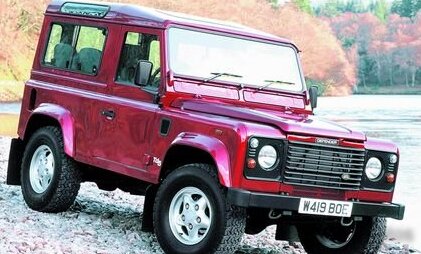
The Land Rover Defender 90 2.5 TDi, produced between 1996 and 1999, represents a pivotal point in the evolution of the iconic Defender lineage. Falling within the second generation of the Defender (introduced in 1994, internally designated as the 1HX0/A3 platform), this variant offered a diesel-powered option aimed at buyers prioritizing durability and off-road capability over outright speed. The 90 designation refers to the wheelbase length in inches, signifying the shortest of the Defender body styles. This particular 2.5 TDi model, generating 113 horsepower, served as a workhorse trim, positioned below the more powerful 300Tdi versions and aimed at utility and agricultural users, as well as those seeking a robust and reliable 4×4.
Technical Specifications
| Brand | Land Rover |
| Model | Defender |
| Generation | Defender 90 |
| Type (Engine) | 2.5 TDi (113 Hp) |
| Start of production | 1996 |
| End of production | 1999 |
| Powertrain Architecture | Internal Combustion engine |
| Body type | Off-road vehicle |
| Seats | 6 |
| Doors | 2 |
| Fuel consumption (combined) | 10.6 l/100 km (22.2 US mpg, 26.6 UK mpg, 9.4 km/l) |
| Fuel Type | Diesel |
| Acceleration 0 – 100 km/h | 18.1 sec |
| Acceleration 0 – 62 mph | 18.1 sec |
| Acceleration 0 – 60 mph | 17.2 sec |
| Maximum speed | 129 km/h (80.16 mph) |
| Weight-to-power ratio | 15 kg/Hp, 66.7 Hp/tonne |
| Weight-to-torque ratio | 6.4 kg/Nm, 156.3 Nm/tonne |
| Power | 113 Hp @ 4000 rpm |
| Power per litre | 45.3 Hp/l |
| Torque | 265 Nm @ 1800 rpm (195.45 lb.-ft. @ 1800 rpm) |
| Engine layout | Front, Longitudinal |
| Engine displacement | 2496 cm3 (152.32 cu. in.) |
| Number of cylinders | 4 |
| Engine configuration | Inline |
| Cylinder Bore | 90.5 mm (3.56 in.) |
| Piston Stroke | 97 mm (3.82 in.) |
| Compression ratio | 19.5:1 |
| Number of valves per cylinder | 2 |
| Fuel injection system | Diesel Commonrail |
| Engine aspiration | Turbocharger |
| Engine oil capacity | 6.65 l (7.03 US qt | 5.85 UK qt) |
| Coolant capacity | 11.5 l (12.15 US qt | 10.12 UK qt) |
| Kerb Weight | 1695 kg (3736.84 lbs.) |
| Max. weight | 2550 kg (5621.79 lbs.) |
| Max load | 855 kg (1884.95 lbs.) |
| Trunk (boot) space – minimum | 1600 l (56.5 cu. ft.) |
| Fuel tank capacity | 60 l (15.85 US gal | 13.2 UK gal) |
| Length | 3870 mm (152.36 in.) |
| Width | 1790 mm (70.47 in.) |
| Height | 1963 mm (77.28 in.) |
| Wheelbase | 2230 mm (87.8 in.) |
| Front track | 1486 mm (58.5 in.) |
| Rear track | 1486 mm (58.5 in.) |
| Drive wheel | All wheel drive (4×4) |
| Number of gears and type of gearbox | 5 gears, manual transmission |
| Front suspension | Rigid axle suspension |
| Rear suspension | Rigid axle suspension |
| Front brakes | Disc |
| Rear brakes | Disc |
| Assisting systems | ABS (Anti-lock braking system) |
| Power steering | Hydraulic Steering |
| Tires size | 205/80 R16 S |
Powertrain & Engine Architecture
The heart of the Defender 90 2.5 TDi is the 2.5-liter four-cylinder diesel engine. This engine, often referred to by its engine code 200Tdi, is a direct injection diesel, utilizing a Bosch rotary injection pump. While not a common rail system as the table suggests, it was a significant upgrade over earlier Land Rover diesel engines. The engine features a cast iron block and head, contributing to its renowned durability. The 8 valves (two per cylinder) are operated by a single overhead camshaft. The turbocharger, a Garrett unit, provides a modest boost, increasing power output compared to naturally aspirated versions. The five-speed manual transmission, a robust unit designed to handle the engine’s torque, is the only transmission option available for this variant. The transmission’s gear ratios are geared towards low-speed torque and off-road performance, rather than rapid acceleration.
Driving Characteristics
The 2.5 TDi Defender 90, with its 113 horsepower and 195 lb-ft of torque, delivers a driving experience focused on capability rather than speed. Acceleration is leisurely, taking over 18 seconds to reach 60 mph. However, the engine’s torque is readily available from low RPMs, making it exceptionally capable in off-road situations. The manual transmission requires deliberate shifting, and the gear ratios are widely spaced. Compared to the later 300Tdi engine, the 2.5 TDi feels noticeably less powerful, especially when fully loaded or tackling steep inclines. The ride quality, typical of a ladder-frame chassis vehicle, is firm and utilitarian. Steering is direct but requires effort, reflecting the hydraulic steering system.
Equipment & Trim Levels
The Defender 90 2.5 TDi was typically sparsely equipped, reflecting its utilitarian purpose. Standard features included basic steel wheels, vinyl upholstery, and a simple dashboard layout. Power steering and anti-lock brakes (ABS) were often included, but not always standard. Optional extras included features like a sunroof, upgraded seating, and additional lighting. Trim levels were minimal; the focus was on providing a functional and durable vehicle rather than luxury appointments. The interior was designed for practicality, with easily cleaned surfaces and minimal distractions.
Chassis & Braking
The Defender 90 utilizes a traditional ladder-frame chassis, providing exceptional strength and durability. Suspension consists of a rigid axle setup with coil springs at the front and leaf springs at the rear. This setup prioritizes off-road articulation and load-carrying capacity over on-road comfort. Braking is provided by disc brakes on all four wheels, with ABS becoming increasingly common towards the end of production. The steering is a hydraulic system, offering some assistance but retaining a direct and communicative feel. The tires, typically 205/80 R16, are designed for all-terrain use, balancing on-road grip with off-road traction.
Market Reception & Comparison
The Defender 90 2.5 TDi was well-received by those seeking a rugged and reliable off-road vehicle. Critics praised its durability and capability, but noted its lack of refinement and relatively slow performance. Compared to the more powerful 300Tdi versions, the 2.5 TDi offered a more affordable entry point into Defender ownership, but at the cost of performance. Fuel economy was reasonable for a vehicle of its type, averaging around 22 mpg. Reliability was generally excellent, although maintenance costs could be high due to the vehicle’s age and complexity.
Legacy
The Land Rover Defender 90 2.5 TDi has become a highly sought-after vehicle in the used car market, particularly among enthusiasts and off-roaders. The 2.5 TDi engine, while not the most powerful, is known for its robustness and relative simplicity. Parts availability is generally good, although some components can be expensive. Well-maintained examples command premium prices, reflecting the Defender’s enduring appeal and reputation for durability. Today, these Defenders are often seen as collectible vehicles, representing a bygone era of rugged and utilitarian 4×4 design. The 2.5 TDi engine, while superseded by more modern designs, remains a testament to Land Rover’s commitment to building vehicles that can withstand the harshest conditions.


