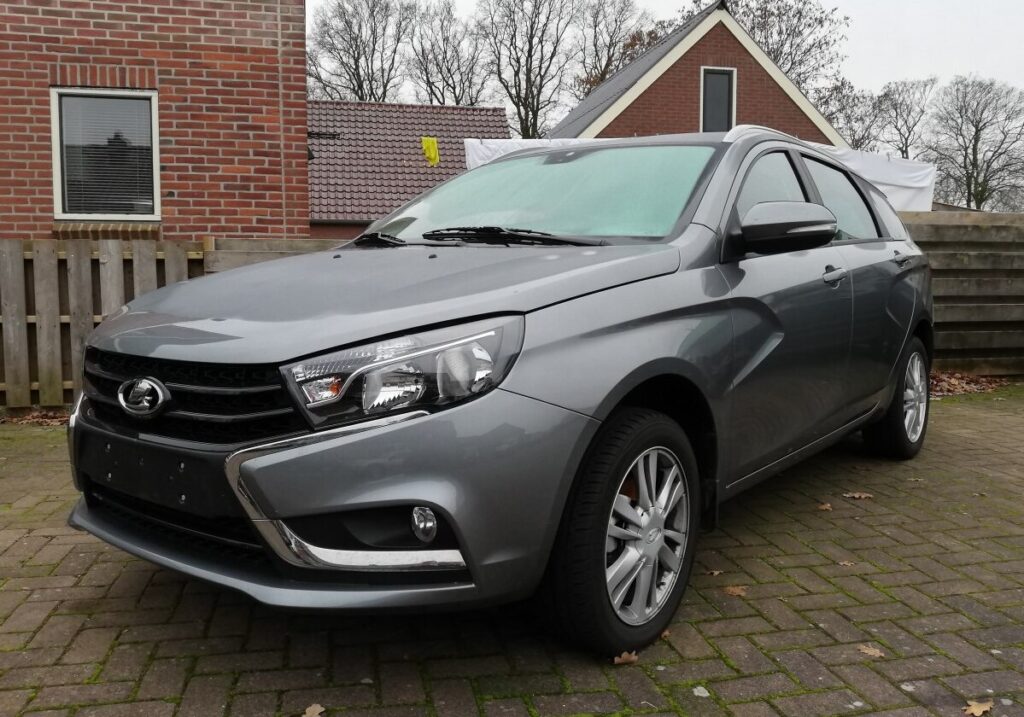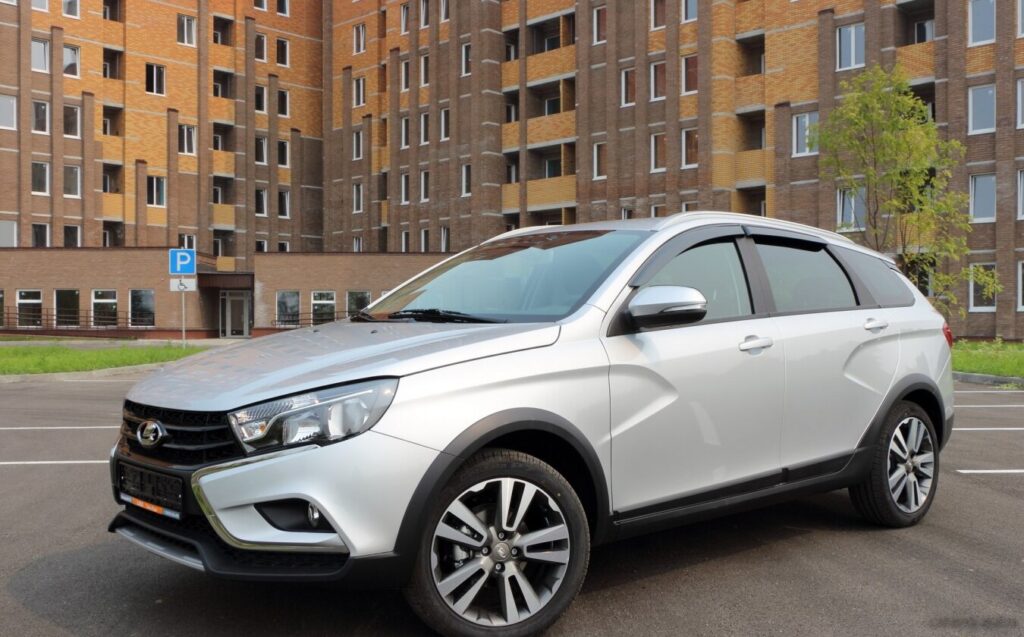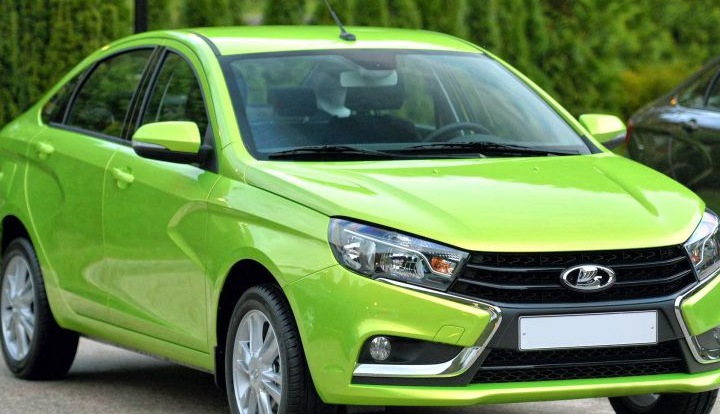
The Lada Vesta 1.8, introduced in 2015, represents a significant step forward for the Russian automaker, AvtoVAZ. Positioned as a mainstream compact sedan, the Vesta aimed to replace the aging Lada Priora and compete with increasingly sophisticated offerings from global manufacturers. The 1.8-liter, 122 horsepower variant served as a core model within the Vesta lineup, offering a balance of affordability, practicality, and acceptable performance for the Russian market and export destinations. It was designed to appeal to families and drivers seeking a modern, reliable, and spacious vehicle. The Vesta is built on a completely new platform, designated as the B/C platform, marking a departure from the shared platforms used in previous Lada models.
Technical Specifications
| Brand | Lada |
| Model | Vesta |
| Generation | Vesta |
| Type (Engine) | 1.8 (122 Hp) |
| Start of production | 2015 |
| Powertrain Architecture | Internal Combustion engine |
| Body type | Sedan |
| Seats | 5 |
| Doors | 4 |
| Fuel consumption (combined) | 7.5 l/100 km (31.4 US mpg, 37.7 UK mpg, 13.3 km/l) |
| Fuel Type | Petrol (Gasoline) |
| Acceleration 0 – 100 km/h | 10.2 sec |
| Acceleration 0 – 62 mph | 10.2 sec |
| Acceleration 0 – 60 mph | 9.7 sec |
| Maximum speed | 188 km/h (116.82 mph) |
| Emission standard | Euro 5 |
| Weight-to-power ratio | 10.1 kg/Hp, 99.2 Hp/tonne |
| Weight-to-torque ratio | 7.2 kg/Nm, 138.2 Nm/tonne |
| Power | 122 Hp @ 6050 rpm |
| Power per litre | 68.8 Hp/l |
| Torque | 170 Nm @ 3750 rpm (125.39 lb.-ft. @ 3750 rpm) |
| Engine layout | Front, Transverse |
| Engine Model/Code | VAZ-21179 |
| Engine displacement | 1774 cm3 (108.26 cu. in.) |
| Number of cylinders | 4 |
| Engine configuration | Inline |
| Cylinder Bore | 82 mm (3.23 in.) |
| Piston Stroke | 84 mm (3.31 in.) |
| Compression ratio | 10.5:1 |
| Number of valves per cylinder | 4 |
| Fuel injection system | Multi-port manifold injection |
| Engine aspiration | Naturally aspirated engine |
| Engine oil capacity | 4.1 l (4.33 US qt | 3.61 UK qt) |
| Coolant | 7 l (7.4 US qt | 6.16 UK qt) |
| Kerb Weight | 1230 kg (2711.69 lbs.) |
| Max. weight | 1670 kg (3681.72 lbs.) |
| Max load | 440 kg (970.03 lbs.) |
| Trunk (boot) space – minimum | 480 l (16.95 cu. ft.) |
| Fuel tank capacity | 55 l (14.53 US gal | 12.1 UK gal) |
| Permitted trailer load with brakes (12%) | 900 kg (1984.16 lbs.) |
| Permitted trailer load without brakes | 450 kg (992.08 lbs.) |
| Length | 4410 mm (173.62 in.) |
| Width | 1764 mm (69.45 in.) |
| Height | 1497 mm (58.94 in.) |
| Wheelbase | 2635 mm (103.74 in.) |
| Front track | 1510 mm (59.45 in.) |
| Rear (Back) track | 1510 mm (59.45 in.) |
| Ride height (ground clearance) | 178 mm (7.01 in.) |
| Drivetrain Architecture | The Internal combustion engine (ICE) drives the front wheels of the vehicle. |
| Drive wheel | Front wheel drive |
| Number of gears and type of gearbox | 5 gears, manual transmission |
| Front suspension | Independent, type McPherson with coil spring and anti-roll bar |
| Rear suspension | Semi-independent, coil spring |
| Front brakes | Ventilated discs |
| Rear brakes | Drum |
| Assisting systems | ABS (Anti-lock braking system) |
| Steering type | Steering rack and pinion |
| Tires size | 185/65 R15; 195/55 R16 |
| Wheel rims size | 15; 16 |
INTRODUCTION
The Lada Vesta 1.8, launched in 2015, marked a turning point for AvtoVAZ. It was the first model to be built on the new B/C platform, a significant investment aimed at improving quality, safety, and driving experience. The 1.8-liter engine, producing 122 horsepower, was a mainstay of the Vesta range, offering a balance between performance and fuel efficiency. This variant was positioned as a practical and affordable option for a broad range of buyers, particularly those prioritizing value and reliability. The Vesta aimed to address criticisms leveled at previous Lada models, offering a more modern and competitive package in the increasingly demanding Russian automotive market.
Powertrain & Engine Architecture
The heart of the Vesta 1.8 is the VAZ-21179 engine, a 1.8-liter inline-four cylinder gasoline engine. This engine is a naturally aspirated unit featuring a multi-point fuel injection system. The engine utilizes a single overhead camshaft (SOHC) design with four valves per cylinder. The engine’s architecture is relatively simple and robust, prioritizing reliability and ease of maintenance over outright performance. The 122 hp output is achieved at 6050 rpm, while peak torque of 170 Nm (125.39 lb-ft) is delivered at 3750 rpm. The engine is transversely mounted in the front of the vehicle. The Vesta 1.8 was primarily offered with a 5-speed manual transmission, although an automated manual transmission (AMT) was also available as an option. The AMT, while offering some convenience, was often criticized for its jerky shifts and slower response compared to a traditional automatic transmission.
Driving Characteristics
The Lada Vesta 1.8 with the 5-speed manual transmission delivers adequate, though not exhilarating, performance. Acceleration from 0 to 60 mph takes around 9.7 seconds, and the top speed is approximately 116.82 mph. The engine feels reasonably responsive in the mid-range, making it suitable for everyday driving and highway cruising. The gear ratios are tuned for fuel efficiency and practicality rather than sporty performance. Compared to higher-output versions of the Vesta, such as those equipped with the 1.6-liter turbocharged engine, the 1.8 feels noticeably less powerful, particularly when fully loaded or climbing hills. The AMT version, while offering ease of use, suffers from slower shift times and a less refined driving experience. The suspension is tuned for comfort, providing a relatively smooth ride over uneven road surfaces, a crucial characteristic given the often-poor road conditions in Russia.
Equipment & Trim Levels
The Lada Vesta 1.8 was available in several trim levels, ranging from basic ‘Standard’ to more well-equipped ‘Comfort’ and ‘Luxe’ versions. Even the base ‘Standard’ trim included essential features such as power steering, central locking, and front airbags. The ‘Comfort’ trim added features like air conditioning, power windows, and a basic audio system. The ‘Luxe’ trim offered additional amenities such as alloy wheels, heated front seats, and a more sophisticated infotainment system. Interior upholstery was typically cloth, with higher trims offering upgraded fabric options. Optional extras included a rear parking sensor, a trip computer, and a more advanced audio system with Bluetooth connectivity.
Chassis & Braking
The Vesta utilizes a McPherson strut front suspension and a semi-independent coil spring rear suspension. This setup provides a good balance between ride comfort and handling. The front brakes are ventilated discs, while the rear brakes are drums. ABS (Anti-lock Braking System) is standard across all trim levels. The Vesta’s chassis is relatively lightweight, contributing to its fuel efficiency and acceptable handling characteristics. The steering is a rack and pinion system, providing reasonable precision and feedback. Tire sizes typically ranged from 185/65 R15 to 195/55 R16, depending on the trim level.
Market Reception & Comparison
The Lada Vesta 1.8 was generally well-received in the Russian market, praised for its spacious interior, comfortable ride, and competitive price. Critics noted the improvement in build quality and overall refinement compared to previous Lada models. However, the engine was sometimes criticized for being underpowered, particularly when compared to foreign competitors. Fuel economy was considered average for its class, around 7.5 l/100 km. Compared to other Vesta trims, the 1.8-liter version offered a more affordable entry point into the Vesta range, appealing to budget-conscious buyers. The 1.6-liter turbocharged engine offered significantly more performance but came at a higher price point. The diesel variants, while offering better fuel economy, were less popular due to the lower quality of diesel fuel available in some regions.
Legacy
The Lada Vesta 1.8 has proven to be a relatively reliable and durable vehicle, particularly in the challenging conditions of the Russian winter. The simple engine design and robust construction contribute to its longevity. In the used car market, the Vesta 1.8 remains a popular choice for buyers seeking an affordable and practical sedan. While not known for its performance or cutting-edge technology, the Vesta 1.8 represents a significant step forward for AvtoVAZ, demonstrating the automaker’s ability to produce a modern and competitive vehicle. Its continued presence on Russian roads is a testament to its practicality and affordability.