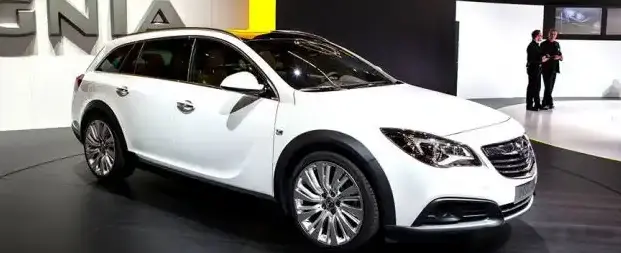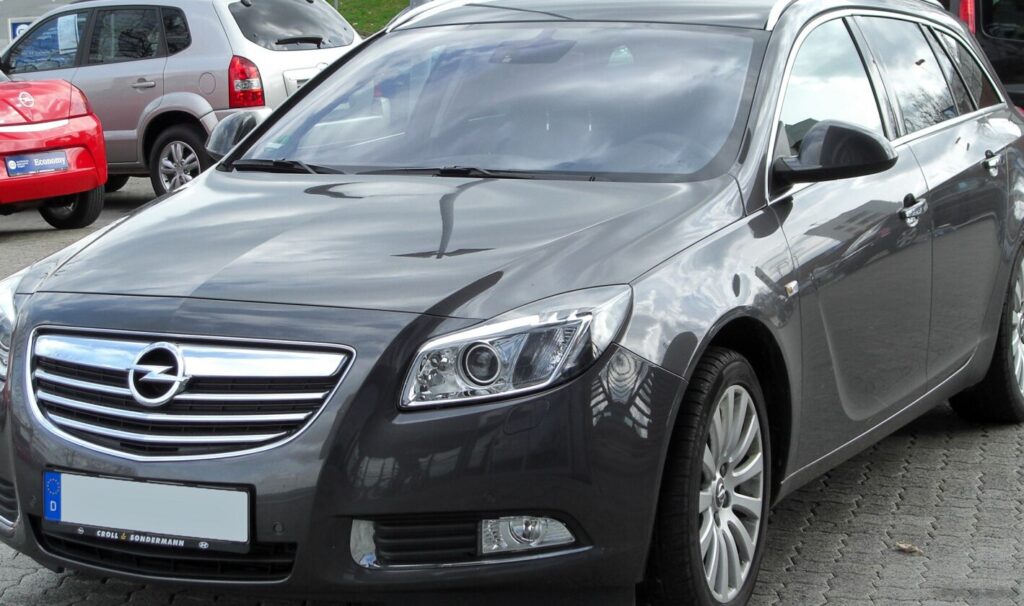
The Opel Insignia Sports Tourer (A) 2.8 V6 Turbo 4×4 Automatic, produced from June 2009 to June 2013, represented the flagship powertrain option for Opel’s first foray into the mid-size wagon segment aiming to compete with established European rivals like the Audi A6 Avant, BMW 3 Series Touring, and Volvo V60. Positioned as the premium trim level, it offered a blend of performance, practicality, and technology. This variant was part of the A generation of the Insignia, built on the GM Epsilon II platform (internal code 7HX0/A3). It was primarily marketed in Europe, offering a more upscale alternative to the standard Insignia models.
Technical Specifications
| Brand | Opel |
| Model | Insignia |
| Generation | Insignia Sports Tourer (A) |
| Type (Engine) | 2.8 V6 Turbo (260 Hp) 4×4 Automatic |
| Start of production | June, 2009 |
| End of production | June, 2013 |
| Powertrain Architecture | Internal Combustion engine |
| Body type | Station wagon (estate) |
| Seats | 5 |
| Doors | 5 |
| Fuel consumption (urban) | 17 l/100 km (13.8 US mpg, 16.6 UK mpg, 5.9 km/l) |
| Fuel consumption (extra urban) | 7.9 l/100 km (29.8 US mpg, 35.8 UK mpg, 12.7 km/l) |
| Fuel consumption (combined) | 11.3 l/100 km (20.8 US mpg, 25 UK mpg, 8.8 km/l) |
| CO2 emissions | 265 g/km |
| Fuel Type | Petrol (Gasoline) |
| Acceleration 0 – 100 km/h | 7.3 sec |
| Acceleration 0 – 62 mph | 7.3 sec |
| Acceleration 0 – 60 mph | 6.9 sec |
| Maximum speed | 250 km/h (155.34 mph) |
| Emission standard | Euro 5 |
| Weight-to-power ratio | 7.1 kg/Hp, 140.3 Hp/tonne |
| Weight-to-torque ratio | 3.9 kg/Nm, 256.3 Nm/tonne |
| Power | 260 Hp @ 5500 rpm |
| Power per litre | 93.1 Hp/l |
| Torque | 475 Nm @ 1900-4500 rpm (350.34 lb.-ft. @ 1900-4500 rpm) |
| Engine layout | Front, Transverse |
| Engine Model/Code | A28NET |
| Engine displacement | 2792 cm3 (170.38 cu. in.) |
| Number of cylinders | 6 |
| Engine configuration | V-engine |
| Cylinder Bore | 89 mm (3.5 in.) |
| Piston Stroke | 74.8 mm (2.94 in.) |
| Compression ratio | 9.5:1 |
| Number of valves per cylinder | 4 |
| Fuel injection system | Multi-port manifold injection |
| Engine aspiration | Turbocharger, Intercooler |
| Engine oil capacity | 6.3 l (6.66 US qt | 5.54 UK qt) |
| Coolant | 6.7 l (7.08 US qt | 5.9 UK qt) |
| Kerb Weight | 1853 kg (4085.17 lbs.) |
| Max. weight | 2520 kg (5555.65 lbs.) |
| Max load | 667 kg (1470.48 lbs.) |
| Trunk (boot) space – minimum | 540 l (19.07 cu. ft.) |
| Trunk (boot) space – maximum | 1530 l (54.03 cu. ft.) |
| Fuel tank capacity | 70 l (18.49 US gal | 15.4 UK gal) |
| Length | 4908 mm (193.23 in.) |
| Width | 1858 mm (73.15 in.) |
| Height | 1520 mm (59.84 in.) |
| Wheelbase | 2737 mm (107.76 in.) |
| Front track | 1585 mm (62.4 in.) |
| Rear (Back) track | 1587 mm (62.48 in.) |
| Ride height (ground clearance) | 160 mm (6.3 in.) |
| Minimum turning circle | 10.8 m (35.43 ft.) |
| Drive wheel | All wheel drive (4×4) |
| Number of gears | 6 |
| Gearbox type | automatic transmission |
| Front brakes | Ventilated discs |
| Rear brakes | Disc |
| Assisting systems | ABS (Anti-lock braking system) |
| Tires size | 245/45 R18 |
| Wheel rims size | 18 |
INTRODUCTION
The Opel Insignia Sports Tourer (A) 2.8 V6 Turbo 4×4 Automatic, launched in 2009, was a significant vehicle for Opel. It aimed to elevate the brand’s image and provide a compelling alternative to the established premium brands in the mid-size wagon segment. The “Sports Tourer” designation signified Opel’s intention to offer a more dynamic and practical vehicle than traditional estate cars. This top-of-the-line variant, with its powerful V6 engine and all-wheel-drive system, was designed to appeal to buyers seeking a blend of performance, space, and all-weather capability. It was a key model in Opel’s attempt to gain market share in a competitive segment.
Powertrain & Engine Architecture
At the heart of this Insignia variant lies the A28NET engine, a 2.8-liter naturally aspirated V6 engine boosted by a twin-scroll turbocharger. This engine produced 260 horsepower at 5500 rpm and a substantial 475 Nm (350 lb-ft) of torque available from a low 1900 rpm all the way to 4500 rpm. The engine utilized multi-port fuel injection and featured a cast iron block with aluminum cylinder heads. The engine’s architecture was designed for smooth power delivery and refinement. The engine was paired with a six-speed automatic transmission, specifically the TF-80SC, a common unit used by General Motors and other manufacturers. This transmission offered smooth shifts and adaptive learning capabilities to optimize performance based on driving style.
Driving Characteristics
The 2.8 V6 Turbo 4×4 Automatic Insignia Sports Tourer offered a noticeably different driving experience compared to the lower-powered variants. The ample torque and responsive turbocharger provided strong acceleration, with 0-60 mph times around 6.9 seconds. The all-wheel-drive system, utilizing a multi-plate clutch, provided excellent traction in various conditions, enhancing stability and confidence. While not a sports car, the Insignia offered a composed and comfortable ride, with well-tuned suspension absorbing most road imperfections. The automatic transmission, while smooth, wasn’t particularly quick to downshift, and lacked the engagement of a manual gearbox. Compared to the 2.0-liter turbocharged four-cylinder models, the V6 offered a more refined and powerful experience, but at the cost of increased fuel consumption.
Equipment & Trim Levels
The 2.8 V6 Turbo 4×4 Automatic typically came with a high level of standard equipment. This included leather upholstery, heated front seats, dual-zone climate control, a premium audio system, and a comprehensive suite of safety features like ABS, ESP, and multiple airbags. Optional extras included a panoramic sunroof, adaptive cruise control, and a navigation system. The interior design was generally modern and functional, with a focus on ergonomics. The dashboard layout was clean and intuitive, with easy-to-use controls. Trim levels varied slightly depending on the market, but generally, this variant represented the highest level of luxury and technology available for the Insignia Sports Tourer.
Chassis & Braking
The Insignia Sports Tourer featured a McPherson strut front suspension and a multi-link rear suspension, providing a good balance between ride comfort and handling. The all-wheel-drive system added to the vehicle’s stability and cornering ability. Braking duties were handled by ventilated discs at the front and solid discs at the rear, providing adequate stopping power. ABS (Anti-lock Braking System) and ESP (Electronic Stability Program) were standard features, enhancing safety and control. The steering was generally precise and well-weighted, offering a good level of feedback to the driver.
Market Reception & Comparison
The Insignia Sports Tourer 2.8 V6 Turbo 4×4 Automatic received generally positive reviews from automotive critics. It was praised for its powerful engine, spacious interior, and comfortable ride. However, some critics noted its relatively high fuel consumption and the slightly sluggish response of the automatic transmission. Compared to its rivals, such as the Audi A6 Avant and BMW 3 Series Touring, the Insignia offered a compelling value proposition, providing similar levels of performance and features at a lower price point. The 2.0-liter turbocharged models offered better fuel economy and were more affordable, appealing to a wider range of buyers. The V6 variant targeted those who prioritized performance and refinement.
Legacy
The Opel Insignia Sports Tourer 2.8 V6 Turbo 4×4 Automatic, while not a high-volume seller, established the Insignia as a credible contender in the mid-size wagon segment. The A28NET engine proved to be relatively reliable, although regular maintenance is crucial. On the used car market, these models are sought after by enthusiasts who appreciate the combination of performance, practicality, and relative rarity. Parts availability is generally good, but specialized components may require sourcing from Opel dealerships or specialist parts suppliers. The Insignia Sports Tourer, particularly this high-performance variant, remains a well-regarded and capable vehicle, offering a unique blend of attributes that continue to appeal to discerning buyers.