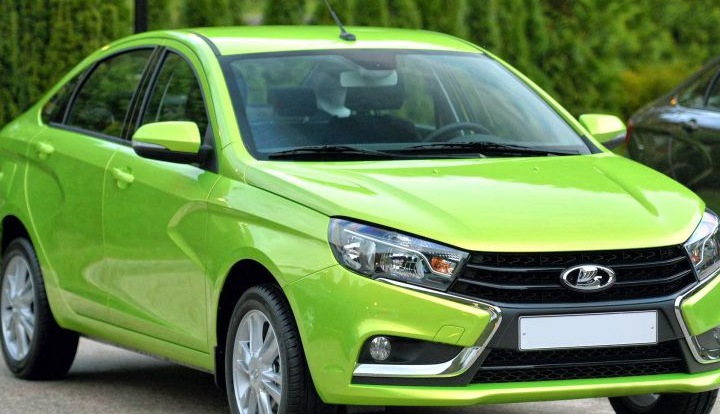
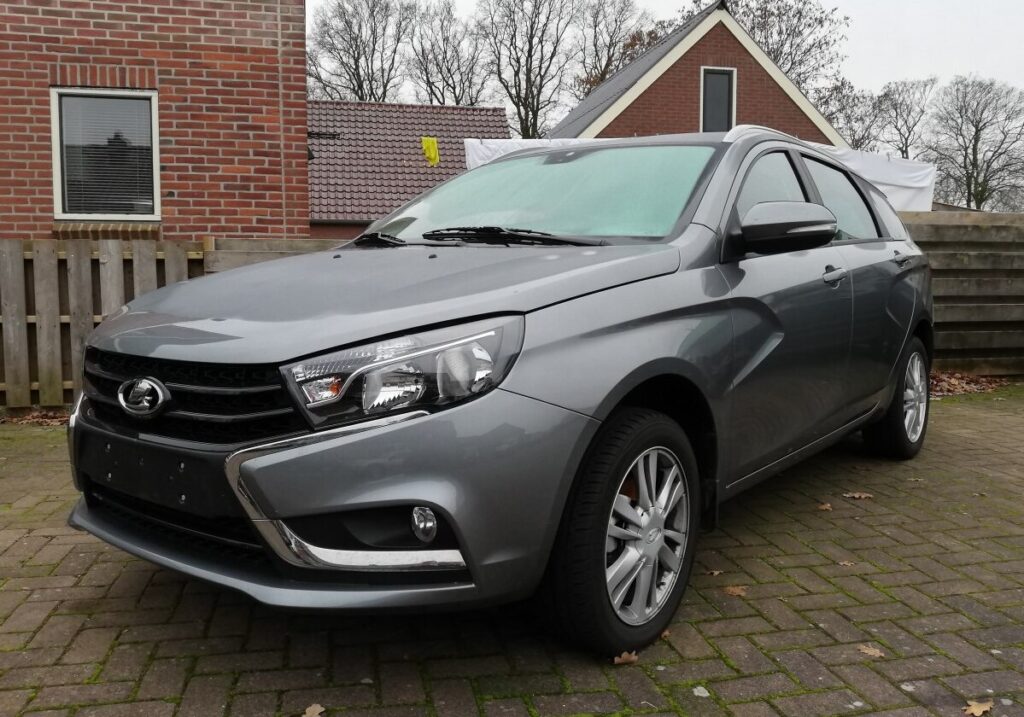
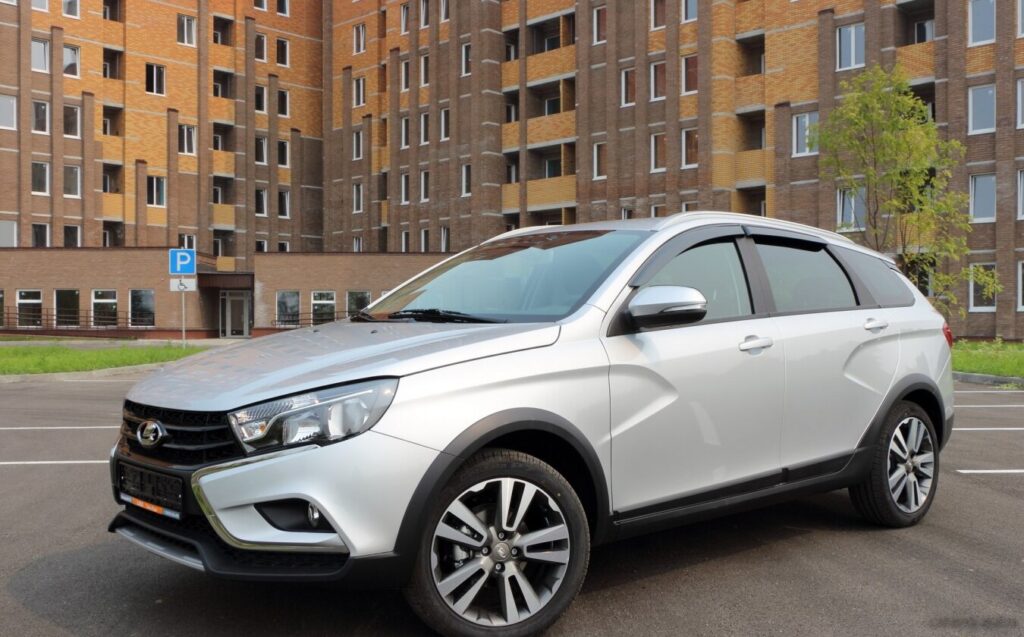
The Lada Vesta Crossover 1.8 (122 hp) Automatic, introduced in 2015, represents a significant step in Lada’s modernization efforts. Positioned as a more rugged and versatile variant of the standard Vesta, the Crossover aimed to appeal to buyers seeking a vehicle capable of handling Russia’s diverse road conditions. This particular configuration – the 1.8-liter engine paired with a five-speed automatic transmission – served as a mid-range offering within the Vesta Crossover lineup, balancing affordability with relative convenience. It was designed to broaden the Vesta’s appeal beyond the traditionally budget-conscious Lada customer base, competing with increasingly sophisticated offerings from international manufacturers in the Russian market.
Technical Specifications
| Brand | Lada |
| Model | Vesta |
| Generation | Vesta Crossover |
| Type (Engine) | 1.8 (122 Hp) Automatic |
| Start of production | 2015 |
| Powertrain Architecture | Internal Combustion engine |
| Body type | Crossover |
| Seats | 5 |
| Doors | 5 |
| Fuel Type | Petrol (Gasoline) |
| Emission standard | Euro 5 |
| Power | 122 Hp @ 5900 rpm |
| Power per litre | 68.8 Hp/l |
| Torque | 170 Nm @ 3700 rpm (125.39 lb.-ft. @ 3700 rpm) |
| Engine layout | Front, Transverse |
| Engine Model/Code | VAZ-21179 |
| Engine displacement | 1774 cm3 (108.26 cu. in.) |
| Number of cylinders | 4 |
| Engine configuration | Inline |
| Cylinder Bore | 82 mm (3.23 in.) |
| Piston Stroke | 84 mm (3.31 in.) |
| Compression ratio | 10.5:1 |
| Number of valves per cylinder | 4 |
| Fuel injection system | Multi-port manifold injection |
| Engine aspiration | Naturally aspirated engine |
| Engine oil capacity | 4.1 l (4.33 US qt | 3.61 UK qt) |
| Coolant | 7 l (7.4 US qt | 6.16 UK qt) |
| Fuel tank capacity | 55 l (14.53 US gal | 12.1 UK gal) |
| Length | 4424 mm (174.17 in.) |
| Width | 1785 mm (70.28 in.) |
| Height | 1532 mm (60.31 in.) |
| Wheelbase | 2635 mm (103.74 in.) |
| Front track | 1510 mm (59.45 in.) |
| Rear (Back) track | 1510 mm (59.45 in.) |
| Ride height (ground clearance) | 203 mm (7.99 in.) |
| Drivetrain Architecture | The Internal combustion engine (ICE) drives the front wheels of the vehicle. |
| Drive wheel | Front wheel drive |
| Number of gears and type of gearbox | 5 gears, automatic transmission |
| Front suspension | Independent, type McPherson with coil spring and anti-roll bar |
| Rear suspension | Semi-independent, coil spring |
| Front brakes | Ventilated discs |
| Rear brakes | Disc |
| Assisting systems | ABS (Anti-lock braking system) |
| Steering type | Steering rack and pinion |
| Power steering | Electric Steering |
| Tires size | 185/65 R15 |
| Wheel rims size | 15 |
Powertrain & Engine Architecture
The heart of the Vesta Crossover 1.8 Automatic is the VAZ-21179 engine, an 1.8-liter inline-four cylinder gasoline engine. This engine is a development of Lada’s earlier designs, incorporating multi-point fuel injection and a relatively high compression ratio of 10.5:1. The engine utilizes a single overhead camshaft (SOHC) design with four valves per cylinder, contributing to reasonable performance for its displacement. The 122 horsepower peak is achieved at 5900 rpm, while the 170 Nm (125 lb-ft) of torque is delivered at 3700 rpm. Paired with this engine is a Jatco-sourced five-speed automatic transmission. This transmission, while providing convenience, was often criticized for its somewhat sluggish shifts and conservative programming, prioritizing fuel economy over outright acceleration. The transmission is a conventional torque converter automatic, lacking the more advanced features found in some contemporary transmissions.
Driving Characteristics
The 1.8-liter engine and five-speed automatic combination in the Vesta Crossover delivers adequate, but not particularly exhilarating, performance. Acceleration is best described as leisurely, with a 0-60 mph time estimated to be around 11-12 seconds. The automatic transmission’s gear ratios are tuned for fuel efficiency, meaning the engine often feels strained during overtaking maneuvers or when climbing hills. Compared to the available five-speed manual transmission, the automatic version sacrifices some responsiveness. The manual offered a more engaging driving experience and slightly improved fuel economy. The Crossover’s increased weight compared to the standard Vesta also contributes to the less dynamic feel.
Equipment & Trim Levels
The 1.8 Automatic trim of the Vesta Crossover typically included standard features such as air conditioning, power windows, central locking, and an audio system with USB connectivity. Higher trim levels added features like alloy wheels, fog lights, a more sophisticated audio system, and upgraded interior materials. Interior upholstery was generally cloth, with options for more durable and visually appealing fabrics on higher trims. Safety equipment included ABS and front airbags, but more advanced safety features like electronic stability control were often reserved for the higher-end models. Optional extras included a rear parking sensor, heated front seats, and a trip computer.
Chassis & Braking
The Vesta Crossover utilizes a McPherson strut front suspension and a semi-independent coil spring rear suspension. This setup provides a reasonable balance between ride comfort and handling, although it’s not particularly sporty. The increased ride height, a defining characteristic of the Crossover, contributes to improved ground clearance for navigating rough roads. Braking duties are handled by ventilated discs at the front and solid discs at the rear. ABS is standard, providing enhanced braking performance in emergency situations. The steering is rack and pinion with electric power assistance, offering light and easy steering feel.
Market Reception & Comparison
The Lada Vesta Crossover 1.8 Automatic was generally well-received in the Russian market, particularly for its combination of affordability, practicality, and improved styling compared to previous Lada models. Critics noted the engine’s adequate power and the convenience of the automatic transmission, but also pointed out the transmission’s sluggishness and the car’s overall lack of refinement compared to some of its international competitors. Fuel economy was considered average for the class, with combined cycle figures around 7.5-8.5 liters per 100 kilometers (approximately 31-28 mpg). Compared to the 1.6-liter manual version, the 1.8 Automatic offered more power but consumed more fuel. The 1.8 Automatic positioned itself as a step up from the base models, appealing to buyers who prioritized convenience and a slightly more refined driving experience.
Legacy
The Vesta Crossover 1.8 Automatic played a crucial role in Lada’s efforts to modernize its image and compete more effectively in the Russian automotive market. While the powertrain isn’t known for exceptional reliability issues, regular maintenance is key to longevity. The Jatco automatic transmission, when properly serviced, has proven to be reasonably durable. On the used car market, these models represent a relatively affordable and practical option, particularly for buyers seeking a vehicle capable of handling challenging road conditions. The Vesta Crossover, in general, helped establish Lada as a more credible player in the crossover segment, paving the way for future models and further improvements in quality and technology.