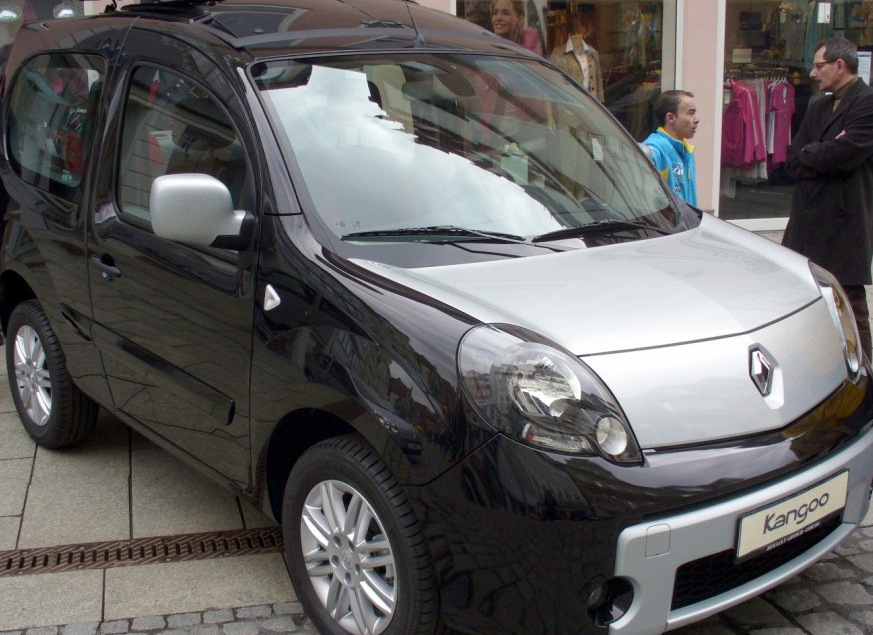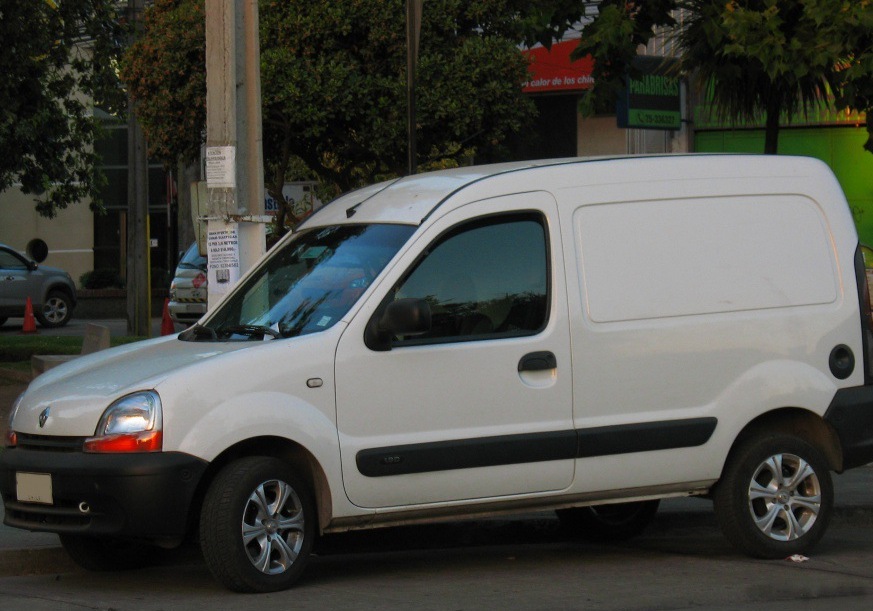
The Renault Kangoo I Express, specifically the 1.5 dCi variant producing 82 horsepower, was a popular choice in the European commercial vehicle market from 2002 to 2003. Falling within the first generation (FC) of the Kangoo, this model served as a practical and economical solution for businesses and tradespeople requiring a compact, versatile van. It was positioned as an entry-level to mid-range offering within the Kangoo Express lineup, prioritizing fuel efficiency and affordability over outright performance. The Kangoo I generation, built on the shared Renault-Nissan B platform, aimed to modernize the small van segment with a focus on car-like driving characteristics and a spacious interior for its size.
Technical Specifications
| Brand | Renault |
| Model | Kangoo |
| Generation | Kangoo I Express (FC) |
| Type (Engine) | 1.5 dCi (82 Hp) |
| Start of production | 2002 |
| End of production | 2003 |
| Powertrain Architecture | Internal Combustion engine |
| Body type | Minivan |
| Seats | 2 |
| Doors | 3 |
| Fuel consumption (urban) | 6.3 l/100 km (37.3 US mpg, 44.8 UK mpg, 15.9 km/l) |
| Fuel consumption (extra urban) | 4.6 l/100 km (51.1 US mpg, 61.4 UK mpg, 21.7 km/l) |
| Fuel consumption (combined) | 5.3 l/100 km (44.4 US mpg, 53.3 UK mpg, 18.9 km/l) |
| CO2 emissions | 139 g/km |
| Fuel Type | Diesel |
| Acceleration 0 – 100 km/h | 12.5 sec |
| Acceleration 0 – 62 mph | 12.5 sec |
| Acceleration 0 – 60 mph | 11.9 sec |
| Maximum speed | 155 km/h (96.31 mph) |
| Weight-to-power ratio | 13.8 kg/Hp, 72.2 Hp/tonne |
| Weight-to-torque ratio | 6.1 kg/Nm, 163 Nm/tonne |
| Power | 82 Hp @ 4000 rpm |
| Power per litre | 56.1 Hp/l |
| Torque | 185 Nm @ 2000 rpm (136.45 lb.-ft. @ 2000 rpm) |
| Engine layout | Front, Transverse |
| Engine Model/Code | K9K |
| Engine displacement | 1461 cm3 (89.16 cu. in.) |
| Number of cylinders | 4 |
| Engine configuration | Inline |
| Cylinder Bore | 76 mm (2.99 in.) |
| Piston Stroke | 80.5 mm (3.17 in.) |
| Compression ratio | 18.8:1 |
| Number of valves per cylinder | 2 |
| Fuel injection system | Diesel Commonrail |
| Engine aspiration | Turbocharger, Intercooler |
| Valvetrain | OHC |
| Engine oil capacity | 5 l (5.28 US qt | 4.4 UK qt) |
| Coolant | 5.5 l (5.81 US qt | 4.84 UK qt) |
| Kerb Weight | 1135 kg (2502.25 lbs.) |
| Max. weight | 1680 kg (3703.77 lbs.) |
| Max load | 545 kg (1201.52 lbs.) |
| Trunk (boot) space – maximum | 2750 l (97.12 cu. ft.) |
| Fuel tank capacity | 50 l (13.21 US gal | 11 UK gal) |
| Max. roof load | 100 kg (220.46 lbs.) |
| Permitted trailer load with brakes (12%) | 820 kg (1807.79 lbs.) |
| Permitted trailer load without brakes | 530 kg (1168.45 lbs.) |
| Permitted towbar download | 75 kg (165.35 lbs.) |
| Length | 3995 mm (157.28 in.) |
| Width | 1663 mm (65.47 in.) |
| Width including mirrors | 2015 mm (79.33 in.) |
| Height | 1827 mm (71.93 in.) |
| Wheelbase | 2600 mm (102.36 in.) |
| Front track | 1405 mm (55.31 in.) |
| Rear (Back) track | 1415 mm (55.71 in.) |
| Front overhang | 692 mm (27.24 in.) |
| Rear overhang | 703 mm (27.68 in.) |
| Minimum turning circle | 10.95 m (35.93 ft.) |
| Drivetrain Architecture | Front wheel drive |
| Drive wheel | Front wheel drive |
| Number of gears and type of gearbox | 5 gears, manual transmission |
| Front suspension | Spring Strut |
| Rear suspension | Trailing arm |
| Front brakes | Ventilated discs |
| Rear brakes | Drum |
| Assisting systems | ABS (Anti-lock braking system) |
| Steering type | Steering rack and pinion |
| Power steering | Hydraulic Steering |
| Tires size | 175/65 R14 |
| Wheel rims size | 14 |
Powertrain & Engine Architecture
The heart of this Kangoo Express variant is the Renault K9K engine, a 1.5-liter inline-four cylinder diesel. This engine, part of the K-series family, was widely used across Renault and Nissan vehicles. The 82 horsepower version, typically identified by engine codes such as K9K 704, utilizes a second-generation common rail direct injection system. This system, supplied by Delphi, allowed for precise fuel delivery, contributing to improved fuel economy and reduced emissions. The engine also features a turbocharger with an intercooler, enhancing power output. The valvetrain employs a single overhead camshaft (OHC) configuration with two valves per cylinder. The five-speed manual transmission was the standard offering, chosen for its simplicity and cost-effectiveness. The transmission’s gear ratios were geared towards maximizing fuel efficiency rather than providing sporty acceleration.
Driving Characteristics
The 1.5 dCi 82 hp Kangoo Express prioritized practicality over performance. Acceleration was modest, with a 0-60 mph time around 12.5 seconds. The engine delivered its peak torque of 185 Nm (136 lb-ft) at 2000 rpm, providing adequate pulling power for typical commercial duties, but it wasn’t particularly responsive at higher engine speeds. The manual transmission, while not offering particularly short ratios, was well-matched to the engine’s characteristics. The Kangoo’s suspension, tuned for comfort and load-carrying capacity, provided a reasonably smooth ride even when fully laden. However, handling was not a strong point, with noticeable body roll in corners.
Equipment & Trim Levels
The Kangoo Express 1.5 dCi 82 hp was generally equipped with basic, functional features. Standard equipment typically included power steering, a driver’s airbag, and a basic audio system. The interior was primarily focused on durability and ease of cleaning, with hard-wearing plastics and vinyl upholstery. Optional extras included air conditioning, power windows, and upgraded audio systems. The trim level was generally considered basic, aimed at providing a cost-effective solution for commercial users. The focus was on providing a reliable and practical work vehicle rather than luxury or refinement.
Chassis & Braking
The Kangoo I Express utilized a relatively simple chassis design. Front suspension consisted of MacPherson strut springs, while the rear employed a trailing arm setup. This configuration provided a good balance between ride comfort and load-carrying capacity. Braking was handled by ventilated discs on the front wheels and drum brakes on the rear. Anti-lock Braking System (ABS) was standard, enhancing safety. The steering system was a rack and pinion type with hydraulic power assistance, providing reasonable steering feel and maneuverability.
Market Reception & Comparison
The Renault Kangoo I Express 1.5 dCi 82 hp was well-received in the European market as a practical and economical light commercial vehicle. Critics praised its fuel efficiency, spacious interior, and car-like driving characteristics. Compared to higher-output versions of the Kangoo, such as those with more powerful diesel engines, the 82 hp variant offered lower running costs but sacrificed performance. Compared to petrol-powered alternatives, the diesel engine provided significantly better fuel economy. Its main competitors included the Citroën Berlingo, Peugeot Partner, and Fiat Doblo.
Legacy
The Renault Kangoo I, and specifically the 1.5 dCi 82 hp variant, established a strong reputation for reliability and durability. The K9K engine proved to be a robust and long-lasting unit, and many examples remain on the road today. In the used car market, these Kangoos are often sought after for their affordability and practicality. While maintenance costs are generally low, potential buyers should be aware of common diesel engine issues such as injector problems and turbocharger wear. The Kangoo I paved the way for subsequent generations of the Kangoo, which continued to build on its success as a popular choice for commercial and private users alike.