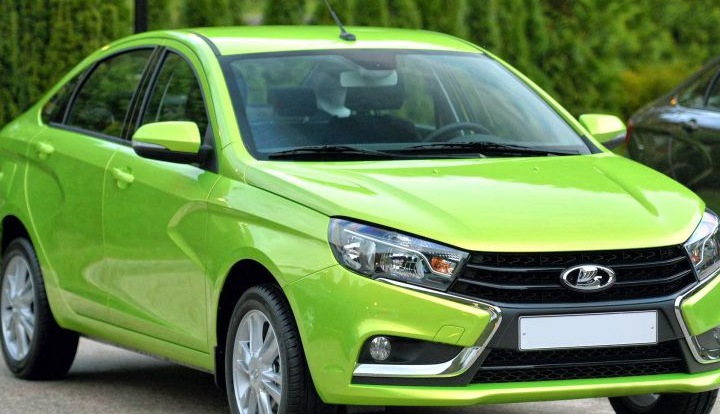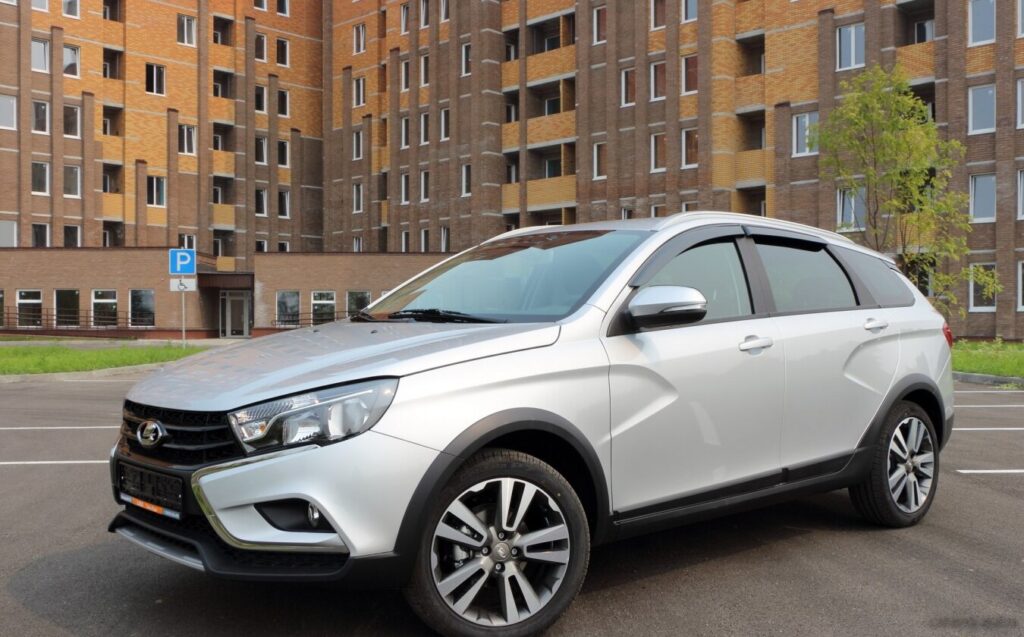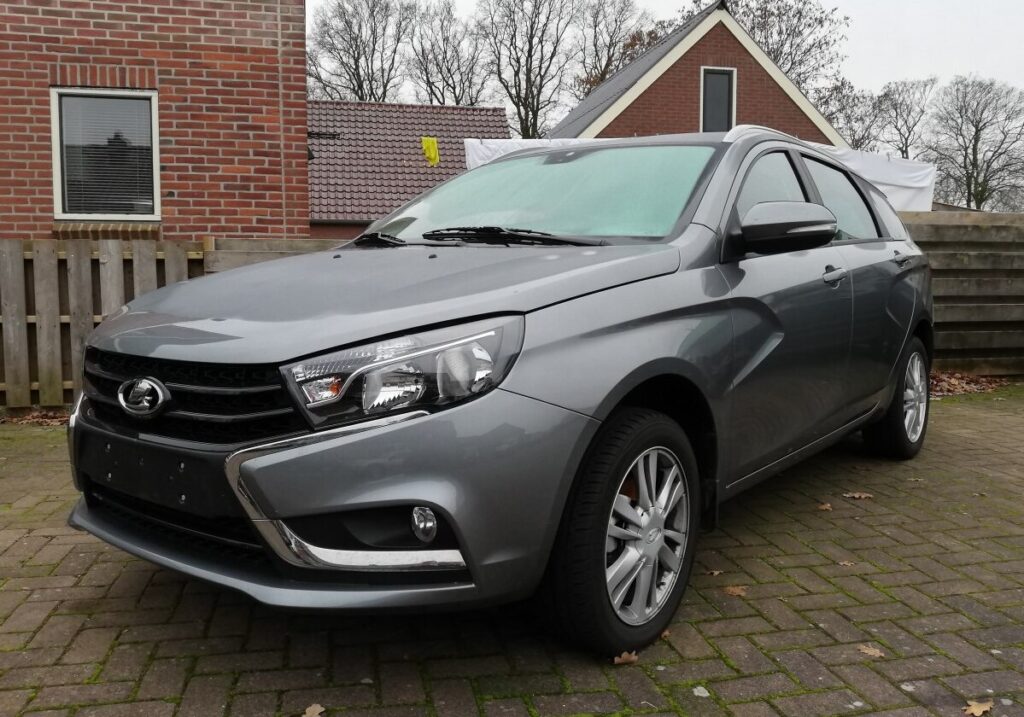
The Lada Vesta SW 1.6, producing 106 horsepower, represents a significant entry point into the Vesta station wagon (estate) lineup, launched in 2015. Positioned as a practical and affordable family vehicle, the Vesta SW aimed to modernize Lada’s image and offer a compelling alternative to aging models in the Russian market and select export regions. This variant, powered by the VAZ-21129 engine, was designed to balance fuel efficiency with adequate performance for everyday driving needs. It’s built on the Lada B/C platform, a front-wheel-drive architecture intended to provide a more modern driving experience than its predecessors.
Technical Specifications
| Brand | Lada |
| Model | Vesta |
| Generation | Vesta SW |
| Type (Engine) | 1.6 (106 Hp) |
| Start of production | 2015 |
| Powertrain Architecture | Internal Combustion engine |
| Body type | Station wagon (estate) |
| Seats | 5 |
| Doors | 5 |
| Fuel Type | Petrol (Gasoline) |
| Emission standard | Euro 5 |
| Power | 106 Hp @ 5800 rpm |
| Power per litre | 66.4 Hp/l |
| Torque | 148 Nm @ 4200 rpm / 109.16 lb.-ft. @ 4200 rpm |
| Engine layout | Front, Transverse |
| Engine Model/Code | VAZ-21129 |
| Engine displacement | 1596 cm3 / 97.39 cu. in. |
| Number of cylinders | 4 |
| Engine configuration | Inline |
| Cylinder Bore | 82 mm / 3.23 in. |
| Piston Stroke | 75.6 mm / 2.98 in. |
| Compression ratio | 10.5:1 |
| Number of valves per cylinder | 4 |
| Fuel injection system | Multi-port manifold injection |
| Engine aspiration | Naturally aspirated engine |
| Engine oil capacity | 4.1 l / 4.33 US qt | 3.61 UK qt |
| Coolant | 6.4 l / 6.76 US qt | 5.63 UK qt |
| Fuel tank capacity | 55 l / 14.53 US gal | 12.1 UK gal |
| Length | 4410 mm / 173.62 in. |
| Width | 1764 mm / 69.45 in. |
| Height | 1512 mm / 59.53 in. |
| Wheelbase | 2635 mm / 103.74 in. |
| Front track | 1510 mm / 59.45 in. |
| Rear (Back) track | 1510 mm / 59.45 in. |
| Ride height (ground clearance) | 178 mm / 7.01 in. |
| Drivetrain Architecture | The Internal combustion engine (ICE) drives the front wheels of the vehicle. |
| Drive wheel | Front wheel drive |
| Number of gears and type of gearbox | 5 gears, manual transmission |
| Front suspension | Independent, type McPherson with coil spring and anti-roll bar |
| Rear suspension | Semi-independent, coil spring |
| Front brakes | Ventilated discs |
| Rear brakes | Drum |
| Assisting systems | ABS (Anti-lock braking system) |
| Steering type | Steering rack and pinion |
| Power steering | Electric Steering |
| Tires size | 185/65 R15 |
| Wheel rims size | 15 |
Powertrain & Engine Architecture
The heart of the Lada Vesta SW 1.6 is the VAZ-21129 engine, a 1.6-liter inline-four cylinder gasoline engine. This engine is a descendant of the long-running VAZ-2112 series, but with several updates aimed at improving efficiency and reliability. It utilizes a multi-point fuel injection system, delivering fuel directly to the intake ports. The engine features a single overhead camshaft (SOHC) design with four valves per cylinder, contributing to reasonable power output for its displacement. The 106 horsepower peak is achieved at 5800 rpm, while the 148 Nm (109.16 lb-ft) of torque is available at 4200 rpm. The engine is transversely mounted in the front of the vehicle, driving the front wheels. The standard transmission for this variant is a five-speed manual gearbox, chosen for its simplicity and cost-effectiveness. While an automatic transmission was eventually offered on other Vesta models, it wasn’t initially available with the 1.6-liter engine.
Driving Characteristics
The 1.6-liter engine, paired with the five-speed manual transmission, provides adequate, though not exhilarating, performance. Acceleration is best described as leisurely, with a 0-60 mph time estimated around 12-13 seconds. The gear ratios are tuned for fuel economy and everyday usability rather than outright speed. The engine feels most comfortable in the mid-range, providing sufficient power for highway cruising and overtaking maneuvers, though it requires downshifting for quicker responses. Compared to the more powerful 1.8-liter versions of the Vesta, or the diesel options, this variant feels noticeably slower. However, the lighter engine weight contributes to slightly improved handling and fuel efficiency. The manual transmission offers a direct and engaging driving experience, allowing the driver to maximize the available power.
Equipment & Trim Levels
The Lada Vesta SW 1.6 typically came with a relatively basic level of equipment, reflecting its position as an entry-level model. Standard features generally included power steering, ABS, front airbags, and a basic audio system. Interior upholstery was typically cloth, with a functional, if somewhat spartan, dashboard layout. Optional extras, depending on the market and year, could include air conditioning, power windows, heated front seats, and an upgraded audio system with Bluetooth connectivity. Higher trim levels of the Vesta SW offered more luxurious features, such as leather upholstery, alloy wheels, and a more sophisticated infotainment system, but these were not standard on the 1.6-liter model.
Chassis & Braking
The Vesta SW utilizes a McPherson strut front suspension with a coil spring and anti-roll bar, providing a comfortable ride quality. The rear suspension is a semi-independent coil spring setup, which is a cost-effective solution for a vehicle in this segment. The front brakes are ventilated discs, offering good stopping power, while the rear brakes are drum brakes, a common feature on more affordable vehicles. The steering is a rack and pinion system with electric power assistance, providing light and easy steering feel. The 185/65 R15 tires offer a good balance of comfort and grip for typical road conditions.
Market Reception & Comparison
The Lada Vesta SW 1.6 was generally well-received in its primary market, Russia, as a practical and affordable family vehicle. Critics praised its spacious interior, comfortable ride, and relatively modern design. However, the engine’s performance was often cited as a weakness, particularly when compared to competitors offering more powerful engines. Fuel economy was considered reasonable, but not exceptional. Compared to other trims in the Vesta lineup, the 1.6-liter model offered the lowest price of entry, making it attractive to budget-conscious buyers. The 1.8-liter versions provided significantly more power, while the diesel options offered better fuel economy, but at a higher cost.
Legacy
The Lada Vesta SW 1.6 has proven to be a relatively reliable powertrain in the used car market. The VAZ-21129 engine is known for its durability and relatively simple maintenance requirements. While not a performance powerhouse, it is a capable and dependable engine for everyday driving. Parts availability is generally good, and repair costs are typically low. The Vesta SW, in general, represented a step forward for Lada in terms of quality and design, and the 1.6-liter variant remains a popular choice for those seeking an affordable and practical station wagon.