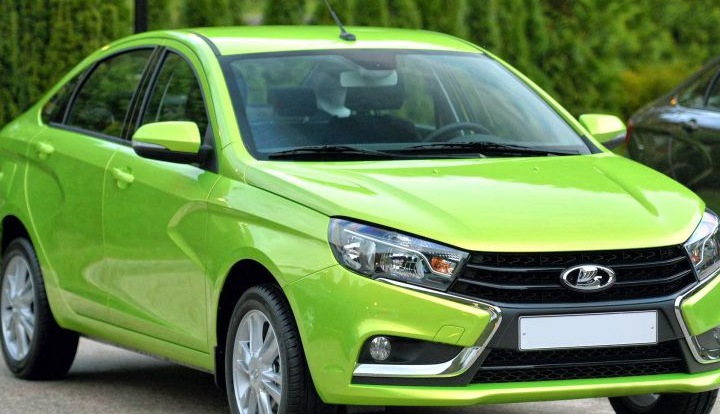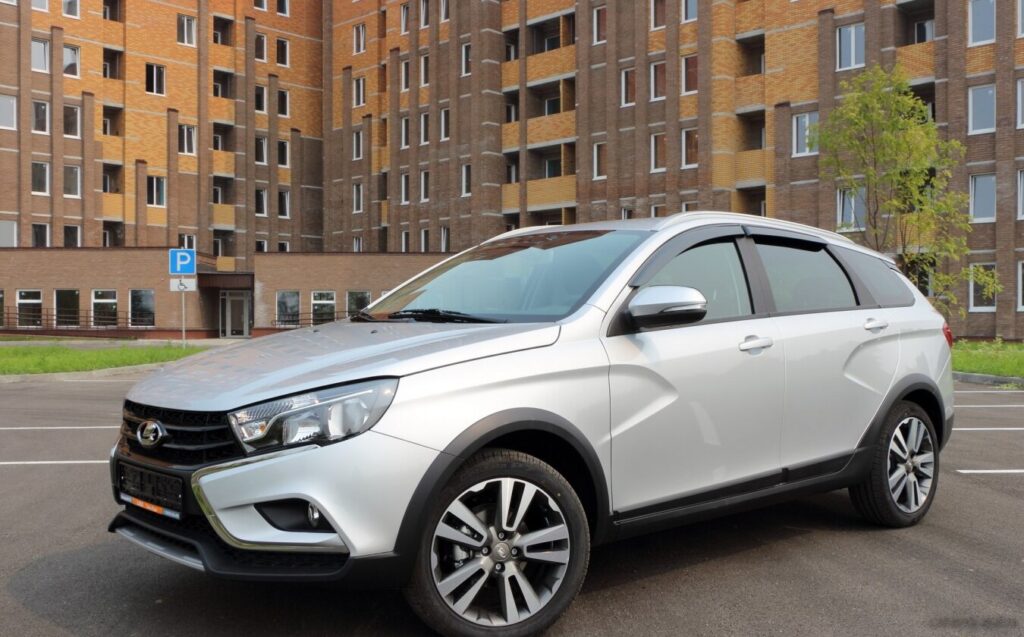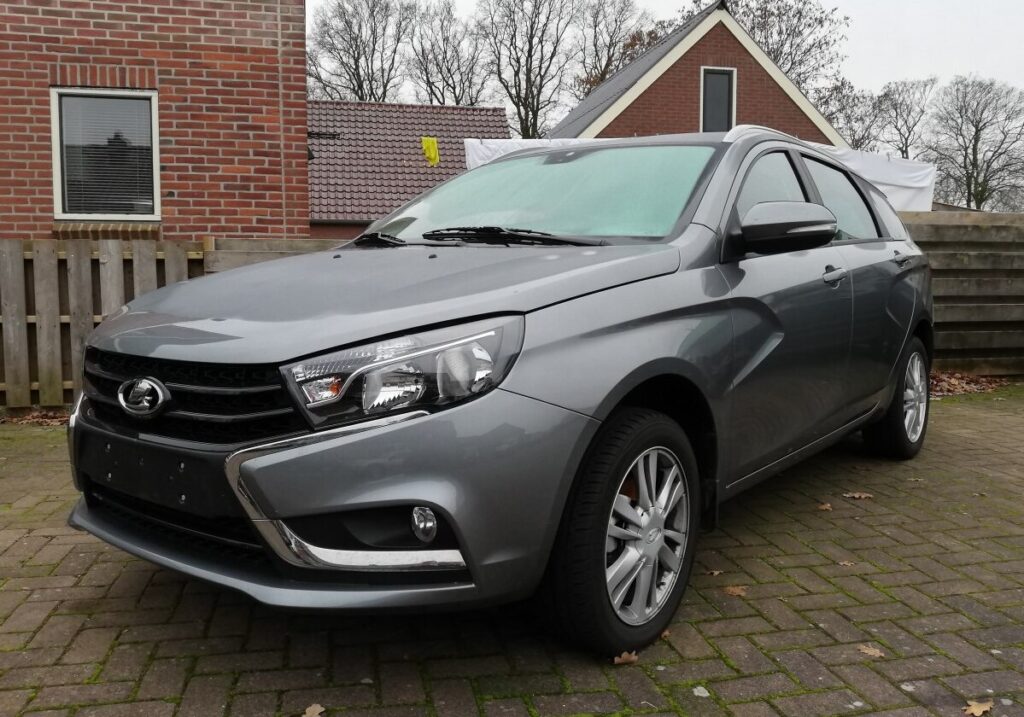
The Lada Vesta SW 1.8 (122 hp) Automatic, introduced in 2015, represents a significant step forward for the Russian automaker, AvtoVAZ. Positioned as a mid-range offering within the Vesta SW (Station Wagon) lineup, this variant aimed to provide a balance of practicality, affordability, and relative comfort for Russian families. The Vesta SW itself was designed to address the growing demand for station wagons in the Russian market, offering increased cargo capacity compared to the sedan version while retaining the Vesta’s modern styling and improved build quality. It’s built on the Lada B/C platform, a collaborative effort with Renault-Nissan, and marked a departure from the older, more utilitarian designs that had characterized the Lada brand for decades. This specific 1.8L automatic configuration was intended to appeal to buyers seeking an easier driving experience, particularly in urban environments.
Technical Specifications
| Brand | Lada |
| Model | Vesta |
| Generation | Vesta SW |
| Type (Engine) | 1.8 (122 Hp) Automatic |
| Start of production | 2015 |
| Powertrain Architecture | Internal Combustion engine |
| Body type | Station wagon (estate) |
| Seats | 5 |
| Doors | 5 |
| Fuel Type | Petrol (Gasoline) |
| Emission standard | Euro 5 |
| Power | 122 Hp @ 5900 rpm |
| Power per litre | 68.8 Hp/l |
| Torque | 170 Nm @ 3700 rpm / 125.39 lb.-ft. @ 3700 rpm |
| Engine layout | Front, Transverse |
| Engine Model/Code | VAZ-21179 |
| Engine displacement | 1774 cm3 / 108.26 cu. in. |
| Number of cylinders | 4 |
| Engine configuration | Inline |
| Cylinder Bore | 82 mm / 3.23 in. |
| Piston Stroke | 84 mm / 3.31 in. |
| Compression ratio | 10.5:1 |
| Number of valves per cylinder | 4 |
| Fuel injection system | Multi-port manifold injection |
| Engine aspiration | Naturally aspirated engine |
| Engine oil capacity | 4.1 l / 4.33 US qt | 3.61 UK qt |
| Coolant | 7 l / 7.4 US qt | 6.16 UK qt |
| Fuel tank capacity | 55 l / 14.53 US gal | 12.1 UK gal |
| Length | 4410 mm / 173.62 in. |
| Width | 1764 mm / 69.45 in. |
| Height | 1512 mm / 59.53 in. |
| Wheelbase | 2635 mm / 103.74 in. |
| Front track | 1510 mm / 59.45 in. |
| Rear (Back) track | 1510 mm / 59.45 in. |
| Ride height (ground clearance) | 178 mm / 7.01 in. |
| Drivetrain Architecture | The Internal combustion engine (ICE) drives the front wheels of the vehicle. |
| Drive wheel | Front wheel drive |
| Number of gears and type of gearbox | 5 gears, automatic transmission |
| Front suspension | Independent, type McPherson with coil spring and anti-roll bar |
| Rear suspension | Semi-independent, coil spring |
| Front brakes | Ventilated discs |
| Rear brakes | Drum |
| Assisting systems | ABS (Anti-lock braking system) |
| Steering type | Steering rack and pinion |
| Power steering | Electric Steering |
| Tires size | 185/65 R15 |
| Wheel rims size | 15 |
Powertrain & Engine Architecture
The heart of the Lada Vesta SW 1.8 Automatic is the VAZ-21179 engine, a 1.8-liter inline-four cylinder gasoline engine. This engine is a naturally aspirated unit, meaning it doesn’t employ turbocharging or supercharging. It utilizes a multi-point fuel injection system, delivering fuel directly into the intake ports. The engine features a double overhead camshaft (DOHC) valvetrain with four valves per cylinder, contributing to improved breathing and efficiency. The 122 horsepower output is achieved at 5900 rpm, while peak torque of 170 Nm (125.39 lb-ft) arrives at 3700 rpm. Paired with this engine is a Jatco-sourced 5-speed automatic transmission. This transmission, while providing convenience, was often criticized for its somewhat sluggish shifts and conservative programming, prioritizing fuel economy over outright performance. The engine’s design is relatively simple and robust, reflecting a focus on reliability and ease of maintenance, important considerations for the Russian market.
Driving Characteristics
The 1.8L automatic powertrain in the Vesta SW delivers adequate, but not exhilarating, performance. Acceleration is best described as leisurely, with a 0-60 mph time estimated around 11-12 seconds. The automatic transmission’s gear ratios are tuned for fuel efficiency, resulting in a noticeable delay when requesting sudden bursts of power. Compared to the available 5-speed manual transmission, the automatic version feels noticeably slower. The manual transmission allowed drivers to better utilize the engine’s torque, providing a more engaging driving experience. However, the automatic’s ease of use made it a popular choice for city driving and for drivers less concerned with sporty performance. The suspension is tuned for comfort, absorbing bumps and imperfections in the road reasonably well, but it doesn’t offer particularly sharp handling.
Equipment & Trim Levels
The Lada Vesta SW 1.8 Automatic typically came equipped with a reasonable level of standard features for its price point. These included power windows, central locking, air conditioning, and an audio system with USB connectivity. Higher trim levels, such as the “Comfort” and “Luxe” variants, added features like heated front seats, a trip computer, rear parking sensors, and alloy wheels. Interior upholstery was typically cloth, with higher trims offering upgraded fabric or partial leather options. The dashboard layout was relatively straightforward and functional, prioritizing usability over aesthetic flair. Optional extras included a navigation system, a rearview camera, and upgraded audio systems.
Chassis & Braking
The Vesta SW utilizes a McPherson strut front suspension with a coil spring and anti-roll bar, providing a comfortable ride and reasonable handling. The rear suspension is a semi-independent torsion beam setup, which is a cost-effective solution that prioritizes space efficiency. Braking duties are handled by ventilated discs at the front and drum brakes at the rear. ABS (Anti-lock Braking System) is standard, enhancing safety during emergency braking situations. The steering is rack and pinion with electric power assistance, offering a light and easy steering feel, particularly useful for maneuvering in tight spaces. The 15-inch wheels were typically fitted with 185/65 R15 tires.
Market Reception & Comparison
The Lada Vesta SW 1.8 Automatic was generally well-received in the Russian market, offering a compelling combination of space, affordability, and practicality. Critics praised the Vesta SW’s improved build quality and modern design compared to previous Lada models. However, the automatic transmission was often criticized for its slow response and lack of refinement. Compared to other station wagons available in Russia, such as the Renault Logan MCV and Skoda Rapid Spaceback, the Vesta SW offered a competitive price and a spacious interior. Fuel economy was respectable, averaging around 7.5-8.5 liters per 100 kilometers (31-33 mpg) in mixed driving conditions. Reliability was generally good, although some owners reported minor issues with the electrical system.
Legacy
The Lada Vesta SW 1.8 Automatic played a crucial role in revitalizing the Lada brand and establishing it as a more competitive player in the Russian automotive market. The VAZ-21179 engine, while not a technological marvel, proved to be a reliable and durable powerplant. The Jatco automatic transmission, despite its shortcomings, provided a convenient option for drivers seeking an easier driving experience. In the used car market, the Vesta SW 1.8 Automatic remains a popular choice due to its affordability, practicality, and relatively low running costs. While newer versions of the Vesta SW have been introduced with updated engines and transmissions, the original 1.8L automatic variant continues to be a viable option for budget-conscious buyers seeking a spacious and reliable station wagon.