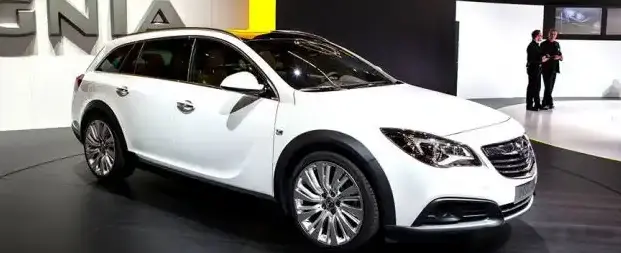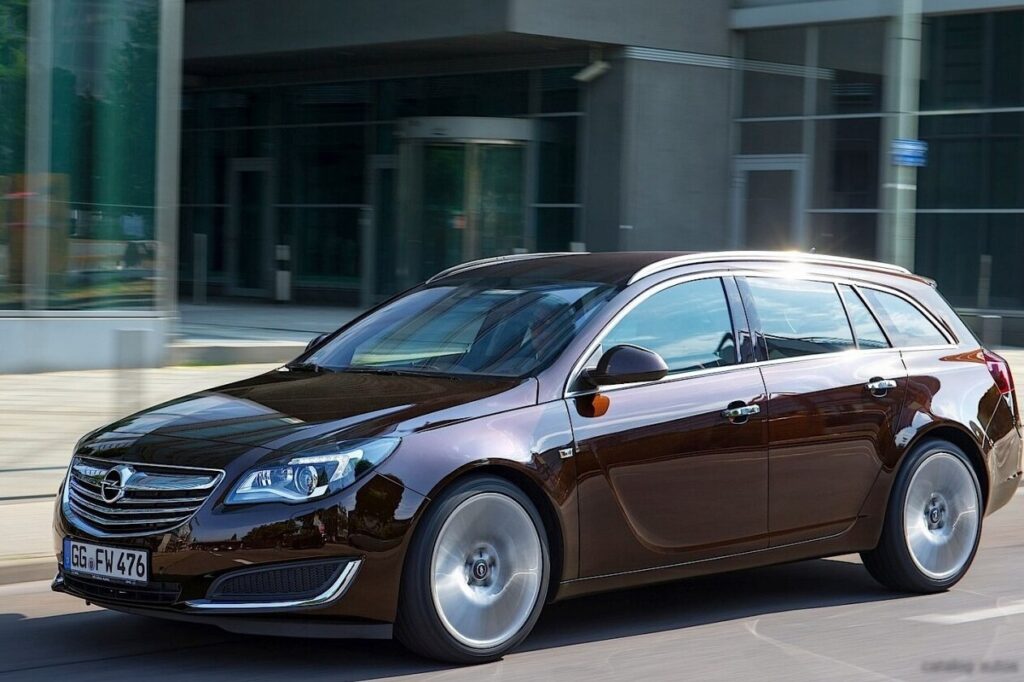
The Opel Insignia Sports Tourer 1.6 CDTI (120 hp) represents a significant offering within the Insignia range, particularly during the facelifted ‘A’ generation produced from 2013 onwards. Introduced in July 2015 and continuing through January 2017, this variant aimed to provide a balance of fuel efficiency and practicality for European buyers seeking a spacious, family-oriented station wagon. Positioned as a mid-range option, it slotted below the more powerful petrol and diesel engines while offering a more economical alternative to the higher-specification trims. The Insignia Sports Tourer, based on the GM Delta platform (often referred to as the 1HX0/A3 platform internally), was Opel’s competitor in the increasingly popular D-segment of estate cars, challenging models like the Ford Mondeo Estate, Volkswagen Passat Variant, and Peugeot 508 SW.
Technical Specifications
| Brand | Opel |
| Model | Insignia |
| Generation | Insignia Sports Tourer (A, facelift 2013) |
| Type (Engine) | 1.6 CDTI (120 Hp) |
| Start of production | July, 2015 |
| End of production | January, 2017 |
| Powertrain Architecture | Internal Combustion engine |
| Body type | Station wagon (estate) |
| Seats | 5 |
| Doors | 5 |
| Fuel consumption (urban) | 5.1-4.9 l/100 km (46.1 – 48 US mpg) |
| Fuel consumption (extra urban) | 3.9-3.7 l/100 km (60.3 – 63.6 US mpg) |
| Fuel consumption (combined) | 4.3-4.1 l/100 km (54.7 – 57.4 US mpg) |
| CO2 emissions | 114-109 g/km |
| Fuel Type | Diesel |
| Acceleration 0 – 100 km/h | 12.4 sec |
| Acceleration 0 – 62 mph | 12.4 sec |
| Acceleration 0 – 60 mph | 11.8 sec |
| Maximum speed | 190 km/h (118.06 mph) |
| Emission standard | Euro 6 |
| Weight-to-power ratio | 13.2 kg/Hp |
| Weight-to-torque ratio | 5 kg/Nm |
| Power | 120 Hp @ 4000 rpm |
| Torque | 320 Nm @ 2000 rpm (236.02 lb.-ft. @ 2000 rpm) |
| Engine layout | Front, Transverse |
| Engine Model/Code | B16DTJ |
| Engine displacement | 1598 cm3 (97.52 cu. in.) |
| Number of cylinders | 4 |
| Engine configuration | Inline |
| Cylinder Bore | 79.7 mm (3.14 in.) |
| Piston Stroke | 80.1 mm (3.15 in.) |
| Compression ratio | 16:1 |
| Fuel injection system | Diesel Commonrail |
| Engine aspiration | Turbocharger, Intercooler |
| Engine oil capacity | 4.5 l (4.76 US qt | 3.96 UK qt) |
| Coolant | 9 l (9.51 US qt | 7.92 UK qt) |
| Kerb Weight | 1589 kg (3503.15 lbs.) |
| Max. weight | 2250 kg (4960.4 lbs.) |
| Max load | 661 kg (1457.26 lbs.) |
| Trunk (boot) space – minimum | 540 l (19.07 cu. ft.) |
| Trunk (boot) space – maximum | 1530 l (54.03 cu. ft.) |
| Fuel tank capacity | 70 l (18.49 US gal | 15.4 UK gal) |
| Max. roof load | 100 kg (220.46 lbs.) |
| Permitted trailer load with brakes (8%) | 1800 kg (3968.32 lbs.) |
| Permitted trailer load with brakes (12%) | 1700 kg (3747.86 lbs.) |
| Permitted trailer load without brakes | 750 kg (1653.47 lbs.) |
| Length | 4913 mm (193.43 in.) |
| Width | 1856 mm (73.07 in.) |
| Width including mirrors | 2084 mm (82.05 in.) |
| Height | 1513 mm (59.57 in.) |
| Wheelbase | 2737 mm (107.76 in.) |
| Front track | 1587 mm (62.48 in.) |
| Rear (Back) track | 1590 mm (62.6 in.) |
| Minimum turning circle | 11.40 m (37.4 ft.) |
| Drivetrain Architecture | Front wheel drive |
| Number of gears and type of gearbox | 6 gears, manual transmission |
| Front brakes | Ventilated discs |
| Rear brakes | Disc |
Powertrain & Engine Architecture
The heart of this Insignia variant is the 1.6-liter (1598cc) B16DTJ turbodiesel engine. This engine is part of Opel’s ‘Whisper Diesel’ family, known for its relatively quiet operation and focus on fuel efficiency. It’s an inline-four cylinder engine featuring a common-rail direct injection system, delivering fuel at extremely high pressure for optimized combustion. The B16DTJ utilizes a variable geometry turbocharger (VGT) and an intercooler to enhance power and torque output. The engine produces 120 horsepower at 4000 rpm and a respectable 320 Nm (236 lb-ft) of torque at 2000 rpm. This torque figure is particularly important for everyday drivability, providing ample pulling power for overtaking and carrying loads. The engine also incorporates a diesel particulate filter (DPF) to meet stringent Euro 6 emission standards. The engine is paired with a six-speed manual transmission, which was the standard offering for this trim level. While an automatic transmission was available on other Insignia models, it wasn’t offered with the 1.6 CDTI 120 hp engine.
Driving Characteristics
The 1.6 CDTI 120 hp Insignia Sports Tourer offers a comfortable and composed driving experience, prioritizing fuel economy over outright performance. Acceleration from 0-100 km/h (0-62 mph) takes around 12.4 seconds, which is adequate for everyday driving but doesn’t provide particularly brisk performance. The engine’s torque is readily available from low revs, making it easy to maintain speed on the highway and navigate urban traffic. The six-speed manual transmission is well-matched to the engine, offering smooth gear changes and allowing the driver to keep the engine in its optimal power band. Compared to the more powerful 2.0 CDTI variants, the 1.6 CDTI feels noticeably less responsive, especially during overtaking maneuvers. However, the trade-off is significantly improved fuel economy. The suspension is tuned for comfort, absorbing bumps and imperfections in the road well, although it may not feel as sporty as some of its rivals.
Equipment & Trim Levels
The 1.6 CDTI 120 hp Insignia Sports Tourer typically came equipped with a reasonable level of standard features. These generally included air conditioning, electric front windows, a basic audio system with USB connectivity, and stability control. Higher trim levels, such as ‘Edition’ or ‘Sport’, added features like alloy wheels, cruise control, a touchscreen infotainment system, and parking sensors. Interior upholstery was typically cloth, with options for leather upgrades on higher trims. The dashboard layout was functional and well-designed, although the materials used were not always of the highest quality. Optional extras included a panoramic sunroof, heated seats, and a more advanced navigation system.
Chassis & Braking
The Insignia Sports Tourer’s chassis features a MacPherson strut front suspension and a multi-link rear suspension, providing a good balance of ride comfort and handling. The front brakes are ventilated discs, while the rear brakes are solid discs. Anti-lock Braking System (ABS) is standard, along with Electronic Stability Program (ESP). The steering is electric power-assisted, offering a light and precise feel. The suspension setup is generally tuned for comfort, with a focus on absorbing bumps and providing a stable ride. Stabilizer bars are fitted to both the front and rear axles to reduce body roll during cornering.
Market Reception & Comparison
The 1.6 CDTI 120 hp Insignia Sports Tourer was generally well-received by critics as a practical and economical family car. It was praised for its spacious interior, comfortable ride, and impressive fuel economy. However, some reviewers noted that the engine lacked the punch of its larger counterparts. Compared to the 2.0 CDTI variants, the 1.6 CDTI offered significantly better fuel economy but at the expense of performance. It also represented a more affordable entry point into the Insignia range, making it an attractive option for budget-conscious buyers. Against rivals like the Ford Mondeo Estate and Volkswagen Passat Variant, the Insignia offered a competitive package in terms of space, comfort, and value for money.
Legacy
The 1.6 CDTI engine, while not without its issues (some early versions experienced DPF problems), has proven to be relatively reliable in the long term when properly maintained. The Insignia Sports Tourer 1.6 CDTI (120 hp) remains a popular choice on the used car market, offering a good balance of practicality, fuel efficiency, and affordability. Its spacious interior and comfortable ride make it a suitable option for families, while its relatively low running costs make it an attractive proposition for those seeking an economical estate car. Regular servicing, including DPF regeneration, is crucial to ensure the long-term health of the engine and exhaust system.