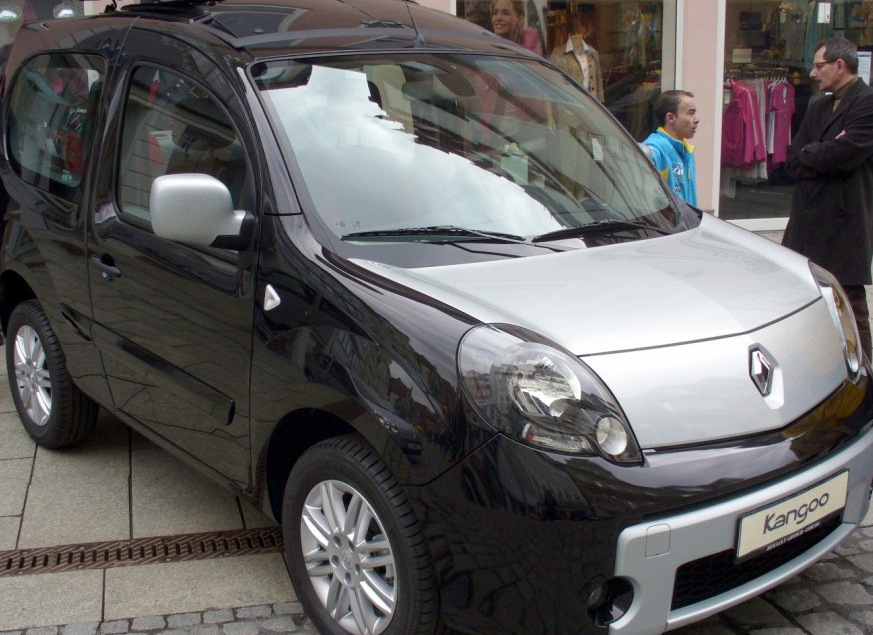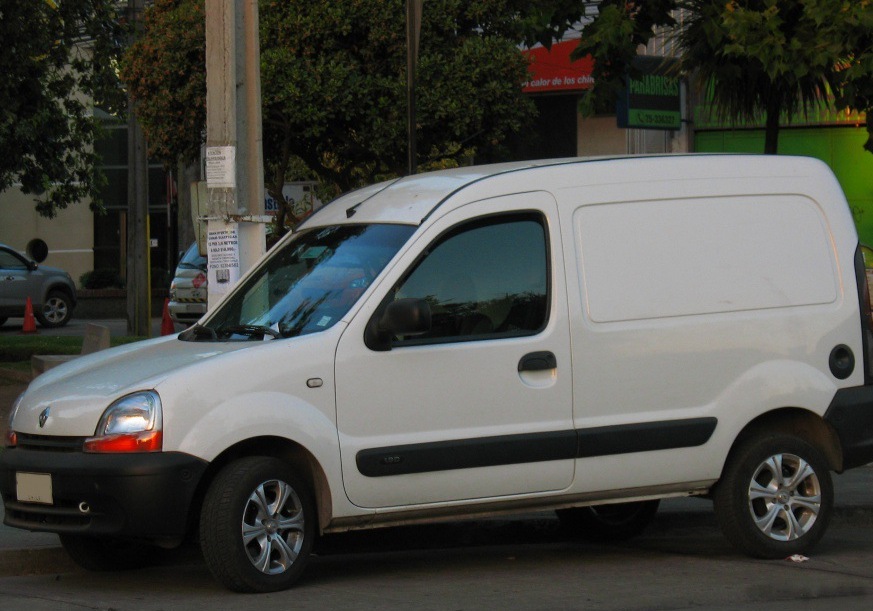
The Renault Kangoo I Express (FC) 1.9 dCi 4×4, produced between 2001 and 2003, represents a specialized offering within the first generation Kangoo range. Positioned as a utilitarian, all-wheel-drive variant of Renault’s popular light commercial vehicle, it catered to businesses and individuals requiring enhanced traction and load-carrying capability. Built on the Kangoo I (FC) platform, this model aimed to provide a robust and practical solution for challenging terrains and demanding work conditions. The “Express” designation signifies the panel van configuration, prioritizing cargo space over passenger comfort, though limited seating options were available. This particular 80 horsepower diesel version occupied a mid-range position in the Kangoo Express lineup, offering a balance between affordability, fuel efficiency, and capability.
Technical Specifications
| Brand | Renault |
| Model | Kangoo |
| Generation | Kangoo I Express (FC) |
| Type (Engine) | 1.9 dCi (80 Hp) 4×4 |
| Start of production | 2001 |
| End of production | 2003 |
| Powertrain Architecture | Internal Combustion engine |
| Body type | Minivan |
| Seats | 2 |
| Doors | 3 |
| Fuel consumption (urban) | 9.3 l/100 km (25.3 US mpg) |
| Fuel consumption (extra urban) | 6.3 l/100 km (37.3 US mpg) |
| Fuel consumption (combined) | 7.4 l/100 km (31.8 US mpg) |
| CO2 emissions | 196 g/km |
| Fuel Type | Diesel |
| Acceleration 0 – 100 km/h | 16.2 sec |
| Acceleration 0 – 62 mph | 16.2 sec |
| Acceleration 0 – 60 mph | 15.4 sec |
| Maximum speed | 142 km/h (88.23 mph) |
| Weight-to-power ratio | 17.1 kg/Hp |
| Weight-to-torque ratio | 8.5 kg/Nm |
| Power | 80 Hp @ 4000 rpm |
| Torque | 160 Nm @ 2000 rpm (118.01 lb.-ft. @ 2000 rpm) |
| Engine layout | Front, Transverse |
| Engine Model/Code | F8Q |
| Engine displacement | 1870 cm3 (114.11 cu. in.) |
| Number of cylinders | 4 |
| Engine configuration | Inline |
| Cylinder Bore | 80 mm (3.15 in.) |
| Piston Stroke | 93 mm (3.66 in.) |
| Compression ratio | 18.3:1 |
| Number of valves per cylinder | 2 |
| Fuel injection system | Diesel Commonrail |
| Engine aspiration | Turbocharger, Intercooler |
| Valvetrain | OHC |
| Engine oil capacity | 5.2 l (5.49 US qt | 4.58 UK qt) |
| Coolant capacity | 7.4 l (7.82 US qt | 6.51 UK qt) |
| Kerb Weight | 1365 kg (3009.31 lbs.) |
| Max. weight | 1890 kg (4166.74 lbs.) |
| Max load | 525 kg (1157.43 lbs.) |
| Trunk (boot) space – maximum | 2750 l (97.12 cu. ft.) |
| Fuel tank capacity | 60 l (15.85 US gal | 13.2 UK gal) |
| Max. roof load | 100 kg (220.46 lbs.) |
| Permitted trailer load with brakes (12%) | 800 kg (1763.7 lbs.) |
| Permitted trailer load without brakes | 645 kg (1421.98 lbs.) |
| Permitted towbar download | 75 kg (165.35 lbs.) |
| Length | 3995 mm (157.28 in.) |
| Width | 1663 mm (65.47 in.) |
| Width including mirrors | 2015 mm (79.33 in.) |
| Height | 1894 mm (74.57 in.) |
| Wheelbase | 2600 mm (102.36 in.) |
| Front track | 1410 mm (55.51 in.) |
| Rear track | 1430 mm (56.3 in.) |
| Front overhang | 692 mm (27.24 in.) |
| Rear overhang | 703 mm (27.68 in.) |
| Minimum turning circle | 10.95 m (35.93 ft.) |
| Drive wheel | All wheel drive (4×4) |
| Number of gears | 5 |
| Gearbox type | Manual transmission |
| Front suspension | Spring Strut |
| Rear suspension | Trailing arm |
| Front brakes | Ventilated discs |
| Rear brakes | Drum |
| Steering type | Steering rack and pinion |
| Power steering | Hydraulic |
| Tires size | 185/65 R15 |
| Wheel rims size | 15 |
Powertrain & Engine Architecture
The heart of the Kangoo I Express 4×4 1.9 dCi is the F8Q engine, a 1.9-liter inline-four cylinder diesel. This engine, a mainstay in Renault’s lineup during the late 1990s and early 2000s, utilizes a single overhead camshaft (OHC) valvetrain with two valves per cylinder. The 80 horsepower output is achieved through the use of a turbocharger and intercooler, boosting intake air density for improved combustion. Crucially, this version employs a diesel common rail fuel injection system, a significant advancement over earlier mechanical injection systems, providing more precise fuel delivery and contributing to improved efficiency and reduced emissions. The 4×4 system is a viscous coupling system, providing automatic engagement of the rear wheels when slip is detected. The transmission is a robust five-speed manual gearbox, chosen for its durability and suitability for commercial applications. The gear ratios are geared towards maximizing torque delivery at lower speeds, prioritizing load-hauling capability over outright acceleration.
Driving Characteristics
The 1.9 dCi 80 hp engine, coupled with the manual transmission and all-wheel-drive system, delivers a utilitarian driving experience. Acceleration is modest, with a 0-60 mph time of around 15.4 seconds. The engine’s strength lies in its torque output of 160 Nm (118 lb-ft), available from 2000 rpm, making it well-suited for carrying heavy loads and navigating challenging terrain. The all-wheel-drive system provides enhanced traction on slippery surfaces, but it does add to the vehicle’s weight and slightly impacts fuel economy. The gear ratios are relatively short, allowing for easy climbing and maintaining speed on inclines, but this also means the engine operates at higher revs during highway cruising. Compared to the higher-powered dCi variants, this 80 hp version feels noticeably slower, but it offers a more economical and less stressed powertrain.
Equipment & Trim Levels
The Kangoo I Express (FC) 1.9 dCi 4×4 was typically equipped with a basic level of trim, reflecting its commercial vehicle focus. Standard features included a driver’s airbag, power steering, and a basic audio system. The interior was primarily functional, with durable plastic trim and cloth upholstery. Optional extras included air conditioning, electric windows, and upgraded audio systems. The “Express” configuration meant a minimal rear seating arrangement, often consisting of a single bench seat or no seats at all, maximizing cargo space. The dashboard layout was straightforward and designed for ease of use, with clearly labeled controls.
Chassis & Braking
The Kangoo I Express 4×4 utilizes a relatively simple chassis design. Front suspension consists of MacPherson strut springs, while the rear employs a trailing arm setup. This configuration provides a reasonable balance between ride comfort and load-carrying capacity. Braking is handled by ventilated discs on the front wheels and drum brakes on the rear. The braking system is adequate for the vehicle’s weight and performance, but it lacks the sophistication of more modern systems. The all-wheel-drive system adds to the vehicle’s overall weight, requiring a slightly more robust suspension setup.
Market Reception & Comparison
The Renault Kangoo I Express 1.9 dCi 4×4 was generally well-received by businesses and individuals needing a compact, all-wheel-drive van. Critics praised its practicality, fuel efficiency, and robust construction. However, the 80 hp engine was sometimes criticized for being underpowered, particularly when fully loaded or driving on steep inclines. Compared to the 1.9 dCi 100 hp version, the 80 hp model offered lower running costs but sacrificed performance. The 4×4 system added a premium to the purchase price, making it less attractive to buyers who did not require all-wheel drive.
Legacy
The Renault Kangoo I Express 1.9 dCi 4×4, while not a high-volume seller, established a reputation for reliability and durability. The F8Q engine, when properly maintained, is known to be a long-lasting unit. Today, these vans are relatively rare and sought after by enthusiasts and businesses needing a dependable, no-frills work vehicle. The all-wheel-drive system remains a valuable asset for those operating in challenging conditions. While parts availability may be becoming more limited, the Kangoo I Express 4×4 continues to offer a practical and affordable solution for a variety of applications.