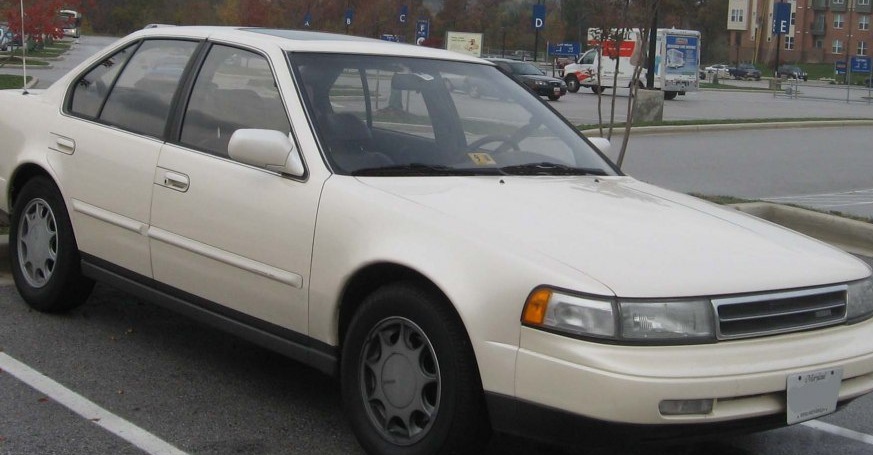
The Nissan Maxima III, designated the J30 chassis, represented a significant step forward for Nissan’s flagship sedan when it debuted in 1988 and continued through 1995. Positioned as a more upscale and sporty alternative to mainstream sedans like the Toyota Camry and Honda Accord, the J30 Maxima aimed to attract buyers seeking a blend of comfort, performance, and technology. The 3.0i variant, equipped with a 3.0-liter V6 engine and a four-speed automatic transmission, was a popular choice, offering a balance between power and convenience. This model year marked a shift towards more sophisticated engineering and design for Nissan, and the J30 played a crucial role in establishing the Maxima’s reputation as a well-rounded and desirable vehicle in the American market.
Technical Specifications
| Brand | Nissan |
| Model | Maxima |
| Generation | Maxima III (J30) |
| Type (Engine) | 3.0 i (170 Hp) Automatic |
| Start of production | 1988 |
| End of production | 1995 |
| Powertrain Architecture | Internal Combustion engine |
| Body type | Sedan |
| Seats | 5 |
| Doors | 4 |
| Fuel consumption (combined) | 9.8 l/100 km (24 US mpg, 28.8 UK mpg, 10.2 km/l) |
| Fuel Type | Petrol (Gasoline) |
| Acceleration 0 – 100 km/h | 8.7 sec |
| Acceleration 0 – 62 mph | 8.7 sec |
| Acceleration 0 – 60 mph | 8.3 sec |
| Maximum speed | 220 km/h (136.7 mph) |
| Weight-to-power ratio | 8.1 kg/Hp, 123.7 Hp/tonne |
| Weight-to-torque ratio | 5.5 kg/Nm, 180.5 Nm/tonne |
| Power | 170 Hp @ 5600 rpm |
| Power per litre | 57.4 Hp/l |
| Torque | 248 Nm @ 2800 rpm (182.92 lb.-ft. @ 2800 rpm) |
| Engine layout | Front, Transverse |
| Engine displacement | 2960 cm3 (180.63 cu. in.) |
| Number of cylinders | 6 |
| Engine configuration | V-engine |
| Cylinder Bore | 87 mm (3.43 in.) |
| Piston Stroke | 83 mm (3.27 in.) |
| Compression ratio | 10:1 |
| Number of valves per cylinder | 2 |
| Fuel injection system | Multi-port manifold injection |
| Engine aspiration | Naturally aspirated engine |
| Valvetrain | OHC |
| Kerb Weight | 1374 kg (3029.15 lbs.) |
| Max. weight | 1935 kg (4265.94 lbs.) |
| Max load | 561 kg (1236.79 lbs.) |
| Trunk (boot) space – minimum | 510 l (18.01 cu. ft.) |
| Fuel tank capacity | 70 l (18.49 US gal | 15.4 UK gal) |
| Length | 4780 mm (188.19 in.) |
| Width | 1760 mm (69.29 in.) |
| Height | 1405 mm (55.31 in.) |
| Wheelbase | 2650 mm (104.33 in.) |
| Front track | 1510 mm (59.45 in.) |
| Rear (Back) track | 1490 mm (58.66 in.) |
| Drivetrain Architecture | The Internal combustion engine (ICE) drives the front wheels of the vehicle. |
| Drive wheel | Front wheel drive |
| Number of gears and type of gearbox | 4 gears, automatic transmission |
| Front suspension | Wishbone |
| Rear suspension | Coil spring |
| Front brakes | Ventilated discs |
| Rear brakes | Disc |
| Assisting systems | ABS (Anti-lock braking system) |
| Steering type | Steering rack and pinion |
| Power steering | Hydraulic Steering |
| Tires size | 205/65 R15 |
| Wheel rims size | 15 |
Powertrain & Engine Architecture
The heart of the 3.0i Maxima was the VG30E, a 3.0-liter (2960 cc) naturally aspirated V6 engine. This engine featured a 60-degree V-angle, contributing to a smoother running character. The VG30E utilized a single overhead camshaft (OHC) design with two valves per cylinder. Fuel delivery was handled by a multi-port fuel injection system, improving efficiency and throttle response compared to earlier carbureted designs. The engine produced 170 horsepower at 5600 rpm and 182.92 lb-ft of torque at 2800 rpm. Paired with this engine was a four-speed automatic transmission, designed for smooth and relatively quick shifts. This transmission wasn’t known for being particularly sporty, prioritizing comfort and ease of use over aggressive downshifts. The automatic transmission featured electronically controlled lock-up torque converter, improving fuel efficiency at highway speeds.
Driving Characteristics
The 3.0i automatic Maxima offered a comfortable and refined driving experience. Acceleration from 0-60 mph took around 8.3 seconds, which was respectable for the time, but noticeably slower than the five-speed manual version. The automatic transmission’s gear ratios were tuned for fuel economy and smooth cruising, rather than outright performance. While the engine had sufficient power for everyday driving and passing maneuvers, it lacked the responsiveness of the manual transmission or the higher-output SVHO variant. The automatic transmission did contribute to a more relaxed driving experience, particularly in city traffic. Steering was light and precise, making the Maxima easy to maneuver. The suspension absorbed bumps well, providing a comfortable ride even on less-than-perfect roads.
Equipment & Trim Levels
The 3.0i Maxima typically came standard with features like power windows, power locks, air conditioning, and a decent sound system. Higher trim levels, often denoted by “S” or “SE” packages, added features such as a sunroof, upgraded upholstery (often cloth or velour), and alloy wheels. Leather interiors were also available as an option. The dashboard layout was functional and straightforward, with easy-to-read gauges. Optional extras included a premium sound system, cruise control, and a power driver’s seat. Some models also featured an automatic speed control system and a trip computer displaying fuel economy and range.
Chassis & Braking
The J30 Maxima utilized a front-engine, front-wheel-drive layout. The front suspension employed an independent wishbone design, while the rear suspension featured a coil spring setup. Braking duties were handled by ventilated discs at the front and solid discs at the rear. Anti-lock brakes (ABS) were available, and became increasingly common as standard equipment towards the later years of the J30’s production run. The suspension was tuned for a comfortable ride, prioritizing smoothness over sporty handling. Stabilizer bars were included to reduce body roll during cornering, but the overall feel was more geared towards grand touring than aggressive driving. The steering system was a rack-and-pinion setup with hydraulic power assistance.
Market Reception & Comparison
The 3.0i automatic Maxima was generally well-received by critics and consumers. It was praised for its comfortable ride, spacious interior, and reliable engine. However, some reviewers noted that the automatic transmission dulled the engine’s performance compared to the manual version. Compared to the 2.0-liter four-cylinder Maxima, the 3.0i offered significantly more power and a more refined driving experience, but at a higher price point. The higher-performance SVHO variant, with its supercharged V6, provided even more exhilarating performance, but also came with a higher price tag and increased maintenance requirements. Fuel economy was average for the class, around 24 mpg combined. The Maxima successfully positioned itself as a more premium alternative to the Camry and Accord, attracting buyers who wanted a bit more style and performance.
Legacy
The Nissan Maxima J30 3.0i Automatic has proven to be a relatively reliable vehicle over the long term. The VG30E engine is known for its durability, and with proper maintenance, can last for many miles. However, like any older vehicle, it is susceptible to age-related issues such as oil leaks and worn suspension components. In the used car market today, the J30 Maxima is appreciated by enthusiasts for its classic styling and relatively simple mechanicals. It represents a significant era in Nissan’s history, and a well-maintained example can provide a comfortable and enjoyable driving experience. Parts availability is generally good, although some specific trim pieces may be difficult to find. The J30 Maxima remains a popular choice for those seeking a reliable and affordable classic sedan, and a testament to Nissan’s engineering prowess of the late 1980s and early 1990s.