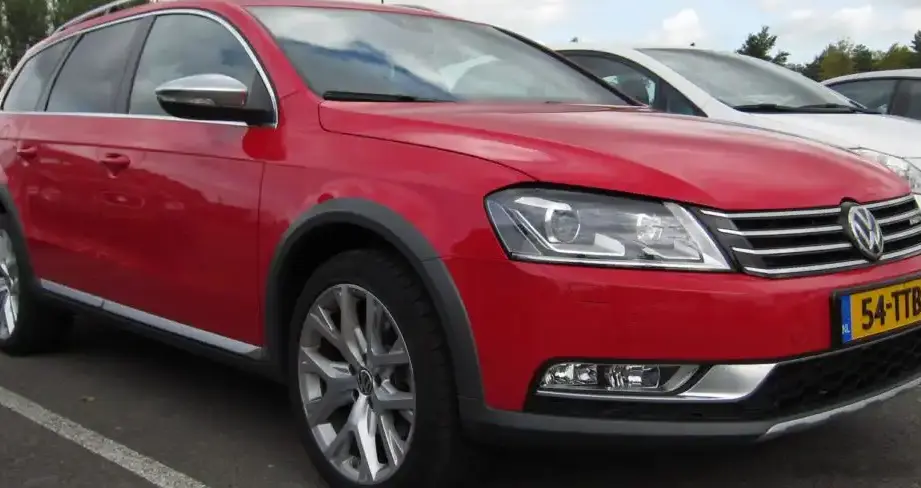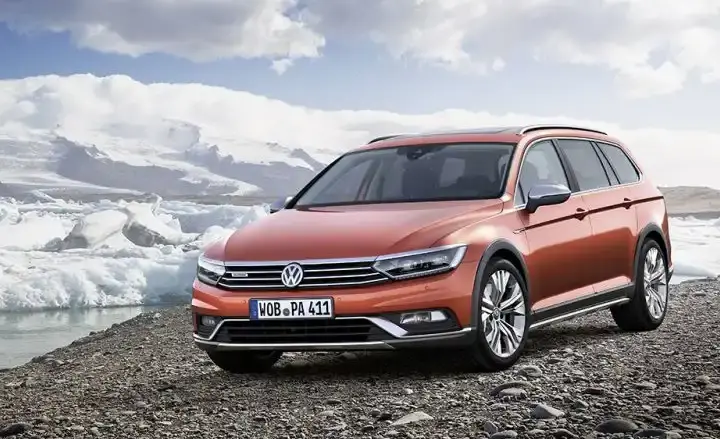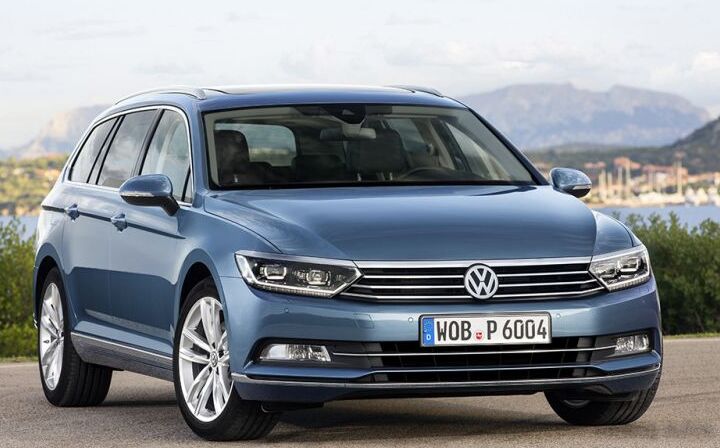
The Volkswagen Passat Variant (B8) 2.0 TDI 150 hp, produced from July 2014 to June 2019, represents a significant iteration of Volkswagen’s popular mid-size wagon. Positioned within the B8 generation of the Passat, which debuted at the 2014 Paris Motor Show, this variant offered a blend of practicality, fuel efficiency, and comfortable touring capabilities. It was a key model in the European market, where wagons (or ‘estates’ as they are often called) maintain a strong following, offering a compelling alternative to SUVs. The B8 Passat was built on the Volkswagen Group’s modular transverse matrix (MQB) platform, shared with models like the Audi A3, SEAT Leon, and Skoda Octavia, allowing for economies of scale and a lighter, more rigid chassis.
Technical Specifications
| Brand | Volkswagen |
| Model | Passat |
| Generation | Passat Variant (B8) |
| Type (Engine) | 2.0 TDI (150 Hp) |
| Start of production | July, 2014 |
| End of production | June, 2019 |
| Powertrain Architecture | Internal Combustion engine |
| Body type | Station wagon (estate) |
| Seats | 5 |
| Doors | 5 |
| Fuel consumption (economy) – urban | 4.8 l/100 km (49 US mpg, 58.9 UK mpg, 20.8 km/l) |
| Fuel consumption (economy) – extra urban | 3.4 l/100 km (69.2 US mpg, 83.1 UK mpg, 29.4 km/l) |
| Fuel consumption (economy) – combined | 3.9 l/100 km (60.3 US mpg, 72.4 UK mpg, 25.6 km/l) |
| CO2 emissions | 102 g/km |
| Fuel Type | Diesel |
| Acceleration 0 – 100 km/h | 8.9 sec |
| Acceleration 0 – 62 mph | 8.9 sec |
| Acceleration 0 – 60 mph | 8.5 sec |
| Maximum speed | 220 km/h (136.7 mph) |
| Emission standard | Euro 6 |
| Weight-to-power ratio | 9.5 kg/Hp, 104.9 Hp/tonne |
| Weight-to-torque ratio | 4.2 kg/Nm, 237.8 Nm/tonne |
| Power | 150 Hp @ 3500-4000 rpm |
| Power per litre | 76.2 Hp/l |
| Torque | 340 Nm @ 1750-3000 rpm (250.77 lb.-ft. @ 1750-3000 rpm) |
| Engine layout | Front, Transverse |
| Engine Model/Code | CRLB, DBGA, DCYA, DFEA, DFGA |
| Engine displacement | 1968 cm3 (120.09 cu. in.) |
| Number of cylinders | 4 |
| Engine configuration | Inline |
| Number of valves per cylinder | 4 |
| Fuel injection system | Diesel Commonrail |
| Engine aspiration | Turbocharger, Intercooler |
| Engine oil capacity | 4.7 l (4.97 US qt | 4.14 UK qt) |
| Kerb Weight | 1430 kg (3152.61 lbs.) |
| Max. weight | 2110 kg (4651.75 lbs.) |
| Max load | 680 kg (1499.14 lbs.) |
| Trunk (boot) space – minimum | 650 l (22.95 cu. ft.) |
| Trunk (boot) space – maximum | 1780 l (62.86 cu. ft.) |
| Fuel tank capacity | 66 l (17.44 US gal | 14.52 UK gal) |
| Max. roof load | 100 kg (220.46 lbs.) |
| Permitted trailer load with brakes (8%) | 2100 kg (4629.71 lbs.) |
| Permitted trailer load with brakes (12%) | 1800 kg (3968.32 lbs.) |
| Permitted trailer load without brakes | 750 kg (1653.47 lbs.) |
| Permitted towbar download | 90 kg (198.42 lbs.) |
| Length | 4767 mm (187.68 in.) |
| Width | 1832 mm (72.13 in.) |
| Width including mirrors | 2083 mm (82.01 in.) |
| Height | 1477 mm (58.15 in.) |
| Wheelbase | 2791 mm (109.88 in.) |
| Front track | 1584 mm (62.36 in.) |
| Rear (Back) track | 1568 mm (61.73 in.) |
| Ride height (ground clearance) | 145 mm (5.71 in.) |
| Minimum turning circle (turning diameter) | 11.7 m (38.39 ft.) |
| Drivetrain Architecture | The Internal combustion engine (ICE) drives the front wheels of the vehicle. |
| Drive wheel | Front wheel drive |
| Number of gears and type of gearbox | 6 gears, manual transmission |
| Front suspension | Independent multi-link suspension |
| Rear suspension | Independent coil spring |
| Front brakes | Ventilated discs |
| Rear brakes | Disc |
| Assisting systems | ABS (Anti-lock braking system) |
| Steering type | Steering rack and pinion |
| Power steering | Electric Steering |
| Tires size | 215/55 R17; 235/45 R18; 235/40 R19 |
| Wheel rims size | 7J x 17; 8J x 18; 8J x 19 |
Powertrain & Engine Architecture
The heart of the Passat Variant 2.0 TDI 150 hp is the Volkswagen Group’s EA288 series of diesel engines. Specifically, this variant utilized engine codes such as CRLB, DBGA, DCYA, DFEA, and DFGA, depending on the production year and specific market. These engines are common rail direct injection diesels, employing piezo injectors for precise fuel delivery. The turbocharger, typically a variable geometry turbo (VGT), provides enhanced low-end torque and improved responsiveness. An intercooler further cools the intake air, increasing power output and efficiency. The engine features four valves per cylinder and a timing belt. The 6-speed manual transmission was standard, offering a balance between fuel economy and driver engagement. While a dual-clutch gearbox (DSG) was available as an option on other trims, the 150 hp version was primarily offered with the manual.
Driving Characteristics
The 2.0 TDI 150 hp Passat Variant provided a comfortable and capable driving experience. Acceleration from 0-60 mph took around 8.5 to 8.9 seconds, making it adequately quick for everyday driving and long-distance journeys. The engine’s 340 Nm (250.77 lb-ft) of torque, available from 1750-3000 rpm, provided strong pulling power, especially useful for overtaking and carrying loads. Compared to the more powerful 2.0 TDI variants (typically 184 hp or 240 hp), this version felt less urgent, but the difference was often negligible in real-world conditions. The manual transmission, while not particularly sporty, was precise and easy to use. The suspension, tuned for comfort, absorbed bumps and imperfections in the road well, contributing to a relaxed ride quality.
Equipment & Trim Levels
The 150 hp 2.0 TDI Passat Variant typically occupied a mid-range position in the lineup. Standard equipment often included air conditioning, alloy wheels, a touchscreen infotainment system, Bluetooth connectivity, and a suite of safety features such as ABS, ESP (Electronic Stability Program), and multiple airbags. Higher trim levels, such as Trendline, Comfortline, and Highline, added features like leather upholstery, heated seats, a larger infotainment screen with navigation, parking sensors, and adaptive cruise control. Optional extras included a panoramic sunroof, upgraded audio systems, and various driver assistance technologies.
Chassis & Braking
The B8 Passat Variant featured a fully independent suspension system, with a multi-link setup at the front and a coil spring arrangement at the rear. This configuration provided a good balance between ride comfort and handling. Brakes consisted of ventilated discs at the front and solid discs at the rear. ABS (Anti-lock Braking System) and ESP (Electronic Stability Program) were standard, enhancing safety and stability. Steering was via a rack and pinion system with electric power assistance.
Market Reception & Comparison
The Passat Variant 2.0 TDI 150 hp was generally well-received by automotive critics. It was praised for its fuel efficiency, spacious interior, comfortable ride, and practicality. Compared to the higher-output TDI variants, it offered a more affordable entry point into the Passat range, albeit with slightly less performance. Fuel economy was a key selling point, with combined figures around 3.9 l/100 km (60.3 US mpg), making it an attractive option for drivers covering long distances. Reliability was generally good, although, like all modern diesels, it was susceptible to issues with the diesel particulate filter (DPF) if not driven on longer journeys regularly.
Legacy
The Volkswagen Passat Variant (B8) 2.0 TDI 150 hp remains a popular choice in the used car market. Its combination of practicality, fuel efficiency, and reliability has ensured its continued appeal. While the EA288 engine has been subject to scrutiny regarding emissions, well-maintained examples are generally considered to be durable and long-lasting. The availability of spare parts is good, and the relatively simple mechanical design makes it relatively easy to maintain. However, potential buyers should be aware of the potential for DPF issues and ensure that the vehicle has been properly serviced throughout its life.