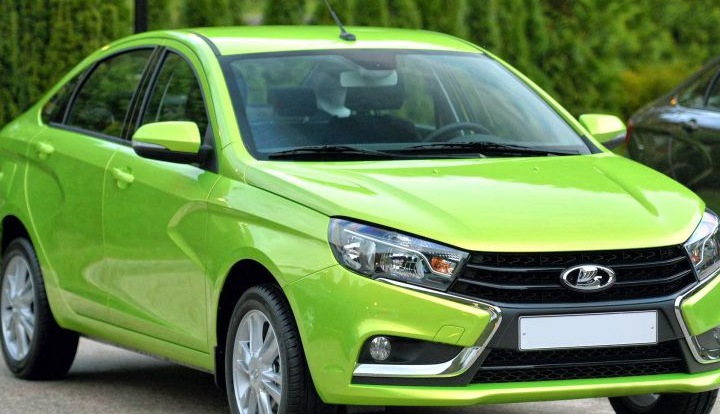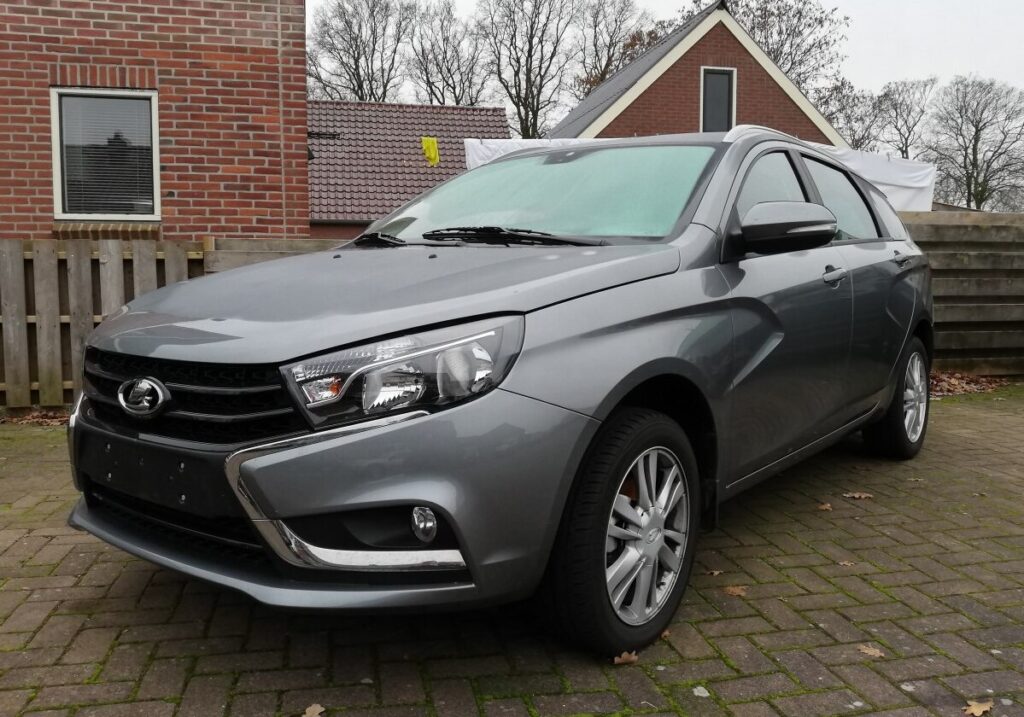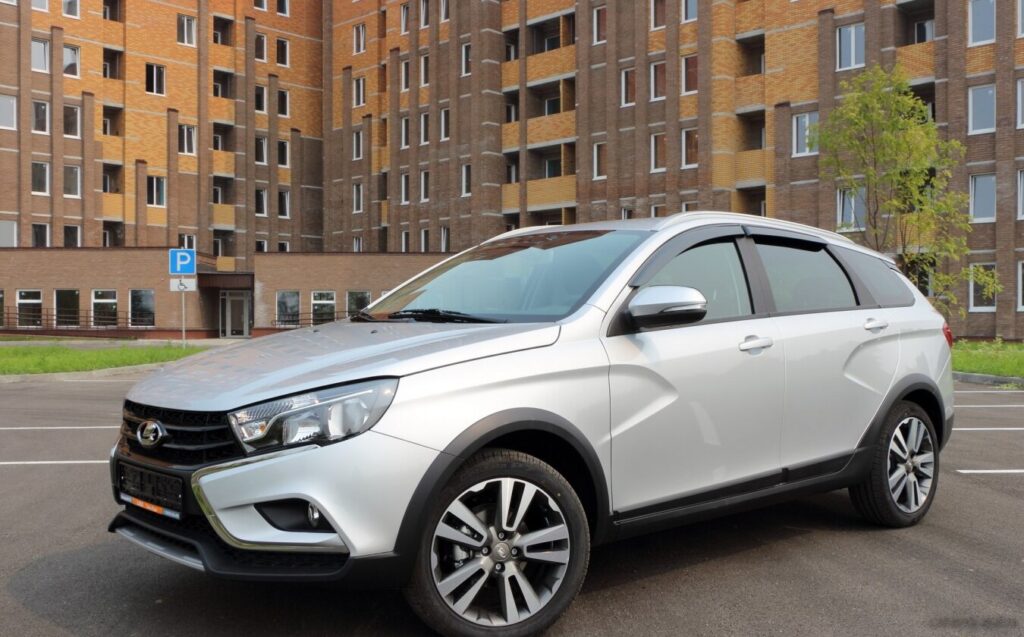
The Lada Vesta SW Cross 1.8, introduced in 2017, represents a significant step in Lada’s attempt to modernize its offerings and appeal to a broader market. Positioned as a crossover-styled station wagon, the Vesta SW Cross aimed to combine the practicality of a wagon with the slightly elevated ride height and rugged aesthetics popular in the growing crossover segment. This particular variant, equipped with the 1.8-liter engine producing 122 horsepower, served as a mid-range option within the Vesta SW Cross lineup, offering a balance between affordability and performance. It was primarily marketed towards families and individuals seeking a versatile and relatively economical vehicle for both urban and rural driving conditions, particularly within Russia and other Eastern European markets.
Technical Specifications
| Brand | Lada |
| Model | Vesta |
| Generation | Vesta SW Cross |
| Type (Engine) | 1.8 (122 Hp) |
| Start of production | 2017 |
| Powertrain Architecture | Internal Combustion engine |
| Body type | Crossover |
| Seats | 5 |
| Doors | 5 |
| Fuel consumption (urban) | 10.7 l/100 km (22 US mpg, 26.4 UK mpg, 9.3 km/l) |
| Fuel consumption (extra urban) | 6.4 l/100 km (36.8 US mpg, 44.1 UK mpg, 15.6 km/l) |
| Fuel consumption (combined) | 7.9 l/100 km (29.8 US mpg, 35.8 UK mpg, 12.7 km/l) |
| Fuel Type | Petrol (Gasoline) |
| Acceleration 0 – 100 km/h | 11.2 sec |
| Acceleration 0 – 62 mph | 11.2 sec |
| Acceleration 0 – 60 mph | 10.6 sec |
| Maximum speed | 180 km/h (111.85 mph) |
| Power | 122 Hp @ 5900 rpm |
| Torque | 170 Nm @ 3700 rpm (125.39 lb.-ft. @ 3700 rpm) |
| Engine layout | Front, Transverse |
| Engine Model/Code | VAZ-21179 |
| Engine displacement | 1774 cm3 (108.26 cu. in.) |
| Number of cylinders | 4 |
| Engine configuration | Inline |
| Number of valves per cylinder | 4 |
| Fuel injection system | Multi-port manifold injection |
| Engine aspiration | Naturally aspirated engine |
| Engine oil capacity | 4.1 l (4.33 US qt, 3.61 UK qt) |
| Coolant capacity | 7 l (7.4 US qt, 6.16 UK qt) |
| Max. weight | 1730 kg (3814 lbs.) |
| Trunk (boot) space – minimum | 480 l (16.95 cu. ft.) |
| Trunk (boot) space – maximum | 825 l (29.13 cu. ft.) |
| Fuel tank capacity | 55 l (14.53 US gal, 12.1 UK gal) |
| Permitted trailer load with brakes (12%) | 900 kg (1984.16 lbs.) |
| Permitted trailer load without brakes | 600 kg (1322.77 lbs.) |
| Length | 4424 mm (174.17 in.) |
| Width | 1785 mm (70.28 in.) |
| Height | 1537 mm (60.51 in.) |
| Wheelbase | 2635 mm (103.74 in.) |
| Front track | 1524 mm (60 in.) |
| Rear track | 1524 mm (60 in.) |
| Front overhang | 862 mm (33.94 in.) |
| Rear overhang | 927 mm (36.5 in.) |
| Ride height (ground clearance) | 203 mm (7.99 in.) |
| Drivetrain Architecture | Front wheel drive |
| Number of gears and type of gearbox | 5 gears, manual transmission |
| Front suspension | Independent, type McPherson with coil spring and anti-roll bar |
| Rear suspension | Semi-independent, coil spring |
| Front brakes | Disc |
| Rear brakes | Disc |
| Assisting systems | ABS (Anti-lock braking system) |
| Steering type | Steering rack and pinion |
| Power steering | Electric Steering |
| Tires size | 205/50 R17 |
| Wheel rims size | 17 |
Powertrain & Engine Architecture
The Lada Vesta SW Cross 1.8 utilizes the VAZ-21179 engine, a 1.8-liter inline-four cylinder gasoline engine. This engine is a naturally aspirated unit, meaning it doesn’t employ turbocharging or supercharging. It features a multi-point fuel injection system, delivering fuel directly into the intake ports. The engine’s valvetrain consists of four valves per cylinder (DOHC – Double Overhead Camshaft), contributing to improved breathing and efficiency. The engine is transversely mounted in the front of the vehicle, driving the front wheels. The 5-speed manual transmission is a relatively conventional design, prioritizing durability and simplicity over outright performance. Gear ratios are tuned for a balance of fuel economy and acceptable acceleration, though the 122 horsepower output doesn’t provide particularly brisk performance.
Driving Characteristics
The 1.8-liter engine and 5-speed manual transmission combination in the Vesta SW Cross delivers adequate, but not exhilarating, performance. Acceleration from 0-60 mph takes around 10.6 seconds, and top speed is limited to 112 mph. The engine feels somewhat strained when pushed hard, particularly when fully loaded or climbing hills. The manual transmission offers a reasonably precise shift feel, but the gear ratios are spaced to prioritize fuel efficiency over sporty driving. Compared to potential higher-output versions (which weren’t widely available on the SW Cross), this variant feels noticeably less responsive. The suspension, tuned for comfort, provides a reasonably smooth ride on most road surfaces, but body roll is present during cornering. The increased ride height, characteristic of the “Cross” designation, aids in navigating rough roads and provides a more commanding driving position.
Equipment & Trim Levels
The Vesta SW Cross 1.8 typically came equipped with a reasonable level of standard features for its price point. These included power windows, central locking, air conditioning, and an audio system with USB connectivity. Safety features such as ABS and front airbags were also standard. Higher trim levels offered options like alloy wheels, a more advanced audio system, heated front seats, and a rear-view camera. Interior upholstery was typically cloth, with a relatively simple and functional dashboard layout. The SW Cross trim added plastic cladding around the lower body and wheel arches, giving it a more rugged appearance.
Chassis & Braking
The Vesta SW Cross utilizes a McPherson strut front suspension and a semi-independent coil spring rear suspension. This setup provides a good balance of comfort and handling for everyday driving. The front brakes are ventilated discs, while the rear brakes are also discs, offering adequate stopping power for the vehicle’s weight and performance. The electric power steering provides light and easy steering, making it maneuverable in urban environments. The increased ground clearance (203mm) is a key feature of the SW Cross, allowing it to tackle rougher terrain and unpaved roads with greater confidence.
Market Reception & Comparison
The Lada Vesta SW Cross 1.8 was generally well-received in its target markets, particularly for its practicality, affordability, and improved build quality compared to previous Lada models. Critics noted the engine’s lack of refinement and the somewhat basic interior, but acknowledged that it offered good value for money. Compared to other trims in the Vesta SW Cross lineup, the 1.8-liter version offered a more economical option, appealing to budget-conscious buyers. Fuel economy was competitive for its class, averaging around 29.8 US mpg in combined driving. Reliability was generally considered to be good, although long-term durability could be a concern due to the relatively simple engineering and materials used.
Legacy
The Lada Vesta SW Cross 1.8 represents a turning point for Lada, demonstrating a commitment to producing more modern and competitive vehicles. While not a performance standout, the 1.8-liter engine proved to be reasonably reliable, and the Vesta SW Cross remains a popular choice in the used car market, particularly in Eastern Europe. Its combination of practicality, affordability, and rugged styling continues to appeal to buyers seeking a versatile and economical vehicle. Parts availability remains generally good, and the relatively simple mechanical design makes it accessible for DIY maintenance and repairs.