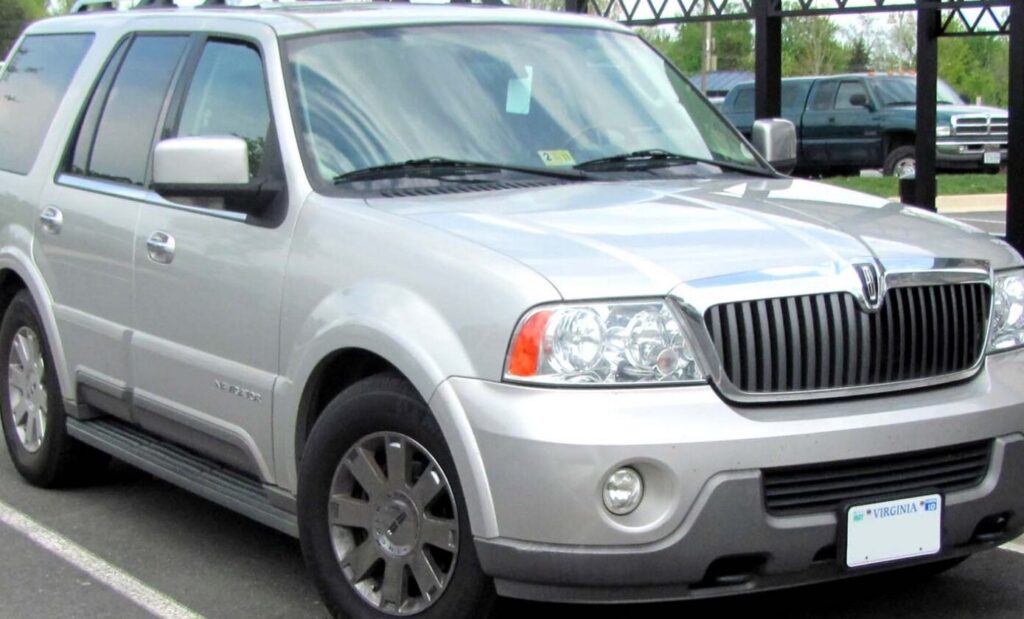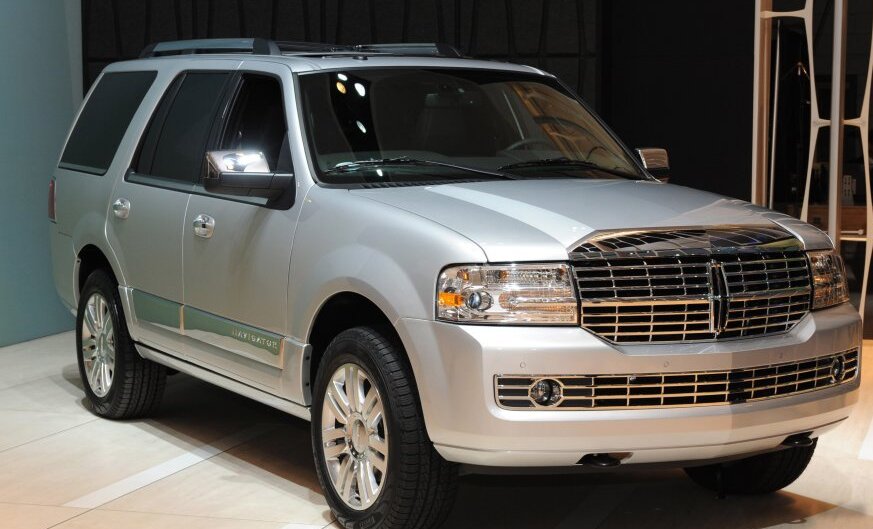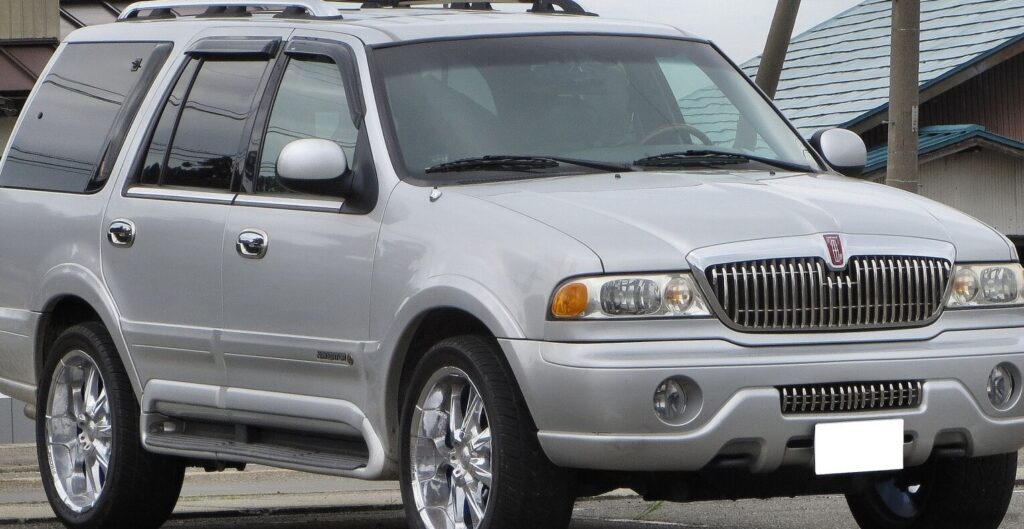
The Lincoln Navigator, launched in 1997, represented Lincoln’s entry into the burgeoning full-size SUV market. Designed to compete with offerings from Chevrolet, Ford (its parent company), and GMC, the Navigator aimed to provide a more luxurious and refined experience than its Ford Expedition counterpart. The first generation Navigator, produced from 1997 to 1999, was based on the Ford U platform and quickly became a popular choice for American families seeking spaciousness, capability, and a touch of prestige. The 5.4-liter V8 engine paired with a four-speed automatic transmission and four-wheel drive was a cornerstone of the Navigator’s appeal, offering a balance of power and usability. This configuration positioned the Navigator as a mid-range offering within the lineup, offering more power than base models but falling short of potential future high-performance trims.
Technical Specifications
| Brand | Lincoln |
| Model | Navigator |
| Generation | Navigator I |
| Type (Engine) | 5.4 V8 (230 Hp) 4×4 Automatic |
| Start of production | 1997 |
| End of production | 1999 |
| Powertrain Architecture | Internal Combustion engine |
| Body type | SUV |
| Seats | 8 |
| Doors | 5 |
| Fuel consumption (economy) – urban | 19.6 l/100 km (12 US mpg, 14.4 UK mpg, 5.1 km/l) |
| Fuel consumption (economy) – extra urban | 14.7 l/100 km (16 US mpg, 19.2 UK mpg, 6.8 km/l) |
| Fuel consumption (economy) – combined | 16.8 l/100 km (14 US mpg, 16.8 UK mpg, 6 km/l) |
| Fuel Type | Petrol (Gasoline) |
| Weight-to-power ratio | 11 kg/Hp, 90.8 Hp/tonne |
| Weight-to-torque ratio | 5.7 kg/Nm, 174.1 Nm/tonne |
| Power | 230 Hp @ 4250 rpm |
| Power per litre | 42.5 Hp/l |
| Torque | 441 Nm @ 3000 rpm (325.26 lb.-ft. @ 3000 rpm) |
| Engine layout | Front, Longitudinal |
| Engine Model/Code | Triton |
| Engine displacement | 5408 cm3 (330.02 cu. in.) |
| Number of cylinders | 8 |
| Engine configuration | V-engine |
| Cylinder Bore | 90.2 mm (3.55 in.) |
| Piston Stroke | 105.8 mm (4.17 in.) |
| Compression ratio | 9:1 |
| Number of valves per cylinder | 2 |
| Fuel injection system | Multi-port manifold injection |
| Engine aspiration | Naturally aspirated engine |
| Valvetrain | SOHC |
| Engine oil capacity | 5.7 l (6.02 US qt | 5.02 UK qt) |
| Coolant | 19.7 l (20.82 US qt | 17.33 UK qt) |
| Kerb Weight | 2533 kg (5584.31 lbs.) |
| Trunk (boot) space – minimum | 1832 l (64.7 cu. ft.) |
| Trunk (boot) space – maximum | 3295 l (116.36 cu. ft.) |
| Fuel tank capacity | 114 l (30.12 US gal | 25.08 UK gal) |
| Length | 5202 mm (204.8 in.) |
| Width | 2030 mm (79.92 in.) |
| Height | 1910 mm (75.2 in.) |
| Wheelbase | 3023 mm (119.02 in.) |
| Front track | 1661 mm (65.39 in.) |
| Rear (Back) track | 1664 mm (65.51 in.) |
| Ride height (ground clearance) | 221 mm (8.7 in.) |
| Drag coefficient (Cd) | 0.43 |
| Minimum turning circle (turning diameter) | 12.3 m (40.35 ft.) |
| Drive wheel | All wheel drive (4×4) |
| Number of gears and type of gearbox | 4 gears, automatic transmission |
| Front suspension | Air suspension |
| Rear suspension | Air suspension |
| Front brakes | Ventilated discs |
| Rear brakes | Disc |
| Assisting systems | ABS (Anti-lock braking system) |
| Power steering | Hydraulic Steering |
| Tires size | 245/75 R16 |
| Wheel rims size | 16 |
INTRODUCTION
The 1997-1999 Lincoln Navigator, powered by the 5.4-liter Triton V8 and a four-speed automatic transmission with four-wheel drive, quickly established itself as a significant player in the full-size luxury SUV segment. Built on the same platform as the Ford Expedition, the Navigator distinguished itself through more upscale interior appointments, unique exterior styling cues, and a focus on providing a smoother, more comfortable ride. This particular configuration was the standard offering for the Navigator during its initial launch, serving as the foundation for the model line. It aimed to attract buyers who desired the space and capability of a large SUV without the need for the higher price tags associated with more powerful or feature-rich trims.
Powertrain & Engine Architecture
At the heart of the Navigator was Ford’s 5.4-liter Triton V8 engine. This engine, designated as the engine code for this generation, was a robust and relatively simple design featuring a cast-iron block and aluminum cylinder heads. It utilized a single overhead camshaft (SOHC) valvetrain with two valves per cylinder. Fuel delivery was handled by a multi-port fuel injection system, providing precise fuel metering for optimal performance and efficiency. The 5.4-liter Triton produced 230 horsepower at 4250 rpm and 441 lb-ft of torque at 3000 rpm. The four-speed automatic transmission, a Ford-built unit, was chosen for its durability and smooth shifting characteristics. While not the most advanced transmission available at the time, it was well-suited to the engine’s torque curve and provided adequate performance for everyday driving and towing. The transmission was electronically controlled, adapting shift points based on throttle position and vehicle speed.
Driving Characteristics
The Navigator 5.4L/Automatic combination delivered a driving experience focused on comfort and capability rather than outright performance. Acceleration was adequate for merging onto highways and passing slower traffic, but it wasn’t particularly brisk. The four-speed automatic transmission, while smooth, lacked the responsiveness of more modern transmissions with additional gears. The torque converter provided ample low-end grunt, making the Navigator feel strong around town. Compared to a manual transmission-equipped Expedition, the Navigator felt slightly less engaging, but the convenience of the automatic outweighed this for many buyers. Compared to potential future Navigator trims with higher horsepower engines, this version offered a more relaxed and fuel-conscious driving experience.
Equipment & Trim Levels
The base Navigator came standard with a respectable array of features, including air conditioning, power windows and locks, cruise control, and an AM/FM stereo with a cassette player. Leather upholstery was standard, as were woodgrain interior trim accents. The Navigator also featured a rear air conditioning system and a power liftgate. Optional extras included a CD player, a premium sound system, and a sunroof. The interior design was generally considered to be more refined than that of the Ford Expedition, with higher-quality materials and a more luxurious overall feel.
Chassis & Braking
The Navigator’s chassis was a traditional body-on-frame construction, providing a robust and durable platform. The suspension utilized air suspension on both the front and rear axles, offering a comfortable ride and the ability to adjust ride height for improved ground clearance. The front brakes were ventilated discs, while the rear brakes were solid discs. Anti-lock brakes (ABS) were standard. The Navigator’s steering was hydraulic power steering, providing a light and easy steering feel. The Navigator’s substantial weight (over 5,500 pounds) contributed to its stable handling characteristics, but also limited its agility.
Market Reception & Comparison
The Lincoln Navigator was generally well-received by critics and consumers alike. It was praised for its spacious interior, comfortable ride, and luxurious features. However, some critics noted its large size and relatively poor fuel economy. Compared to the Ford Expedition, the Navigator offered a more upscale experience, but at a higher price point. Compared to other luxury SUVs, such as the Cadillac Escalade, the Navigator offered a competitive value proposition. Fuel economy was a significant drawback, averaging around 14 mpg in combined driving. Reliability was generally good, although some owners reported issues with the air suspension system.
Legacy
The first-generation Lincoln Navigator established the model as a key player in the luxury SUV market. The 5.4-liter Triton V8 and four-speed automatic transmission proved to be a durable and reliable combination, and many Navigators from this era are still on the road today. While fuel economy is a concern, the Navigator’s spacious interior, comfortable ride, and relatively affordable price make it a popular choice for those seeking a classic American SUV. The Navigator’s success paved the way for future generations of the model, which continued to build on its reputation for luxury, capability, and comfort.