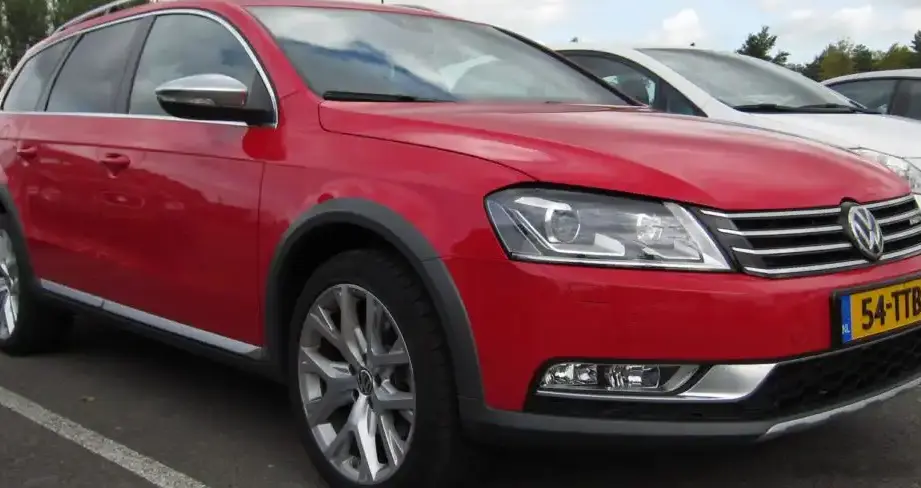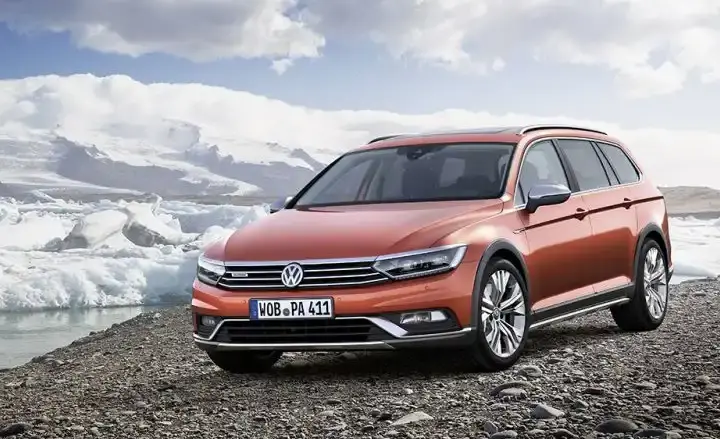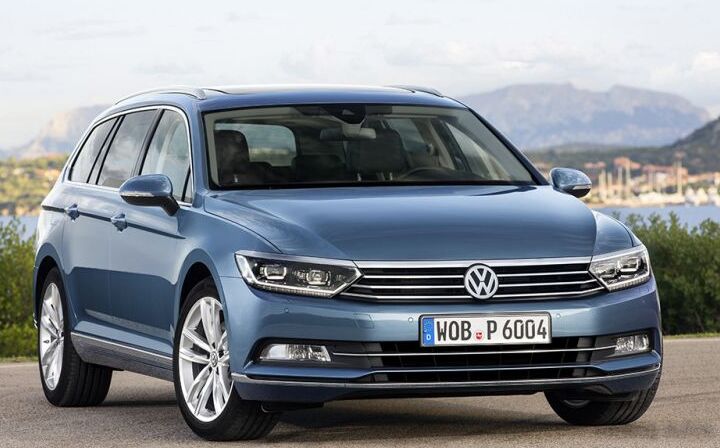
The Volkswagen Passat Variant (B8) 2.0 TDI 190 hp with a Dual Clutch Gearbox (DSG) represents a significant iteration of Volkswagen’s popular mid-size wagon, produced from July 2014 to March 2019. Positioned as a mid-to-upper trim level within the B8 Passat Variant range, this model combined the practicality of a station wagon with a relatively powerful and efficient diesel engine, aimed at buyers prioritizing fuel economy, performance, and long-distance comfort. It was a key offering in the European market, where wagons remain highly popular, and saw limited sales in North America where the Passat was offered exclusively as a sedan during this generation.
Technical Specifications
| Brand | Volkswagen |
| Model | Passat |
| Generation | Passat Variant (B8) |
| Type (Engine) | 2.0 TDI (190 Hp) DSG |
| Start of production | July, 2014 |
| End of production | March, 2019 |
| Powertrain Architecture | Internal Combustion engine |
| Body type | Station wagon (estate) |
| Seats | 5 |
| Doors | 5 |
| Fuel consumption (urban) | 5.4 l/100 km (43.6 US mpg, 52.3 UK mpg, 18.5 km/l) |
| Fuel consumption (extra urban) | 4.1 l/100 km (57.4 US mpg, 68.9 UK mpg, 24.4 km/l) |
| Fuel consumption (combined) | 4.6 l/100 km (51.1 US mpg, 61.4 UK mpg, 21.7 km/l) |
| CO2 emissions | 119-120 g/km |
| Fuel Type | Diesel |
| Acceleration 0 – 100 km/h | 7.9 sec |
| Acceleration 0 – 62 mph | 7.9 sec |
| Acceleration 0 – 60 mph | 7.5 sec |
| Maximum speed | 233 km/h (144.78 mph) |
| Emission standard | Euro 6 |
| Weight-to-power ratio | 8.3 kg/Hp, 120.2 Hp/tonne |
| Weight-to-torque ratio | 4 kg/Nm, 253 Nm/tonne |
| Power | 190 Hp @ 3500-4000 rpm |
| Power per litre | 96.5 Hp/l |
| Torque | 400 Nm @ 1750-3000 rpm (295.02 lb.-ft. @ 1750-3000 rpm) |
| Engine layout | Front, Transverse |
| Engine Model/Code | DDAA, DFCA |
| Engine displacement | 1968 cm3 (120.09 cu. in.) |
| Number of cylinders | 4 |
| Engine configuration | Inline |
| Number of valves per cylinder | 4 |
| Fuel injection system | Diesel Commonrail |
| Engine aspiration | Turbocharger, Intercooler |
| Engine oil capacity | 4.7 l (4.97 US qt | 4.14 UK qt) |
| Kerb Weight | 1581 kg (3485.51 lbs.) |
| Max. weight | 2170 kg (4784.03 lbs.) |
| Max load | 589 kg (1298.52 lbs.) |
| Trunk (boot) space – minimum | 650 l (22.95 cu. ft.) |
| Trunk (boot) space – maximum | 1780 l (62.86 cu. ft.) |
| Fuel tank capacity | 66 l (17.44 US gal | 14.52 UK gal) |
| Length | 4767 mm (187.68 in.) |
| Width | 1832 mm (72.13 in.) |
| Height | 1477 mm (58.15 in.) |
| Wheelbase | 2791 mm (109.88 in.) |
| Front track | 1584 mm (62.36 in.) |
| Rear (Back) track | 1568 mm (61.73 in.) |
| Minimum turning circle | 11.7 m (38.39 ft.) |
| Drivetrain Architecture | The Internal combustion engine (ICE) drives the front wheels of the vehicle. |
| Drive wheel | Front wheel drive |
| Number of gears and type of gearbox | 6 gears, automatic transmission DSG |
| Front brakes | Ventilated discs |
| Assisting systems | ABS (Anti-lock braking system) |
| Steering type | Steering rack and pinion |
| Tires size | 215/60 R16; 215/55 R17 |
| Wheel rims size | 6.5J x 16; 7.0J x 17 |
Powertrain & Engine Architecture
At the heart of the Passat Variant 2.0 TDI 190 DSG lies the Volkswagen Group’s EA288 series of diesel engines. Specifically, this variant utilized either the DDAA or DFCA engine code, both representing 2.0-liter inline-four cylinder diesel engines. These engines featured common-rail direct injection, delivering fuel at extremely high pressures for optimized combustion. A turbocharger with an intercooler was standard, boosting power output and improving efficiency. The engine employed four valves per cylinder and a sophisticated variable geometry turbocharger (VGT) to provide a broad torque curve. The 190 horsepower output was achieved through careful calibration of the engine management system, balancing performance with fuel economy and emissions compliance (Euro 6 standard). The DSG (Direct-Shift Gearbox) is a seven-speed dual-clutch transmission. It offers quicker, smoother shifts compared to a traditional automatic, and contributes to improved fuel efficiency. The DSG features two separate clutches, one for even and one for odd gears, allowing for pre-selection of the next gear for near-instantaneous shifts.
Driving Characteristics
The 2.0 TDI 190 hp DSG Passat Variant offered a compelling blend of performance and economy. Acceleration from 0-60 mph in around 7.5-7.9 seconds was respectable for a wagon, and the 400 Nm (295 lb-ft) of torque available from 1750-3000 rpm provided strong pulling power for overtaking and hauling loads. The DSG transmission played a crucial role in maximizing the engine’s potential, providing quick and precise gear changes. Compared to the lower-powered 1.6 TDI variants, the 2.0 TDI offered a noticeably more responsive driving experience. While not as sporty as the petrol-powered Passat variants, it provided ample power for everyday driving and long-distance cruising. The DSG’s programming prioritized smooth shifts and fuel efficiency in normal driving modes, but could be shifted into Sport mode for more aggressive gear changes and a more engaging driving experience.
Equipment & Trim Levels
The 2.0 TDI 190 hp DSG trim typically included a generous level of standard equipment. This often included features like automatic climate control, a touchscreen infotainment system with navigation, Bluetooth connectivity, and a suite of safety features such as ABS, ESP (Electronic Stability Program), and multiple airbags. Interior upholstery was typically cloth or a combination of cloth and leatherette, with higher trim levels offering full leather options. Optional extras included features like a panoramic sunroof, adaptive cruise control, park assist, and upgraded sound systems. The Passat Variant B8 offered a range of trim levels, with the 2.0 TDI 190 DSG generally positioned in the mid-to-upper range, offering a balance of features and performance.
Chassis & Braking
The B8 Passat Variant utilized a MacPherson strut front suspension and a multi-link rear suspension, providing a comfortable and controlled ride. The suspension was tuned to prioritize comfort, but still offered decent handling characteristics. Braking systems typically consisted of ventilated front discs and solid rear discs, with ABS and ESP as standard safety features. Stabilizer bars were fitted to both the front and rear axles to reduce body roll during cornering. The chassis was designed to accommodate the increased weight of the diesel engine and DSG transmission, providing a stable and predictable driving experience.
Market Reception & Comparison
The Passat Variant 2.0 TDI 190 DSG was generally well-received by automotive critics. It was praised for its fuel efficiency, comfortable ride, spacious interior, and practical wagon body style. Compared to the lower-powered diesel variants, the 2.0 TDI offered a significant performance upgrade without sacrificing fuel economy. Compared to petrol-powered Passat variants, the 2.0 TDI offered superior fuel economy and torque, making it a popular choice for drivers who frequently cover long distances. Reliability was generally good, although some owners reported issues with the DSG transmission, particularly early units.
Legacy
The Volkswagen Passat Variant B8 2.0 TDI 190 DSG remains a popular choice in the used car market, particularly in Europe. The EA288 diesel engine is known for its durability and relatively low maintenance costs, although regular servicing is essential. The DSG transmission, while generally reliable, requires periodic fluid changes to ensure optimal performance. The combination of practicality, fuel efficiency, and performance has ensured that this variant remains a desirable option for buyers seeking a versatile and comfortable family wagon. Its continued presence on the used car market is a testament to the B8 Passat Variant’s overall quality and enduring appeal.