
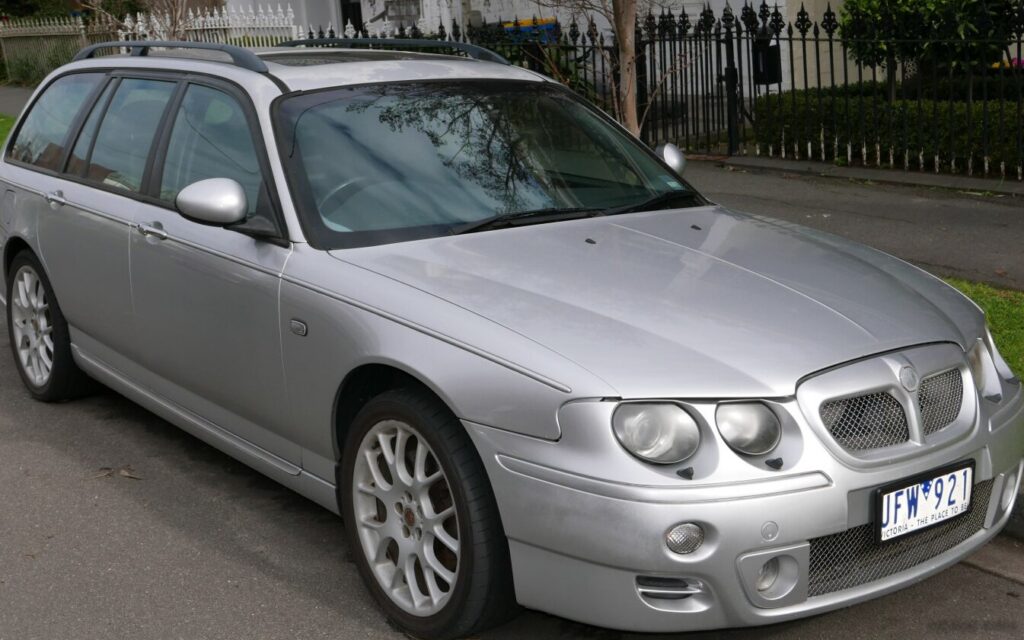
The MG ZT-T 2.0 CDTi, produced between 2003 and 2005, was a station wagon (estate) variant of the MG ZT, itself a revival of the Rover 75 platform following BMW’s divestment of the Rover Group. Positioned as a practical and somewhat sporty offering in the British market, the ZT-T aimed to provide a more engaging driving experience than traditional estate cars while offering the space and versatility expected of the segment. It was built upon the X20 platform, also known as the 1HX0/A3 platform, shared with the Rover 75 and MG ZT saloon. The 2.0 CDTi variant represented a mid-range option within the ZT-T lineup, offering a balance between fuel economy, performance, and cost.
Technical Specifications
| Brand | MG |
| Model | ZT-T |
| Generation | ZT-T |
| Type (Engine) | 2.0 CDTi (131 Hp) |
| Start of production | 2003 |
| End of production | 2005 |
| Powertrain Architecture | Internal Combustion engine |
| Body type | Station wagon (estate) |
| Seats | 5 |
| Doors | 5 |
| Fuel consumption (urban) | 8.1 l/100 km (29 US mpg, 34.9 UK mpg, 12.3 km/l) |
| Fuel consumption (extra urban) | 4.4 l/100 km (53.5 US mpg, 64.2 UK mpg, 22.7 km/l) |
| Fuel consumption (combined) | 5.8 l/100 km (40.6 US mpg, 48.7 UK mpg, 17.2 km/l) |
| Fuel Type | Diesel |
| Acceleration 0 – 100 km/h | 11.3 sec |
| Acceleration 0 – 62 mph | 11.3 sec |
| Acceleration 0 – 60 mph | 10.7 sec |
| Maximum speed | 193 km/h (119.92 mph) |
| Weight-to-power ratio | 12.1 kg/Hp, 82.9 Hp/tonne |
| Weight-to-torque ratio | 5.3 kg/Nm, 189.9 Nm/tonne |
| Power | 131 Hp @ 4000 rpm |
| Power per litre | 67.1 Hp/l |
| Torque | 300 Nm @ 1900 rpm (221.27 lb.-ft. @ 1900 rpm) |
| Engine layout | Front, Transverse |
| Engine Model/Code | M47R / 204D2 |
| Engine displacement | 1951 cm3 (119.06 cu. in.) |
| Number of cylinders | 4 |
| Engine configuration | Inline |
| Cylinder Bore | 84 mm (3.31 in.) |
| Piston Stroke | 88 mm (3.46 in.) |
| Compression ratio | 18:1 |
| Number of valves per cylinder | 4 |
| Fuel injection system | Diesel Commonrail |
| Engine aspiration | Turbocharger, Intercooler |
| Engine oil capacity | 6.8 l (7.19 US qt | 5.98 UK qt) |
| Coolant capacity | 8.2 l (8.66 US qt | 7.21 UK qt) |
| Kerb Weight | 1580 kg (3483.3 lbs.) |
| Max. weight | 2030 kg (4475.38 lbs.) |
| Max load | 450 kg (992.08 lbs.) |
| Trunk (boot) space – minimum | 400 l (14.13 cu. ft.) |
| Trunk (boot) space – maximum | 1220 l (43.08 cu. ft.) |
| Fuel tank capacity | 65 l (17.17 US gal | 14.3 UK gal) |
| Length | 4790 mm (188.58 in.) |
| Width | 1780 mm (70.08 in.) |
| Height | 1410 mm (55.51 in.) |
| Wheelbase | 2746 mm (108.11 in.) |
| Front track | 1560 mm (61.42 in.) |
| Rear track | 1610 mm (63.39 in.) |
| Drivetrain Architecture | Front wheel drive |
| Number of gears | 5 |
| Gearbox type | Manual transmission |
| Front suspension | Spring Strut |
| Rear suspension | Coil spring |
| Front brakes | Ventilated discs |
| Rear brakes | Disc |
| Assisting systems | ABS (Anti-lock braking system) |
| Steering type | Steering rack and pinion |
| Power steering | Hydraulic Steering |
| Tires size | 225/45 R18 |
Powertrain & Engine Architecture
The MG ZT-T 2.0 CDTi utilized the M47R engine, a 1.951-liter inline-four cylinder diesel engine. This engine, also known by the code 204D2, was sourced from BMW and was a common powerplant in various Rover and MG models of the period. It featured a common rail direct injection system, delivering fuel at high pressure directly into the combustion chamber for improved efficiency and reduced emissions. A turbocharger with an intercooler was employed to boost power output, providing 131 horsepower at 4000 rpm and a respectable 300 Nm (221 lb-ft) of torque at just 1900 rpm. The engine’s four valves per cylinder and a relatively high compression ratio of 18:1 contributed to its performance characteristics. The engine was transversely mounted in the front of the vehicle. The ZT-T 2.0 CDTi was equipped with a five-speed manual transmission, chosen for its balance of cost and efficiency.
Driving Characteristics
The 2.0 CDTi engine in the ZT-T provided a usable and relatively refined driving experience. While not overtly sporty, the engine’s torque output made it capable of comfortable cruising and reasonable acceleration. The 0-60 mph time of around 10.7 seconds was adequate for everyday driving, and the engine felt responsive at lower revs. Compared to the more powerful V6 variants of the ZT-T, the 2.0 CDTi offered significantly better fuel economy, but at the expense of outright performance. The five-speed manual transmission was well-matched to the engine’s characteristics, providing smooth gear changes and allowing the driver to keep the engine in its optimal power band. The gear ratios were geared towards fuel efficiency, rather than outright acceleration.
Equipment & Trim Levels
The 2.0 CDTi trim level of the ZT-T typically included features such as air conditioning, electric front windows, central locking, and an RDS stereo. Interior upholstery was generally cloth, although leather options were available. Dashboard design followed the Rover 75’s classic wood and chrome aesthetic. Optional extras included alloy wheels, a sunroof, and upgraded audio systems. The ZT-T aimed to offer a good level of standard equipment for its price point, appealing to buyers seeking a practical and well-equipped estate car.
Chassis & Braking
The ZT-T utilized a front-wheel-drive layout with independent suspension at the front (Spring Strut) and a coil spring setup at the rear. The front brakes were ventilated discs, providing good stopping power, while the rear brakes were solid discs. ABS (Anti-lock Braking System) was standard. The suspension was tuned to provide a balance between comfort and handling, offering a reasonably composed ride quality. The steering was rack and pinion with hydraulic assistance, providing a direct and responsive feel.
Market Reception & Comparison
The MG ZT-T 2.0 CDTi was generally well-received by automotive critics as a practical and reasonably priced estate car. It was praised for its fuel economy and comfortable ride, but some reviewers noted that the engine lacked the outright performance of its V6 counterparts. Compared to other estate cars in its class, such as the Ford Mondeo Estate and Vauxhall Vectra Estate, the ZT-T offered a more distinctive and arguably more stylish design. However, it often lagged behind in terms of overall refinement and brand recognition.
Legacy
The MG ZT-T 2.0 CDTi, like all MG models produced during the final years of MG Rover, is now a relatively rare vehicle. The M47R engine, while generally reliable, can be susceptible to issues with the fuel injectors and turbocharger over time. Parts availability can be a challenge, although a dedicated network of MG Rover enthusiasts and specialists has emerged to support owners. Today, the ZT-T 2.0 CDTi is appreciated by enthusiasts for its unique character, practicality, and relatively affordable running costs. It represents a final chapter in the history of British automotive manufacturing and a testament to the engineering skills of the MG Rover workforce.
