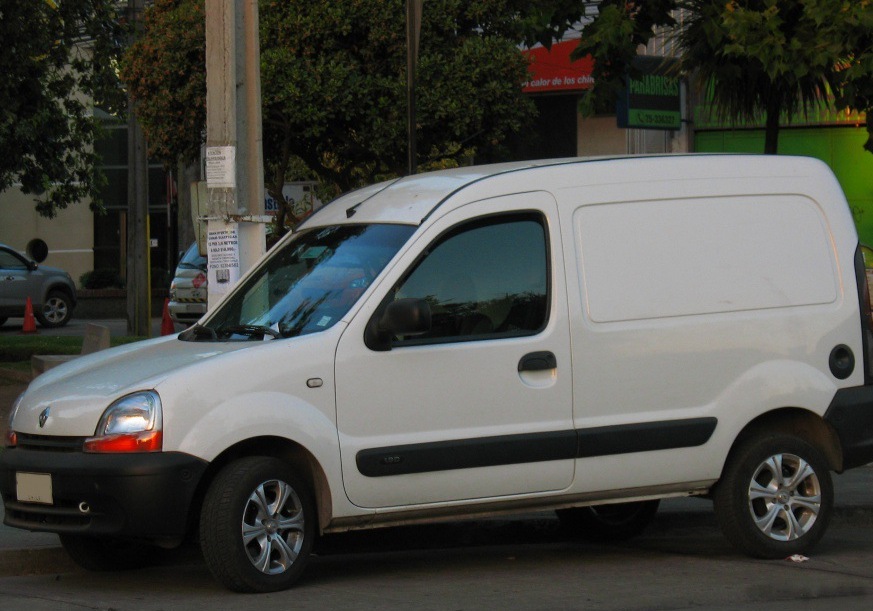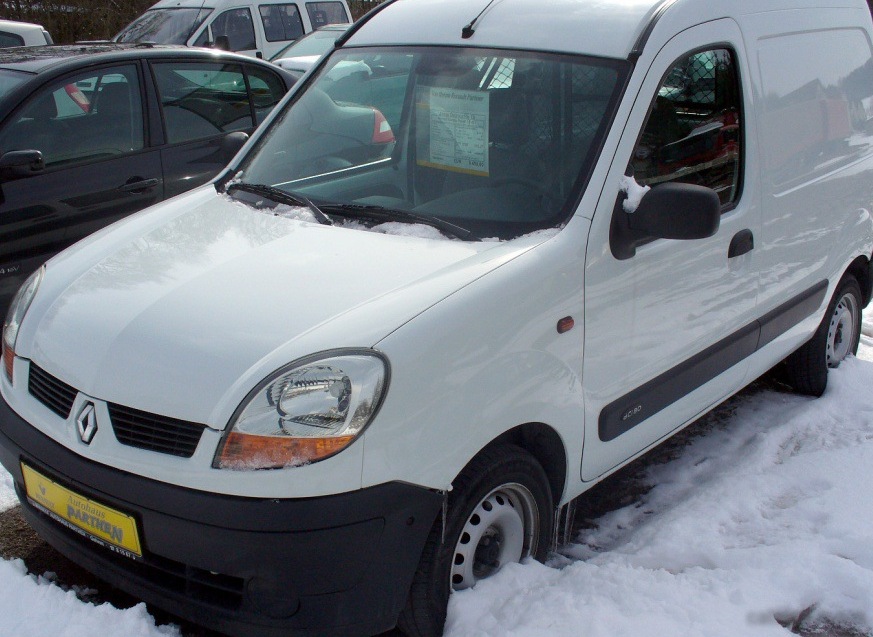
The Renault Kangoo I Express, specifically the facelifted version produced from 2003 to 2005, represented a practical and versatile light commercial vehicle aimed at small businesses and tradespeople. This variant, equipped with the 1.6-liter 16V engine producing 95 horsepower, occupied a middle ground within the Kangoo Express lineup, offering a balance between affordability, fuel economy, and usability. It was a key component of Renault’s commercial vehicle strategy in Europe, providing a compact and efficient solution for urban deliveries and service applications. The Kangoo I (code name KC0/1) and its Express variant were built on the shared Renault-Nissan B platform.
Technical Specifications
| Brand | Renault |
| Model | Kangoo |
| Generation | Kangoo I Express (FC, facelift 2003) |
| Type (Engine) | 1.6 16V (95 Hp) |
| Start of production | 2003 |
| End of production | 2005 |
| Powertrain Architecture | Internal Combustion engine |
| Body type | Minivan |
| Seats | 2 |
| Doors | 3/4 |
| Fuel consumption (urban) | 9.8 l/100 km (24 US mpg, 28.8 UK mpg, 10.2 km/l) |
| Fuel consumption (extra urban) | 6.1 l/100 km (38.6 US mpg, 46.3 UK mpg, 16.4 km/l) |
| Fuel consumption (combined) | 7.5 l/100 km (31.4 US mpg, 37.7 UK mpg, 13.3 km/l) |
| CO2 emissions | 177 g/km |
| Fuel Type | Petrol (Gasoline) |
| Acceleration 0 – 100 km/h | 10.7 sec |
| Acceleration 0 – 62 mph | 10.7 sec |
| Acceleration 0 – 60 mph | 10.2 sec |
| Maximum speed | 160 km/h (99.42 mph) |
| Emission standard | Euro 3 |
| Weight-to-power ratio | 11.2 kg/Hp |
| Weight-to-torque ratio | 7.2 kg/Nm |
| Power | 95 Hp @ 5000 rpm |
| Torque | 148 Nm @ 3750 rpm (109.16 lb.-ft. @ 3750 rpm) |
| Engine layout | Front, Transverse |
| Engine Model/Code | K4M |
| Engine displacement | 1598 cm3 (97.52 cu. in.) |
| Number of cylinders | 4 |
| Engine configuration | Inline |
| Cylinder Bore | 79.5 mm (3.13 in.) |
| Piston Stroke | 80.5 mm (3.17 in.) |
| Number of valves per cylinder | 4 |
| Fuel injection system | Multi-port manifold injection |
| Engine aspiration | Naturally aspirated engine |
| Engine oil capacity | 4.9 l (5.18 US qt, 4.31 UK qt) |
| Kerb Weight | 1060 kg (2336.9 lbs.) |
| Max. weight | 1610 kg (3549.44 lbs.) |
| Max load | 550 kg (1212.54 lbs.) |
| Trunk (boot) space – maximum | 3000 l (105.94 cu. ft.) |
| Fuel tank capacity | 50 l (13.21 US gal, 11 UK gal) |
| Max. roof load | 100 kg (220.46 lbs.) |
| Permitted trailer load with brakes (12%) | 890 kg (1962.11 lbs.) |
| Permitted trailer load without brakes | 530 kg (1168.45 lbs.) |
| Permitted towbar download | 75 kg (165.35 lbs.) |
| Length | 4035 mm (158.86 in.) |
| Width | 1672 mm (65.83 in.) |
| Width including mirrors | 2031 mm (79.96 in.) |
| Height | 1835 mm (72.24 in.) |
| Wheelbase | 2605 mm (102.56 in.) |
| Front track | 1405 mm (55.31 in.) |
| Rear (Back) track | 1410 mm (55.51 in.) |
| Front overhang | 730 mm (28.74 in.) |
| Rear overhang | 700 mm (27.56 in.) |
| Minimum turning circle | 10.79 m (35.4 ft.) |
| Drivetrain Architecture | Front wheel drive |
| Drive wheel | Front wheel drive |
| Number of gears and type of gearbox | 5 gears, manual transmission |
| Front suspension | Independent type McPherson |
| Rear suspension | Coil spring |
| Front brakes | Ventilated discs |
| Rear brakes | Disc |
| Steering type | Steering rack and pinion |
| Tires size | 175/65 R 14 |
| Wheel rims size | 5.5J x 14 |
Powertrain & Engine Architecture
The heart of this Kangoo Express variant is the Renault K4M engine, a 1.6-liter inline-four cylinder gasoline engine. This engine, a mainstay in Renault’s lineup for many years, features a cast iron block and aluminum cylinder head with dual overhead camshafts (DOHC) and four valves per cylinder. The 16-valve configuration contributes to improved breathing and higher power output compared to earlier 8-valve versions. Fuel delivery is managed by a multi-point fuel injection system, providing precise fuel metering for optimal combustion. The K4M engine is known for its relative simplicity and durability, making it a cost-effective choice for commercial applications. The 95 horsepower is achieved at 5000 rpm, while peak torque of 148 Nm (109.16 lb-ft) arrives at 3750 rpm. The engine is transversely mounted, driving the front wheels. The standard transmission for this model was a five-speed manual gearbox, although an optional four-speed automatic transmission was available, albeit less common.
Driving Characteristics
The 1.6 16V engine, paired with the five-speed manual transmission, provided adequate performance for typical commercial use. Acceleration from 0 to 100 km/h (0-62 mph) took approximately 10.7 seconds, and the top speed was around 160 km/h (99 mph). While not particularly sporty, the engine offered sufficient power for navigating urban streets and highways with a moderate load. The gear ratios were tuned for practicality, prioritizing fuel efficiency and drivability over outright acceleration. Compared to the more powerful (but also more expensive) versions of the Kangoo, this variant felt less strained during everyday driving, and the automatic transmission, when equipped, offered a smoother, albeit less engaging, driving experience. The automatic transmission, while convenient, did slightly impact fuel economy and acceleration.
Equipment & Trim Levels
The Kangoo Express 1.6 16V typically came with a basic but functional equipment list. Standard features included power steering, a driver’s airbag, and a basic audio system. The interior was primarily focused on durability and practicality, with hard-wearing plastics and easy-to-clean surfaces. Upholstery was typically a simple cloth material. Optional extras included air conditioning, central locking, electric windows, and upgraded audio systems. The trim level was generally considered entry-level to mid-range within the Kangoo Express lineup, appealing to businesses seeking a cost-effective and reliable work vehicle.
Chassis & Braking
The Kangoo Express featured a MacPherson strut independent suspension at the front and a coil spring suspension at the rear. This setup provided a reasonable balance between ride comfort and load-carrying capacity. The front brakes were ventilated discs, offering good stopping power, while the rear brakes were discs. The steering was a rack and pinion system, providing precise and responsive handling. The vehicle’s relatively lightweight construction (around 1060 kg or 2336.9 lbs) contributed to its agility and fuel efficiency.
Market Reception & Comparison
The Renault Kangoo Express 1.6 16V was generally well-received by critics and customers alike. It was praised for its practicality, fuel efficiency, and affordability. Compared to other light commercial vehicles in its class, such as the Citroën Berlingo and Peugeot Partner, the Kangoo offered a competitive package. The 1.6-liter engine provided a good balance between performance and economy, making it a popular choice for businesses that didn’t require the extra power of the larger engine options. Reliability was generally good, although some owners reported minor issues with the electrical system.
Legacy
The Renault Kangoo I Express 1.6 16V remains a relatively common sight on European roads today, testament to its durability and practicality. The K4M engine is known for its longevity, and many examples are still running reliably with proper maintenance. In the used car market, this variant represents a good value proposition for those seeking a cost-effective and versatile light commercial vehicle. While newer generations of the Kangoo have since been introduced, the first generation, particularly the 1.6 16V model, holds a place in automotive history as a practical and dependable workhorse.