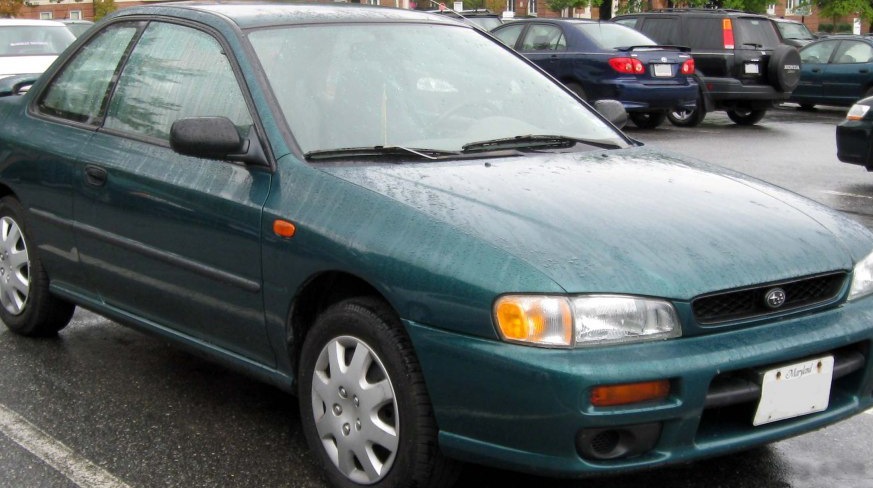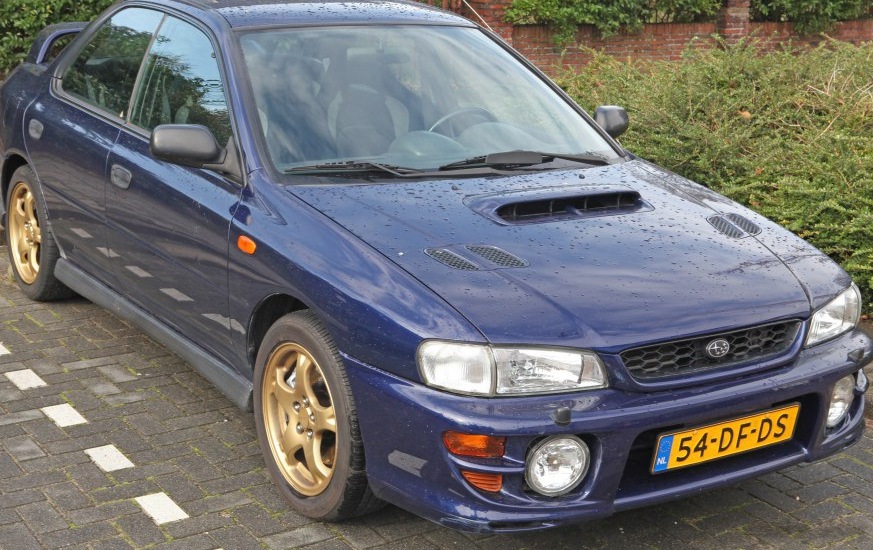
The Subaru Impreza I (GC) 1.6i, produced from 1992 to 2000, represented the entry point into Subaru’s popular compact car lineup during its first generation. Positioned as a practical and affordable option, this variant offered Subaru’s signature symmetrical all-wheel drive system in a 4-door sedan body style. It served as a crucial model for establishing the Impreza’s reputation for reliability and all-weather capability, particularly in markets where inclement weather was common. While not the performance flagship of the range – that role was reserved for the turbocharged models – the 1.6i provided a solid foundation for everyday driving and a gateway to the Subaru brand.
Technical Specifications
| Brand | Subaru |
| Model | Impreza |
| Generation | Impreza I (GC) |
| Type | 1.6i (90 Hp) 4WD |
| Start of production | 1992 |
| End of production | 2000 |
| Powertrain Architecture | Internal Combustion engine |
| Body type | Sedan |
| Seats | 5 |
| Doors | 4 |
| Fuel consumption (combined) | 8.2 l/100 km (28.7 US mpg, 34.4 UK mpg, 12.2 km/l) |
| Fuel Type | Petrol (Gasoline) |
| Acceleration 0 – 100 km/h | 13.1 sec |
| Acceleration 0 – 62 mph | 13.1 sec |
| Acceleration 0 – 60 mph | 12.4 sec |
| Maximum speed | 172 km/h (106.88 mph) |
| Weight-to-power ratio | 12.4 kg/Hp, 80.7 Hp/tonne |
| Weight-to-torque ratio | 8.7 kg/Nm, 114.8 Nm/tonne |
| Power | 90 Hp @ 5600 rpm |
| Power per litre | 56.4 Hp/l |
| Torque | 128 Nm @ 4000 rpm (94.41 lb.-ft. @ 4000 rpm) |
| Engine layout | Front, Longitudinal |
| Engine Model/Code | EJ16 |
| Engine displacement | 1597 cm3 (97.45 cu. in.) |
| Number of cylinders | 4 |
| Engine configuration | Boxer |
| Cylinder Bore | 87.9 mm (3.46 in.) |
| Piston Stroke | 65.8 mm (2.59 in.) |
| Compression ratio | 9.4:1 |
| Number of valves per cylinder | 4 |
| Fuel injection system | Multi-port manifold injection |
| Engine aspiration | Naturally aspirated engine |
| Valvetrain | OHC |
| Engine oil capacity | 4 l (4.23 US qt | 3.52 UK qt) |
| Kerb Weight | 1115 kg (2458.15 lbs.) |
| Max. weight | 1620 kg (3571.49 lbs.) |
| Max load | 505 kg (1113.33 lbs.) |
| Trunk (boot) space – minimum | 353 l (12.47 cu. ft.) |
| Fuel tank capacity | 50 l (13.21 US gal | 11 UK gal) |
| Length | 4350 mm (171.26 in.) |
| Width | 1690 mm (66.54 in.) |
| Height | 1415 mm (55.71 in.) |
| Wheelbase | 2520 mm (99.21 in.) |
| Front track | 1460 mm (57.48 in.) |
| Rear (Back) track | 1455 mm (57.28 in.) |
| Drive wheel | All wheel drive (4×4) |
| Number of gears and type of gearbox | 5 gears, manual transmission |
| Front suspension | Wishbone |
| Rear suspension | Several levers and rods |
| Front brakes | Ventilated discs |
| Rear brakes | Drum |
| Steering type | Steering rack and pinion |
| Power steering | Hydraulic Steering |
| Tires size | 175/70 R14 |
| Wheel rims size | 14 |
Powertrain & Engine Architecture
The heart of the Impreza 1.6i was the EJ16 engine, a 1.6-liter (1597 cc) naturally aspirated, horizontally-opposed four-cylinder “boxer” engine. This engine design, a Subaru hallmark, offered inherent balance and a lower center of gravity, contributing to the car’s handling characteristics. The EJ16 featured a single overhead camshaft (OHC) valvetrain with four valves per cylinder, and utilized multi-port fuel injection for efficient fuel delivery. The engine produced 90 horsepower at 5600 rpm and 128 Nm (94.41 lb-ft) of torque at 4000 rpm. The engine’s longitudinal mounting, coupled with Subaru’s symmetrical all-wheel drive system, required a unique drivetrain layout. The standard transmission was a 5-speed manual, providing a direct connection to the engine’s power. While an automatic transmission was offered in some markets, it wasn’t as common with this engine configuration.
Driving Characteristics
The 1.6i Impreza, with its 90 horsepower and relatively lightweight construction, offered adequate performance for everyday driving. Acceleration was not its strong suit, taking around 13.1 seconds to reach 62 mph (100 km/h). However, the all-wheel drive system provided excellent traction, particularly on slippery surfaces. The manual transmission allowed for precise control, while the automatic, when equipped, offered convenience at the expense of some responsiveness. Compared to the more powerful 1.8L and 2.0L Impreza variants, the 1.6i felt noticeably less spirited. The higher-output engines, especially those with turbocharging, delivered significantly quicker acceleration and a more engaging driving experience. However, the 1.6i’s fuel economy was generally better than its more powerful siblings.
Equipment & Trim Levels
The Impreza 1.6i typically came with a fairly basic level of equipment, reflecting its position as the entry-level model. Standard features generally included power steering, central locking, and basic instrumentation. Interior upholstery was typically cloth, and the dashboard featured a functional, if somewhat spartan, design. Optional extras could include air conditioning, power windows, and an upgraded audio system. Trim levels varied depending on the market, but generally focused on adding convenience features rather than significantly altering the car’s performance.
Chassis & Braking
The Impreza 1.6i utilized a MacPherson strut front suspension and a multi-link rear suspension, providing a comfortable ride and predictable handling. The front brakes were ventilated discs, offering good stopping power, while the rear brakes were drums, a cost-saving measure common in entry-level models. The car’s relatively light weight helped to compensate for the rear drum brakes. Stabilizer bars were typically included, further enhancing handling stability.
Market Reception & Comparison
The Impreza 1.6i was generally well-received as a practical and reliable family car. Critics praised its all-wheel drive system and its ability to handle challenging road conditions. However, some reviewers noted its lack of outright performance compared to other models in the Impreza range. Compared to the 1.8L and 2.0L Impreza variants, the 1.6i offered better fuel economy but less power. The 1.8L models provided a noticeable performance boost without a significant increase in price, making them a popular alternative. The 1.6i’s reliability was generally considered good, although regular maintenance was essential to ensure the longevity of the engine and drivetrain.
Legacy
The Subaru Impreza 1.6i (GC) remains a relatively affordable and accessible classic car today. The EJ16 engine, while not known for its high performance, is generally considered reliable if properly maintained. Parts availability is generally good, although some components may be becoming increasingly difficult to find. The car’s all-wheel drive system continues to be a major selling point, making it a popular choice for drivers in regions with harsh winters. While not as sought-after as the turbocharged WRX models, the 1.6i Impreza represents a solid and dependable entry point into the world of Subaru ownership, and a testament to the brand’s commitment to all-weather capability and durability.