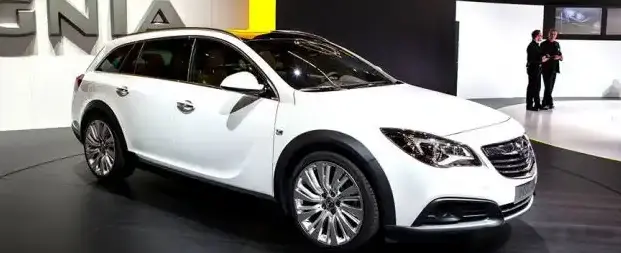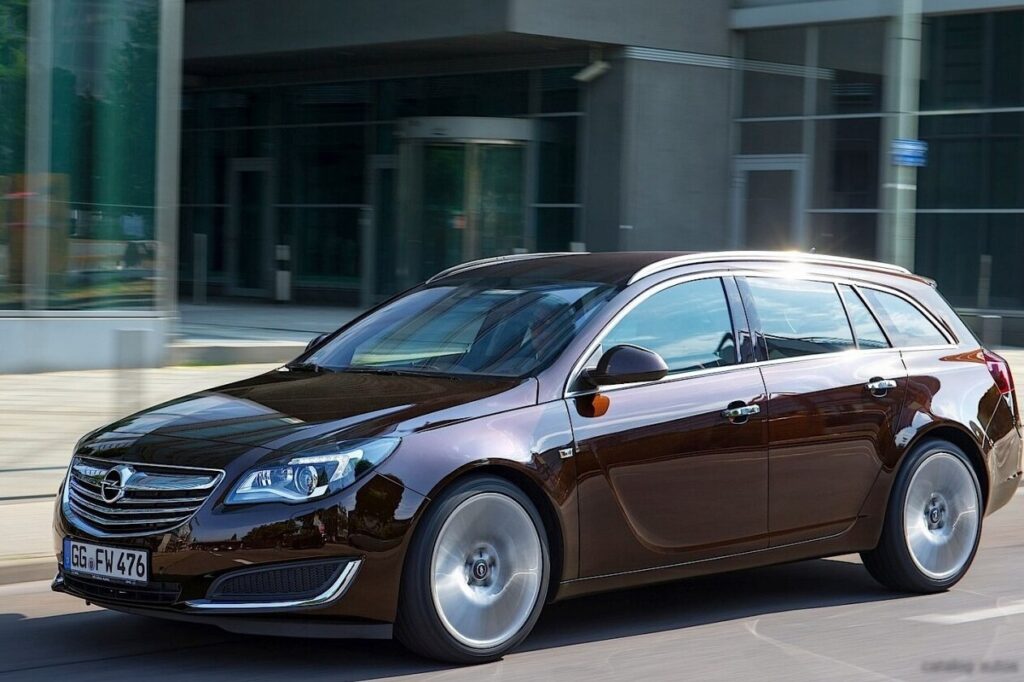
The Opel Insignia Sports Tourer, specifically the 2.0 CDTI (140 hp) Ecotec ecoFLEX start/stop variant, was produced from July 2013 to June 2015. This model represents a facelift of the first-generation (A) Insignia, introduced in 2008, and aimed to refine the original design while improving fuel efficiency and reducing emissions. Positioned as a mid-range offering within the Insignia Sports Tourer lineup, it catered to buyers seeking a balance between performance, practicality, and economy in a spacious station wagon. The Insignia, in general, was Opel’s flagship model, intended to compete with established players like the Ford Mondeo and Volkswagen Passat in the European market.
Technical Specifications
| Brand | Opel |
| Model | Insignia |
| Generation | Insignia Sports Tourer (A, facelift 2013) |
| Type (Engine) | 2.0 CDTI (140 Hp) Ecotec ecoFLEX start/stop |
| Start of production | July, 2013 |
| End of production | June, 2015 |
| Powertrain Architecture | Internal Combustion engine |
| Body type | Station wagon (estate) |
| Seats | 5 |
| Doors | 5 |
| Fuel consumption (urban) | 4.7 l/100 km (50 US mpg, 60.1 UK mpg, 21.3 km/l) |
| Fuel consumption (extra urban) | 3.5 l/100 km (67.2 US mpg, 80.7 UK mpg, 28.6 km/l) |
| Fuel consumption (combined) | 3.9 l/100 km (60.3 US mpg, 72.4 UK mpg, 25.6 km/l) |
| CO2 emissions | 104 g/km |
| Fuel Type | Diesel |
| Acceleration 0 – 100 km/h | 11 sec |
| Acceleration 0 – 62 mph | 11 sec |
| Acceleration 0 – 60 mph | 10.5 sec |
| Maximum speed | 200 km/h (124.27 mph) |
| Emission standard | Euro 5 |
| Power | 140 Hp @ 4000 rpm |
| Power per litre | 71.6 Hp/l |
| Torque | 350 Nm @ 1750-2500 rpm (258.15 lb.-ft. @ 1750-2500 rpm) |
| Engine layout | Front, Transverse |
| Engine Model/Code | A20DTE |
| Engine displacement | 1956 cm3 (119.36 cu. in.) |
| Number of cylinders | 4 |
| Engine configuration | Inline |
| Cylinder Bore | 83 mm (3.27 in.) |
| Piston Stroke | 90.4 mm (3.56 in.) |
| Fuel injection system | Diesel Commonrail |
| Engine aspiration | Turbocharger, Intercooler |
| Engine oil capacity | 4.5 l (4.76 US qt | 3.96 UK qt) |
| Coolant | 9 l (9.51 US qt | 7.92 UK qt) |
| Trunk (boot) space – minimum | 540 l (19.07 cu. ft.) |
| Trunk (boot) space – maximum | 1530 l (54.03 cu. ft.) |
| Fuel tank capacity | 70 l (18.49 US gal | 15.4 UK gal) |
| Length | 4913 mm (193.43 in.) |
| Width | 1856 mm (73.07 in.) |
| Width including mirrors | 2084 mm (82.05 in.) |
| Height | 1513 mm (59.57 in.) |
| Wheelbase | 2737 mm (107.76 in.) |
| Front track | 1587 mm (62.48 in.) |
| Rear (Back) track | 1590 mm (62.6 in.) |
| Minimum turning circle | 11.4 m (37.4 ft.) |
| Drivetrain Architecture | Front wheel drive, Internal Combustion engine |
| Number of gears | 6 |
| Gearbox type | Manual transmission |
| Front brakes | Ventilated discs |
| Assisting systems | ABS (Anti-lock braking system) |
| Steering type | Steering rack and pinion |
| Power steering | Electric Steering |
Powertrain & Engine Architecture
The heart of this Insignia variant is the A20DTE engine, a 2.0-liter inline-four cylinder diesel. This engine is part of Opel’s Ecotec range and features common-rail direct injection, a turbocharger with intercooling, and four valves per cylinder. The common-rail system, operating at high pressure, ensures precise fuel delivery for optimized combustion. The turbocharger boosts power output, while the intercooler cools the intake air, further enhancing efficiency. The engine’s 140 horsepower peak is reached at 4000 rpm, while its substantial 350 Nm (258 lb-ft) of torque is available from 1750 to 2500 rpm, providing strong pulling power at lower engine speeds. This engine was paired with a six-speed manual transmission, chosen for its efficiency and driver engagement. The ‘ecoFLEX’ designation indicates the inclusion of fuel-saving technologies like the Start/Stop system, which automatically shuts off the engine when the vehicle is stationary, reducing idle fuel consumption.
Driving Characteristics
The 140 hp 2.0 CDTI with a manual transmission offered a comfortable and capable driving experience. Acceleration from 0-60 mph took around 10.5 seconds, making it adequately quick for everyday driving and highway cruising. The engine’s strong low-end torque meant that overtaking maneuvers were generally effortless, even with a full load. Compared to the more powerful 160 hp or 170 hp versions of the 2.0 CDTI, this variant felt less urgent in its acceleration, but it provided a more relaxed and fuel-efficient driving experience. The six-speed manual gearbox was well-matched to the engine’s characteristics, offering smooth shifts and allowing the driver to maintain optimal engine speed for efficiency or performance. The gear ratios were tuned for a balance between fuel economy and responsiveness.
Equipment & Trim Levels
The 2.0 CDTI (140 hp) Ecotec ecoFLEX typically came equipped with a respectable level of standard features. These included air conditioning, electric front and rear windows, a CD/MP3 stereo system, alloy wheels, and ABS brakes. Higher trim levels, such as SE or Elite, added features like dual-zone climate control, leather upholstery, parking sensors, a touchscreen infotainment system, and advanced safety features like lane departure warning. Interior upholstery was typically cloth on the base models, with leather options available on higher trims. The dashboard layout was functional and well-designed, with clear instrumentation and intuitive controls.
Chassis & Braking
The Insignia Sports Tourer featured a MacPherson strut front suspension and a multi-link rear suspension, providing a comfortable ride and good handling characteristics. The suspension was tuned to balance ride comfort with body control. Front brakes were ventilated discs, offering good stopping power, while rear brakes were typically solid discs. ABS (Anti-lock Braking System) was standard, enhancing safety during emergency braking. The steering was electric power-assisted, providing a light and precise feel. Stabilizer bars were fitted to both the front and rear axles to reduce body roll during cornering.
Market Reception & Comparison
The 1.8 CDTI Automatic combination received generally positive reviews from automotive critics. It was praised for its fuel efficiency, comfortable ride, and spacious interior. However, some critics noted that the engine could feel a bit underpowered when fully loaded or when tackling steep hills. Compared to the higher-output 2.0 CDTI variants, this version offered better fuel economy but less outright performance. In terms of reliability, the A20DTE engine proved to be generally robust, although, like any diesel engine, it required regular maintenance, including oil changes and filter replacements. Fuel economy was a key selling point, with combined figures around 3.9 l/100 km (60.3 US mpg) being highly competitive in its class.
Legacy
The Opel Insignia Sports Tourer 2.0 CDTI (140 hp) Ecotec ecoFLEX start/stop remains a popular choice in the used car market. The A20DTE engine has proven to be relatively reliable, and parts availability is generally good. While not the most exciting variant in the Insignia lineup, it offers a practical and economical option for buyers seeking a spacious and comfortable station wagon. Its fuel efficiency and relatively low running costs continue to make it an attractive proposition for those looking for a sensible family car.