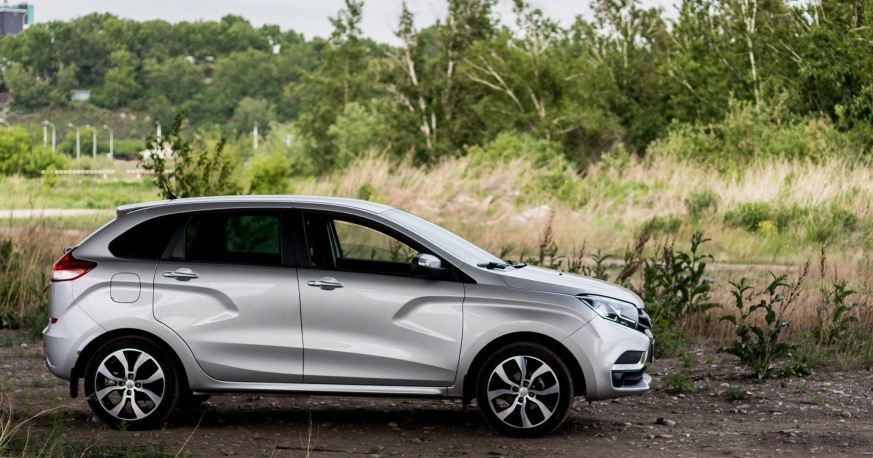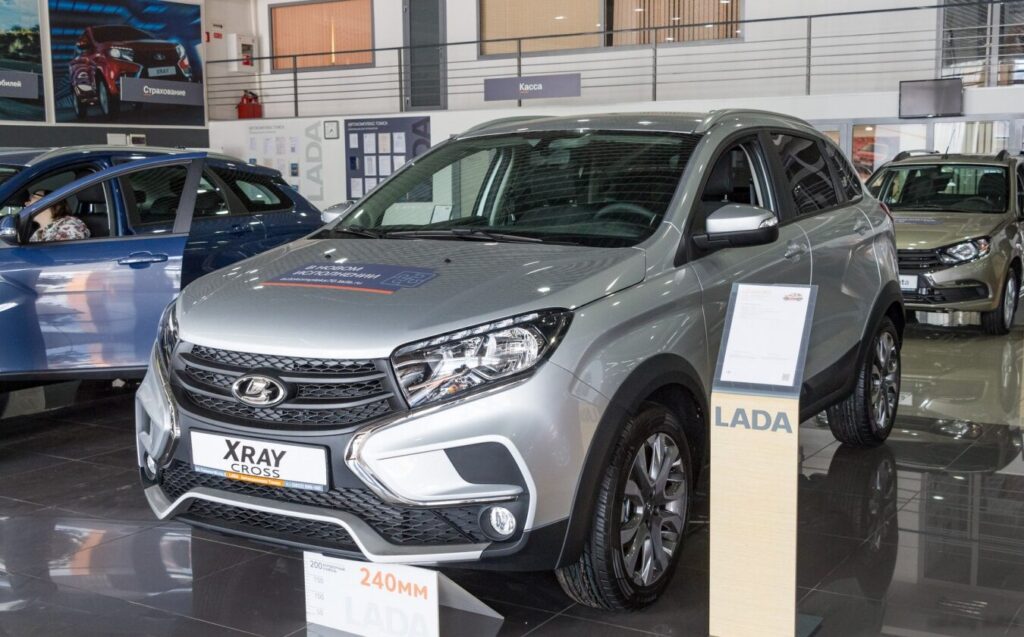
The Lada XRAY Cross 1.8 16V, produced from 2018 onwards, represents a significant iteration within the XRAY model line, Lada’s attempt to enter the increasingly popular compact crossover segment. Built upon the B0 platform – a heavily modified version of the Renault/Nissan B platform (also known as the 1HX0/A3 platform) – the XRAY aimed to offer a more modern and appealing vehicle to Russian consumers. The “Cross” designation signified a slightly more rugged appearance and increased ground clearance compared to the standard XRAY. This particular variant, powered by the 1.8-liter 16-valve engine producing 122 horsepower, occupied a middle ground in the XRAY lineup, offering a balance between affordability and performance. It was positioned above the base 1.6-liter engine options but below the more powerful, though less common, 1.8-liter versions with different tuning.
Technical Specifications
| Brand | Lada |
| Model | XRAY |
| Generation | XRAY Cross |
| Type (Engine) | 1.8 16V (122 Hp) |
| Start of production | 2018 |
| Powertrain Architecture | Internal Combustion engine |
| Body type | Crossover |
| Seats | 5 |
| Doors | 5 |
| Fuel consumption (urban) | 9.7 l/100 km (24.2 US mpg, 29.1 UK mpg, 10.3 km/l) |
| Fuel consumption (extra urban) | 6.3 l/100 km (37.3 US mpg, 44.8 UK mpg, 15.9 km/l) |
| Fuel consumption (combined) | 7.5 l/100 km (31.4 US mpg, 37.7 UK mpg, 13.3 km/l) |
| Fuel Type | Petrol (Gasoline) |
| Acceleration 0 – 100 km/h | 10.9 sec |
| Acceleration 0 – 62 mph | 10.9 sec |
| Acceleration 0 – 60 mph | 10.4 sec |
| Maximum speed | 180 km/h (111.85 mph) |
| Weight-to-power ratio | 10.6 kg/Hp, 94.2 Hp/tonne |
| Weight-to-torque ratio | 7.6 kg/Nm, 131.3 Nm/tonne |
| Power | 122 Hp @ 6050 rpm |
| Power per litre | 68.8 Hp/l |
| Torque | 170 Nm @ 3700 rpm (125.39 lb.-ft. @ 3700 rpm) |
| Engine layout | Front, Transverse |
| Engine Model/Code | VAZ-21179 |
| Engine displacement | 1774 cm3 (108.26 cu. in.) |
| Number of cylinders | 4 |
| Engine configuration | Inline |
| Number of valves per cylinder | 4 |
| Fuel injection system | Multi-port manifold injection |
| Engine aspiration | Naturally aspirated engine |
| Kerb Weight | 1295-1300 kg (2854.99 – 2866.01 lbs.) |
| Max. weight | 1650 kg (3637.63 lbs.) |
| Max load | 350-355 kg (771.62 – 782.64 lbs.) |
| Trunk (boot) space – minimum | 361 l (12.75 cu. ft.) |
| Trunk (boot) space – maximum | 1514 l (53.47 cu. ft.) |
| Fuel tank capacity | 50 l (13.21 US gal | 11 UK gal) |
| Permitted trailer load with brakes (12%) | 800 kg (1763.7 lbs.) |
| Permitted trailer load without brakes | 650 kg (1433 lbs.) |
| Length | 4171 mm (164.21 in.) |
| Width | 1810 mm (71.26 in.) |
| Width including mirrors | 1983 mm (78.07 in.) |
| Height | 1645 mm (64.76 in.) |
| Wheelbase | 2592 mm (102.05 in.) |
| Front track | 1503 mm (59.17 in.) |
| Rear (Back) track | 1546 mm (60.87 in.) |
| Ride height (ground clearance) | 215 mm (8.46 in.) |
| Drivetrain Architecture | Front wheel drive |
| Number of gears and type of gearbox | 5 gears, manual transmission |
| Front suspension | Independent, type McPherson with coil spring and anti-roll bar |
| Rear suspension | Semi-independent, coil spring |
| Front brakes | Ventilated discs |
| Rear brakes | Drum |
| Assisting systems | ABS (Anti-lock braking system) |
| Steering type | Steering rack and pinion |
| Power steering | Electric Steering |
| Tires size | 215/50 R17 91 H |
| Wheel rims size | 17 |
Powertrain & Engine Architecture
The heart of the XRAY Cross 1.8 16V is the VAZ-21179 engine, a 1.8-liter inline-four cylinder gasoline engine. This engine is a development of the older VAZ-21178 series, featuring a 16-valve cylinder head for improved breathing and power output. It utilizes a multi-point fuel injection system, providing a reasonable balance between fuel efficiency and performance. The engine is naturally aspirated, meaning it doesn’t employ turbocharging or supercharging. The 16 valves (four per cylinder) contribute to a broader powerband compared to older 8-valve designs. The engine’s 82.5mm bore and 84mm stroke contribute to its 1774cc displacement. The XRAY Cross 1.8 16V was exclusively offered with a 5-speed manual transmission, designed to efficiently deliver power to the front wheels. The transmission’s gear ratios were tuned for a blend of acceleration and fuel economy, prioritizing usability in everyday driving conditions.
Driving Characteristics
The 122 horsepower and 170 Nm (125 lb-ft) of torque offered by the 1.8-liter engine provided adequate, though not exhilarating, performance. Acceleration from 0 to 60 mph took around 10.4 seconds, and the top speed was limited to 180 km/h (112 mph). Compared to the base 1.6-liter engines, the 1.8 offered noticeably improved responsiveness, particularly when overtaking or climbing hills. However, it didn’t possess the outright punch of higher-performance variants, if available in certain markets. The 5-speed manual transmission was generally well-matched to the engine’s characteristics, offering smooth shifts and a usable gear spread. The XRAY Cross’s increased ride height, compared to the standard XRAY, did introduce a slightly more pronounced body roll in corners, but this was a trade-off for improved ground clearance and a more rugged appearance.
Equipment & Trim Levels
The XRAY Cross 1.8 16V typically came with a reasonable level of standard equipment. This included power windows, central locking, air conditioning, and an audio system with USB connectivity. Safety features such as ABS and front airbags were also standard. Higher trim levels offered options like alloy wheels, fog lights, a more advanced audio system, and a rear-view camera. Interior upholstery was typically cloth, with a relatively simple and functional design. The dashboard layout was straightforward, prioritizing ease of use over stylistic flair. The “Cross” trim level added some exterior styling enhancements, such as plastic cladding around the wheel arches and sills, giving the vehicle a more adventurous look.
Chassis & Braking
The XRAY Cross utilized a McPherson strut front suspension and a semi-independent coil spring rear suspension. This setup provided a comfortable ride quality, suitable for the often-poor road conditions found in Russia and surrounding markets. The front brakes were ventilated discs, offering good stopping power, while the rear brakes were drums, a cost-saving measure. The steering was rack and pinion with electric power assistance, providing a light and easy steering feel. The XRAY Cross’s increased ride height (215mm or 8.46 inches) was a key feature, allowing it to navigate rough terrain and snow-covered roads with greater confidence.
Market Reception & Comparison
The Lada XRAY Cross 1.8 16V was generally well-received in its target market, offering a relatively affordable and practical crossover option. Critics praised its comfortable ride, spacious interior, and decent fuel economy. However, some criticisms were leveled at its somewhat basic interior materials and lack of refinement compared to more established competitors. Compared to the 1.6-liter XRAY variants, the 1.8 offered a noticeable performance improvement, making it a more appealing choice for drivers who frequently carried passengers or drove on highways. Fuel economy was comparable to other vehicles in its class, averaging around 7.5 l/100 km (31.4 US mpg).
Legacy
The Lada XRAY Cross 1.8 16V, while not a groundbreaking vehicle, played an important role in Lada’s efforts to modernize its lineup and appeal to a wider range of customers. The VAZ-21179 engine proved to be relatively reliable, and parts availability remains good in regions where the XRAY was sold. On the used car market, these models represent a relatively affordable and practical option for those seeking a compact crossover with decent performance and a comfortable ride. While not known for exceptional longevity, the powertrain is generally considered robust enough for continued use with regular maintenance.