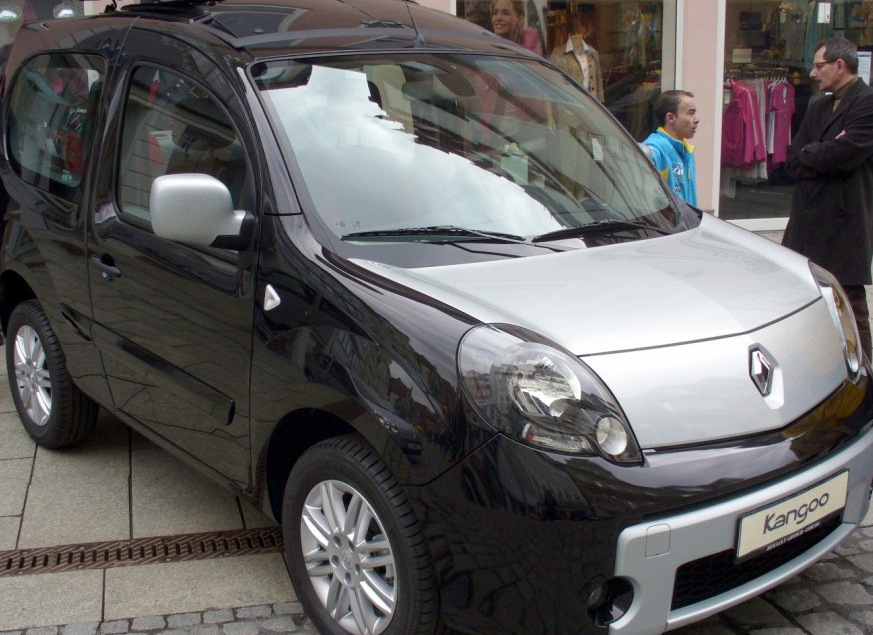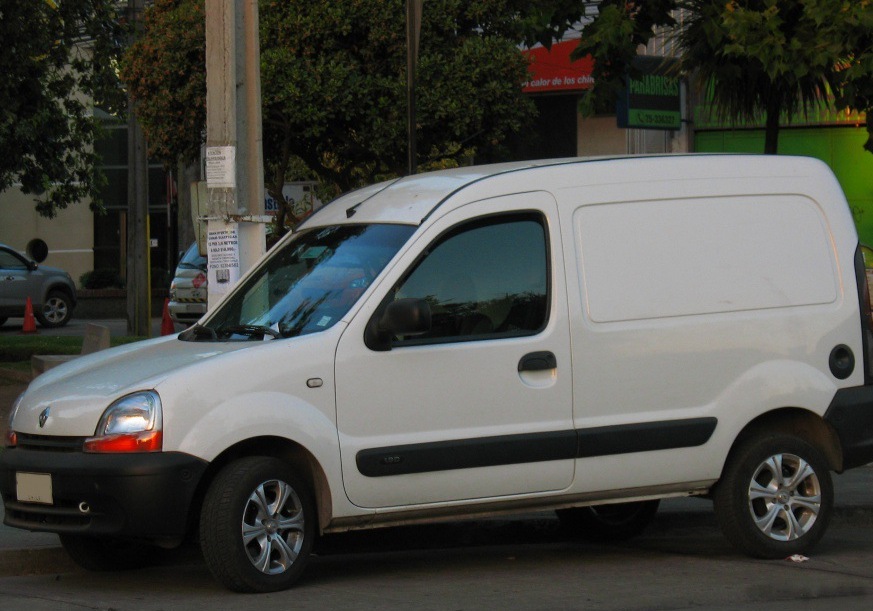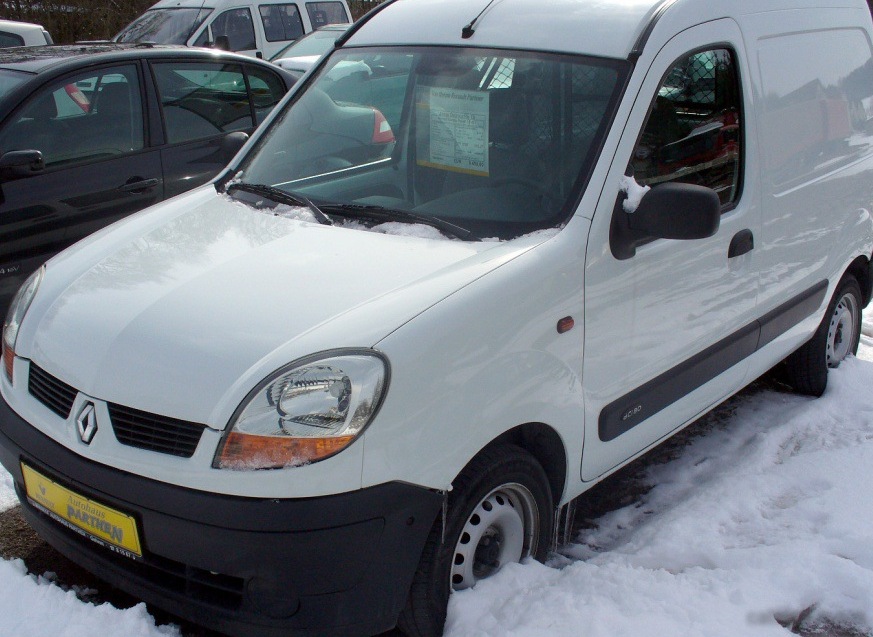
The Renault Kangoo I Express, specifically the facelifted version produced from 2003 to 2005, offered a practical and versatile light commercial vehicle option in the European market. This variant, equipped with the 1.9 dCi (84 horsepower) diesel engine and a four-wheel-drive system, was designed for businesses and tradespeople requiring a robust and capable van. The Kangoo Express, positioned as a compact panel van, competed with vehicles like the Citroën Berlingo and Peugeot Partner, offering a blend of functionality, affordability, and relatively efficient operation. This particular configuration, with its modest power output and all-wheel drive, aimed for a balance between fuel economy and all-weather capability.
Technical Specifications
| Brand | Renault |
| Model | Kangoo |
| Generation | Kangoo I Express (FC, facelift 2003) |
| Type (Engine) | 1.9 dCi (84 Hp) 4×4 |
| Start of production | 2003 |
| End of production | 2005 |
| Powertrain Architecture | Internal Combustion engine |
| Body type | Minivan |
| Seats | 2 |
| Doors | 3/4 |
| Fuel consumption (urban) | 9.3 l/100 km (25.3 US mpg, 30.4 UK mpg, 10.8 km/l) |
| Fuel consumption (extra urban) | 6.3 l/100 km (37.3 US mpg, 44.8 UK mpg, 15.9 km/l) |
| Fuel consumption (combined) | 7.4 l/100 km (31.8 US mpg, 38.2 UK mpg, 13.5 km/l) |
| CO2 emissions | 196 g/km |
| Fuel Type | Diesel |
| Emission standard | Euro 3 |
| Weight-to-power ratio | 13.2 kg/Hp, 75.7 Hp/tonne |
| Weight-to-torque ratio | 6.2 kg/Nm, 162.2 Nm/tonne |
| Power | 84 Hp @ 4000 rpm |
| Power per litre | 44.9 Hp/l |
| Torque | 180 Nm @ 2000 rpm (132.76 lb.-ft. @ 2000 rpm) |
| Engine layout | Front, Transverse |
| Engine Model/Code | F9Q |
| Engine displacement | 1870 cm3 (114.11 cu. in.) |
| Number of cylinders | 4 |
| Engine configuration | Inline |
| Cylinder Bore | 80 mm (3.15 in.) |
| Piston Stroke | 93 mm (3.66 in.) |
| Number of valves per cylinder | 2 |
| Fuel injection system | Diesel Commonrail |
| Engine aspiration | Turbocharger, Intercooler |
| Engine oil capacity | 4.6 l (4.86 US qt | 4.05 UK qt) |
| Kerb Weight | 1110 kg (2447.13 lbs.) |
| Max. weight | 1800 kg (3968.32 lbs.) |
| Max load | 690 kg (1521.19 lbs.) |
| Trunk (boot) space – maximum | 3000 l (105.94 cu. ft.) |
| Fuel tank capacity | 60 l (15.85 US gal | 13.2 UK gal) |
| Max. roof load | 100 kg (220.46 lbs.) |
| Permitted trailer load with brakes (12%) | 890 kg (1962.11 lbs.) |
| Permitted trailer load without brakes | 555 kg (1223.57 lbs.) |
| Permitted towbar download | 75 kg (165.35 lbs.) |
| Length | 4035 mm (158.86 in.) |
| Width | 1672 mm (65.83 in.) |
| Width including mirrors | 2031 mm (79.96 in.) |
| Height | 1885 mm (74.21 in.) |
| Wheelbase | 2600 mm (102.36 in.) |
| Front track | 1400 mm (55.12 in.) |
| Rear (Back) track | 1415 mm (55.71 in.) |
| Front overhang | 735 mm (28.94 in.) |
| Rear overhang | 700 mm (27.56 in.) |
| Minimum turning circle (turning diameter) | 10.95 m (35.93 ft.) |
| Drive wheel | All wheel drive (4×4) |
| Number of gears and type of gearbox | 5 gears, manual transmission |
| Front suspension | Spring Strut |
| Rear suspension | Trailing arm |
| Front brakes | Ventilated discs |
| Rear brakes | Drum |
| Assisting systems | ABS (Anti-lock braking system) |
| Steering type | Steering rack and pinion |
| Power steering | Hydraulic Steering |
| Tires size | 175/65 R14 |
| Wheel rims size | 5.5J x 14 |
Powertrain & Engine Architecture
The heart of this Kangoo Express variant is the Renault F9Q engine, a 1.9-liter inline-four cylinder diesel. This engine, a mainstay in Renault’s lineup for many years, utilizes a common rail direct injection system, providing improved fuel atomization and more precise control over the combustion process. The F9Q is a naturally aspirated engine boosted by a turbocharger with an intercooler, helping to increase power and torque while maintaining reasonable fuel efficiency. The engine features two valves per cylinder (SOHC) and is known for its relative simplicity and durability. The 84 horsepower output is achieved at 4000 rpm, while the 180 Nm (132.76 lb-ft) of torque is available from 2000 rpm. This torque curve provides adequate pulling power for carrying loads, even at lower engine speeds. The engine is transversely mounted in the front of the vehicle. The transmission is a five-speed manual gearbox, chosen for its robustness and cost-effectiveness.
Driving Characteristics
The 1.9 dCi 4×4 Kangoo Express offers a utilitarian driving experience. The 84 horsepower engine, while sufficient for everyday use, doesn’t provide particularly brisk acceleration. The focus is on practicality and fuel economy rather than performance. The five-speed manual transmission is well-matched to the engine’s characteristics, allowing drivers to keep the engine in its optimal torque band. The all-wheel-drive system provides enhanced traction on slippery surfaces, making it suitable for tradespeople operating in varied weather conditions or on uneven terrain. Compared to the higher-output versions of the Kangoo, this variant feels noticeably slower, especially when fully loaded. However, the 4×4 system provides a significant advantage in terms of stability and control.
Equipment & Trim Levels
The Kangoo Express 1.9 dCi 4×4 was typically equipped with a functional, rather than luxurious, interior. Standard features included a driver’s airbag, power steering, and a basic audio system. The interior trim was typically hard-wearing and designed for durability. The cabin focused on practicality, with ample storage compartments and a robust dashboard layout. Options included air conditioning, upgraded audio systems, and electric windows. The van’s interior was designed to be easily cleaned and maintained, reflecting its commercial vehicle purpose.
Chassis & Braking
The Kangoo Express utilizes a relatively simple chassis design. The front suspension consists of MacPherson struts, while the rear suspension employs a trailing arm setup. This configuration provides a reasonable balance between ride comfort and load-carrying capacity. The braking system features ventilated discs on the front wheels and drum brakes on the rear. ABS (Anti-lock Braking System) was standard, enhancing safety during emergency braking situations. The steering is a rack and pinion system with hydraulic power assistance, providing relatively light and precise steering feel.
Market Reception & Comparison
The Renault Kangoo I Express 1.9 dCi 4×4 was generally well-received in the European market as a practical and affordable light commercial vehicle. Critics praised its fuel efficiency, load-carrying capacity, and the added security of the all-wheel-drive system. However, the engine’s modest power output was sometimes criticized, particularly when the van was fully loaded. Compared to the higher-powered versions of the Kangoo, this variant offered a more economical option, but at the expense of performance. The 1.9 dCi engine was known for its reliability, but regular maintenance was essential to ensure long-term durability.
Legacy
The Renault Kangoo I Express 1.9 dCi 4×4 remains a relatively common sight on European roads today, testament to its durability and practicality. The F9Q engine, while aging, is generally considered to be a reliable unit, provided it has been properly maintained. These vans are often found in the hands of tradespeople and small businesses, continuing to serve as dependable workhorses. In the used car market, these Kangoos represent an affordable entry point into the light commercial vehicle segment, offering a blend of functionality and value. While not known for its speed or luxury, the Kangoo I Express 1.9 dCi 4×4 remains a practical and capable vehicle for those requiring a versatile and reliable van.