Technical Specifications
| Brand | Renault |
| Model | Kangoo |
| Generation | Kangoo I (KC) |
| Type (Engine) | 1.2 (58 Hp) |
| Start of production | 1997 |
| End of production | 2001 |
| Powertrain Architecture | Internal Combustion engine |
| Body type | Minivan |
| Seats | 5 |
| Doors | 4 |
| Fuel consumption (urban) | 8.3 l/100 km (28.3 US mpg, 34 UK mpg, 12 km/l) |
| Fuel consumption (extra urban) | 6.1 l/100 km (38.6 US mpg, 46.3 UK mpg, 16.4 km/l) |
| Fuel consumption (combined) | 6.9 l/100 km (34.1 US mpg, 40.9 UK mpg, 14.5 km/l) |
| CO2 emissions | 163 g/km |
| Fuel Type | Petrol (Gasoline) |
| Acceleration 0 – 100 km/h | 17.2 sec |
| Acceleration 0 – 62 mph | 17.2 sec |
| Acceleration 0 – 60 mph | 16.3 sec |
| Maximum speed | 140 km/h (86.99 mph) |
| Weight-to-power ratio | 17.6 kg/Hp, 56.9 Hp/tonne |
| Weight-to-torque ratio | 11 kg/Nm, 91.2 Nm/tonne |
| Power | 58 Hp @ 5250 rpm |
| Power per litre | 50.5 Hp/l |
| Torque | 93 Nm @ 2500 rpm (68.59 lb.-ft. @ 2500 rpm) |
| Engine layout | Front, Transverse |
| Engine Model/Code | D7F |
| Engine displacement | 1149 cm3 (70.12 cu. in.) |
| Number of cylinders | 4 |
| Engine configuration | Inline |
| Cylinder Bore | 69 mm (2.72 in.) |
| Piston Stroke | 76.8 mm (3.02 in.) |
| Compression ratio | 9.6:1 |
| Number of valves per cylinder | 2 |
| Fuel injection system | Multi-port manifold injection |
| Engine aspiration | Naturally aspirated engine |
| Valvetrain | OHC |
| Engine oil capacity | 4 l (4.23 US qt, 3.52 UK qt) |
| Coolant capacity | 4.5 l (4.76 US qt, 3.96 UK qt) |
| Kerb Weight | 1020 kg (2248.72 lbs.) |
| Max. weight | 1600 kg (3527.4 lbs.) |
| Max load | 580 kg (1278.68 lbs.) |
| Trunk (boot) space – minimum | 650 l (22.95 cu. ft.) |
| Trunk (boot) space – maximum | 2600 l (91.82 cu. ft.) |
| Fuel tank capacity | 50 l (13.21 US gal, 11 UK gal) |
| Max. roof load | 100 kg (220.46 lbs.) |
| Permitted trailer load with brakes (12%) | 850 kg (1873.93 lbs.) |
| Permitted trailer load without brakes | 545 kg (1201.52 lbs.) |
| Permitted towbar download | 75 kg (165.35 lbs.) |
| Length | 3995 mm (157.28 in.) |
| Width | 1663 mm (65.47 in.) |
| Width including mirrors | 2015 mm (79.33 in.) |
| Height | 1827 mm (71.93 in.) |
| Wheelbase | 2600 mm (102.36 in.) |
| Front track | 1405 mm (55.31 in.) |
| Rear track | 1415 mm (55.71 in.) |
| Front overhang | 692 mm (27.24 in.) |
| Rear overhang | 703 mm (27.68 in.) |
| Minimum turning circle | 10.95 m (35.93 ft.) |
| Drivetrain | Front wheel drive |
| Number of gears | 5 gears, manual transmission |
| Front suspension | Spring Strut |
| Rear suspension | Trailing arm |
| Front brakes | Ventilated discs |
| Rear brakes | Drum |
| Assisting systems | ABS (Anti-lock braking system) |
| Steering type | Steering rack and pinion |
| Power steering | Hydraulic Steering |
| Tires size | 165/70 R14 C |
| Wheel rims size | 5.5J x 14 |
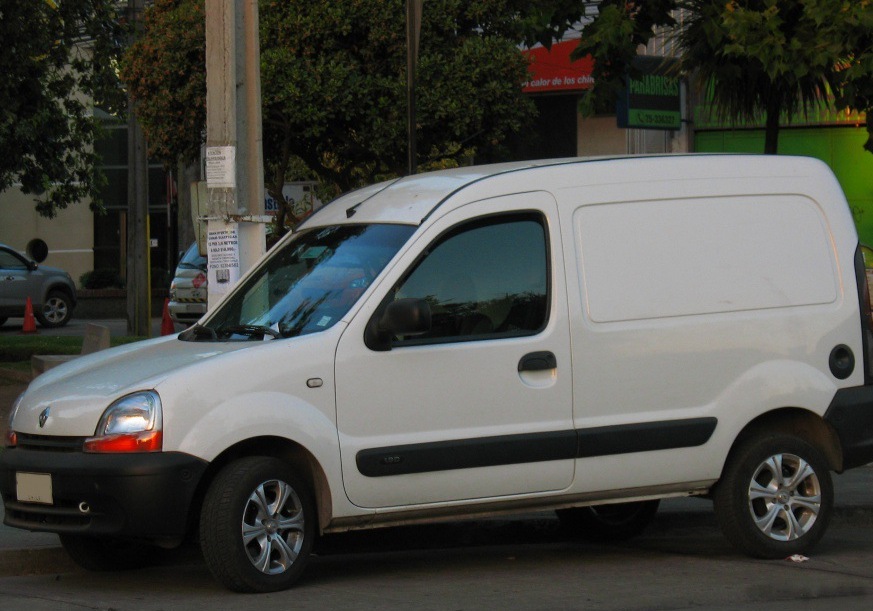
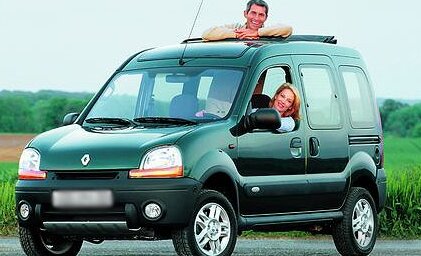
The Renault Kangoo I, produced from 1997 to 2001, marked Renault’s entry into the growing European leisure activity vehicle (LAV) segment. The 1.2-liter (58 horsepower) variant served as the entry point into the Kangoo I range, aimed at buyers prioritizing economy. Based on the shared Renault 5/Clio platform, the Kangoo I (KC) sought to deliver a practical and affordable solution for small families and commercial users. This particular engine and transmission combination focused on maximizing fuel efficiency and minimizing the initial purchase price, making it a popular choice in markets where operating costs were a significant concern. It played a crucial role in establishing the Kangoo’s reputation for versatility and affordability.
Powertrain & Engine Architecture
The Renault Kangoo I 1.2 utilized the D7F engine, a 1.149-liter inline-four cylinder petrol engine. This engine was a long-standing component in Renault’s smaller vehicle lineup, appreciated for its simplicity and durability. The D7F featured a single overhead camshaft (OHC) operating two valves per cylinder. Fuel delivery was managed by a multi-port fuel injection system, a notable improvement over earlier carbureted versions. The engine’s modest 58 horsepower output at 5250 rpm and 93 Nm of torque at 2500 rpm were adequate for city driving and lighter loads, but performance suffered when fully loaded or on inclines. The engine’s design prioritized fuel economy over raw power. A 5-speed manual transmission was standard, offering a reasonable spread of gears to optimize efficiency and usability. The transmission was a conventional design, known for its reliability but lacking the sophistication of more modern gearboxes.
Driving Characteristics
The 1.2-liter Kangoo I provided a relaxed driving experience. Acceleration was slow, requiring over 17 seconds to reach 62 mph. The engine demanded frequent downshifts to maintain speed, especially when climbing hills or overtaking. The gear ratios were tuned for fuel economy, resulting in a relatively high final drive ratio. Compared to the more powerful 1.4 and 1.6-liter versions, the 1.2 felt noticeably underpowered. However, the light steering and compact dimensions made it easy to maneuver in urban settings. The suspension, while basic, offered a comfortable ride on most road surfaces. The overall driving experience was best described as practical and functional, rather than sporty or engaging.
Equipment & Trim Levels
The 1.2-liter Kangoo I typically came with a basic equipment level. Standard features included power steering, central locking, and a basic audio system. Interior upholstery was generally a durable cloth material. Optional extras included air conditioning, electric windows, and upgraded audio systems. The Kangoo I was designed as a utilitarian vehicle, so luxury features were generally minimized in the base 1.2 model. The dashboard layout was simple and functional, with clearly marked controls. Safety features were also basic, typically including driver and passenger airbags and ABS brakes.
Chassis & Braking
The Kangoo I employed a relatively straightforward chassis design. The front suspension utilized MacPherson strut springs, while the rear suspension featured a trailing arm setup. This configuration provided a reasonable balance between ride comfort and handling. Braking was handled by ventilated discs at the front and drum brakes at the rear. ABS (Anti-lock Braking System) was standard, enhancing safety by preventing wheel lockup during hard braking. The Kangoo I’s relatively light weight helped to offset the modest braking performance.
Market Reception & Comparison
The Renault Kangoo I 1.2 was generally well-received as an affordable and practical vehicle. Critics praised its spacious interior, versatility, and fuel efficiency. However, the engine’s lack of power was a common point of criticism. Compared to the 1.4 and 1.6-liter versions, the 1.2 offered significantly lower performance but at a lower purchase price. Fuel economy was a key selling point, making it an attractive option for budget-conscious buyers. Reliability was generally good, although the engine’s simple design meant that maintenance was straightforward and affordable.
Legacy
The Renault Kangoo I 1.2, while not a performance leader, proved to be a reliable and economical workhorse. The D7F engine, despite its age, is known for its durability and relatively simple maintenance requirements. In the used car market, these models are often sought after by those looking for an affordable and practical vehicle. While parts availability may be becoming more limited, the engine’s simplicity means that repairs are often within the capabilities of amateur mechanics. The Kangoo I established the Kangoo nameplate as a versatile and affordable option in the European LAV market, setting the stage for subsequent generations.