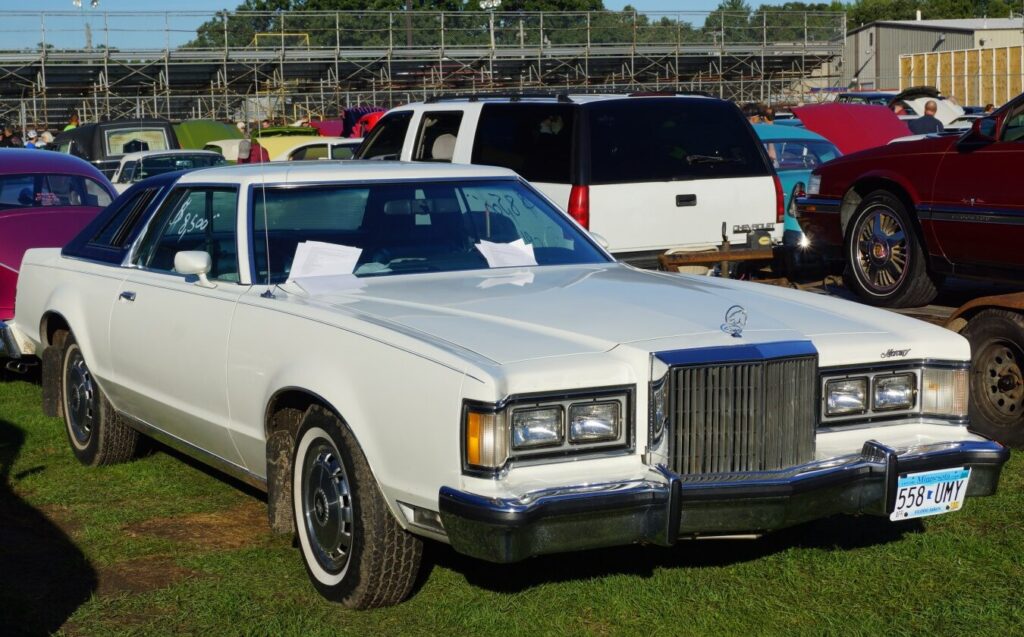
The Mercury Cougar XR7 with the 5.8-liter V8 engine, produced between 1977 and 1979, represents a significant iteration of Ford’s luxury coupe. This fourth-generation Cougar (often referred to as the Cougar IV) aimed to blend performance with a comfortable, upscale experience, positioning itself as a competitor to personal luxury cars like the Buick Regal and Oldsmobile Cutlass Supreme. The XR7 designation denoted the premium trim level, offering a more refined interior and a selection of convenience features. This particular variant, with its 161 horsepower V8, occupied a middle ground in the Cougar lineup, offering a step up in power from the smaller six-cylinder engines while remaining more accessible than the higher-output V8 options available in later years.
Technical Specifications
| Brand | Mercury |
| Model | Cougar |
| Generation | Cougar IV (XR7) |
| Engine Type | 5.8 V8 (161 Hp) |
| Production Years | 1977-1979 |
| Powertrain Architecture | Internal Combustion Engine |
| Body Type | Coupe |
| Seats | 4 |
| Doors | 2 |
| Fuel Type | Petrol (Gasoline) |
| Power | 161 Hp |
| Engine Aspiration | Naturally Aspirated |
| Wheelbase | 2896 mm (114.02 in) |
| Drivetrain | Rear Wheel Drive |
Powertrain & Engine Architecture
The heart of the 1977-1979 Mercury Cougar XR7 5.8 V8 was the 351 cubic inch (5.8 liter) Ford Windsor V8 engine. This engine, a mainstay of Ford’s lineup for many years, was known for its durability and relatively simple design. The 351 Windsor featured a cast iron block and cylinder heads, with a two-barrel carburetor handling fuel delivery. While not a high-performance engine by contemporary standards, it provided adequate power for comfortable cruising and occasional spirited driving. The engine utilized a traditional pushrod valvetrain, with two valves per cylinder. The 161 horsepower output was achieved through a relatively conservative compression ratio, designed to accommodate the lower octane fuel available at the time. The engine was mated to a three-speed automatic transmission, a common pairing for personal luxury cars of this era. This transmission was selected for its smooth operation and ease of use, prioritizing comfort over outright performance.
Driving Characteristics
The Cougar XR7 5.8 V8 offered a driving experience geared towards comfort and refinement. The automatic transmission, while not offering the responsiveness of a manual, provided smooth and effortless gear changes. Acceleration was adequate for merging onto highways and passing slower traffic, but it wasn’t a particularly quick car. The 351 Windsor delivered its peak torque at relatively low RPMs, providing good low-end grunt for everyday driving. The rear-wheel-drive configuration contributed to a balanced feel, although the Cougar’s relatively heavy weight (around 3,700 pounds) meant it wasn’t a particularly nimble handler. Compared to the six-cylinder Cougars, the V8 offered a noticeable improvement in acceleration and overall responsiveness. However, it fell short of the performance offered by the later, higher-output 351 Windsor variants or the optional 400 cubic inch V8 available in some years. The steering was power-assisted, making maneuvering easy, but lacked the precision of more modern steering systems.
Equipment & Trim Levels
The XR7 trim level represented the pinnacle of luxury for the Cougar. Standard features included plush carpeting, simulated woodgrain interior trim, a center console, and upgraded upholstery, typically cloth or vinyl. Power windows and power door locks were often included, as was an AM/FM radio. Air conditioning was a popular option, as was a tilt steering wheel. The XR7 also featured distinctive exterior trim, including brightwork around the windows and a unique grille design. Optional extras included a sunroof, leather upholstery, and a premium sound system. The dashboard layout was typical of American cars of the 1970s, with a large instrument cluster featuring a speedometer, fuel gauge, and temperature gauge. The overall interior design emphasized comfort and spaciousness, providing a relaxing environment for both driver and passengers.
Chassis & Braking
The Cougar IV was built on Ford’s Fox platform, a versatile chassis that underpinned a wide range of Ford and Mercury vehicles. The suspension consisted of independent front suspension with coil springs and a solid rear axle with leaf springs. This setup provided a comfortable ride, but wasn’t particularly sporty. The Cougar XR7 5.8 V8 typically came equipped with power-assisted front disc brakes and rear drum brakes. While adequate for normal driving, the braking system wasn’t particularly powerful by modern standards. Stabilizer bars were included both front and rear to help reduce body roll during cornering. The tire size was typically P205/75R15, providing a good balance of ride comfort and handling. The overall chassis design prioritized comfort and durability over outright performance.
Market Reception & Comparison
The 1977-1979 Mercury Cougar XR7 5.8 V8 was generally well-received by automotive critics. It was praised for its comfortable ride, spacious interior, and attractive styling. However, some critics noted that the 161 horsepower V8 was somewhat underpowered for a car of its size and weight. Fuel economy was also a concern, as the Cougar was not particularly efficient, averaging around 15-18 miles per gallon. Compared to the six-cylinder Cougars, the V8 offered a noticeable improvement in performance, but at the cost of increased fuel consumption. The XR7 trim level was considered a good value for the money, offering a luxurious interior and a comprehensive list of standard features. Against competitors like the Buick Regal and Oldsmobile Cutlass Supreme, the Cougar offered a similar level of comfort and refinement, but often at a slightly lower price point.
Legacy
The Mercury Cougar XR7 5.8 V8 has become a popular classic car among collectors and enthusiasts. The 351 Windsor V8 engine is known for its reliability and ease of maintenance, making it a relatively affordable classic to own and operate. Parts availability is generally good, as many components are shared with other Ford vehicles of the era. While not a high-performance machine, the Cougar XR7 offers a comfortable and stylish driving experience that evokes the spirit of the 1970s. Today, well-maintained examples command reasonable prices in the used car market, appealing to those seeking a classic American coupe with a touch of luxury. The Cougar IV, and particularly the XR7 with the 5.8 V8, represents a unique chapter in Mercury’s history, blending performance, comfort, and style in a package that continues to resonate with enthusiasts today.