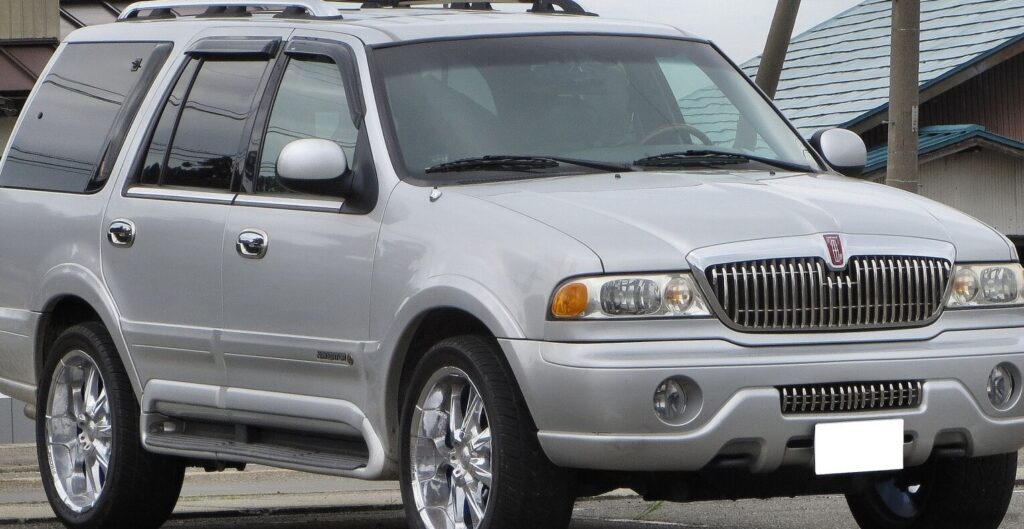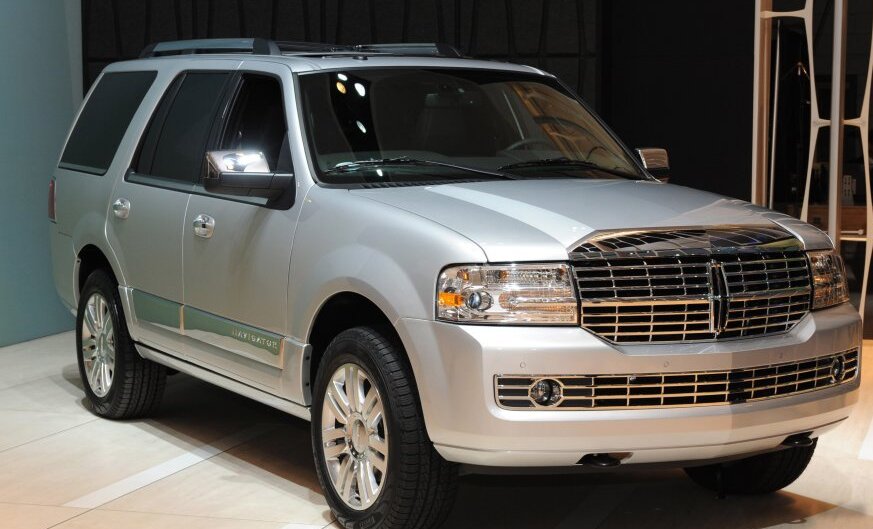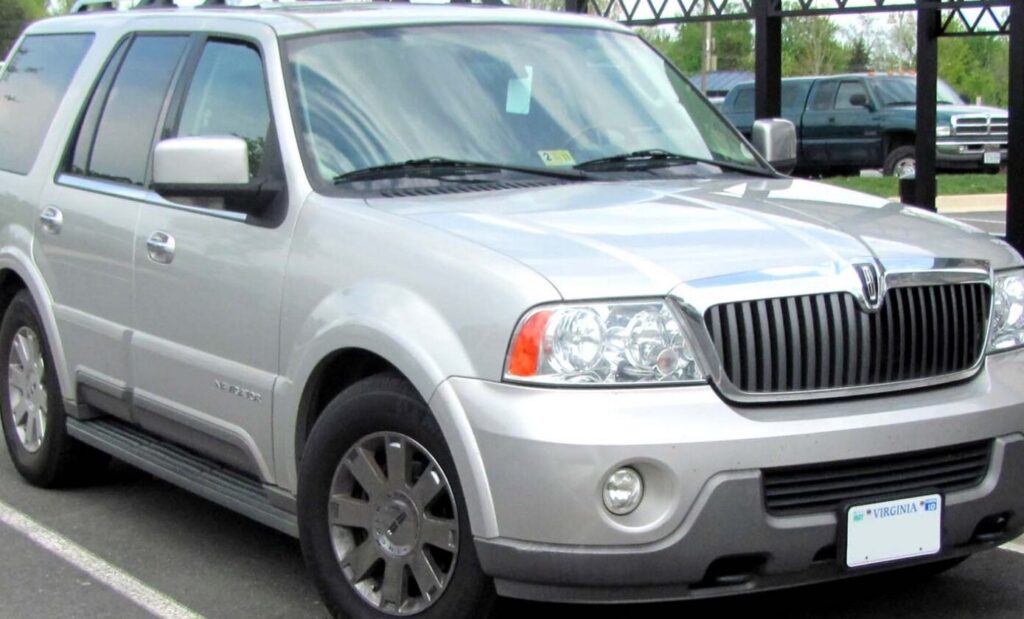
The Lincoln Navigator II, specifically the 5.4i V8 32V (300 Hp) Automatic variant, represents a significant iteration in Lincoln’s full-size SUV offerings. Produced from 2002 through 2004, this model year fell within the second generation of the Navigator (model code 1HX0), which was based on the Ford U246 platform shared with the Ford Expedition. This generation marked a substantial increase in size, refinement, and capability compared to the original Navigator, aiming to compete directly with Cadillac Escalade and other luxury SUVs. The 5.4i Automatic trim occupied a central position in the Navigator II lineup, offering a balance of power, features, and price, appealing to buyers seeking a luxurious and capable family vehicle.
Technical Specifications
| Brand | Lincoln |
| Model | Navigator |
| Generation | Navigator II |
| Type (Engine) | 5.4i V8 32V (300 Hp) Automatic |
| Start of production | 2002 |
| End of production | 2004 |
| Powertrain Architecture | Internal Combustion engine |
| Body type | SUV |
| Seats | 8 |
| Doors | 5 |
| Fuel consumption (urban) | 19.6 l/100 km (12 US mpg, 14.4 UK mpg, 5.1 km/l) |
| Fuel consumption (extra urban) | 13.9 l/100 km (16.9 US mpg, 20.3 UK mpg, 7.2 km/l) |
| Fuel consumption (combined) | 16.8 l/100 km (14 US mpg, 16.8 UK mpg, 6 km/l) |
| Fuel Type | Petrol (Gasoline) |
| Acceleration 0 – 100 km/h | 9.3 sec |
| Acceleration 0 – 62 mph | 9.3 sec |
| Acceleration 0 – 60 mph | 8.8 sec |
| Maximum speed | 170 km/h (105.63 mph) |
| Weight-to-power ratio | 8.7 kg/Hp, 114.9 Hp/tonne |
| Weight-to-torque ratio | 5.4 kg/Nm, 184.2 Nm/tonne |
| Power | 300 Hp @ 5000 rpm |
| Power per litre | 55.5 Hp/l |
| Torque | 481 Nm @ 2750 rpm (354.77 lb.-ft. @ 2750 rpm) |
| Engine layout | Front, Longitudinal |
| Engine Model/Code | InTech / T54DSEM |
| Engine displacement | 5408 cm3 (330.02 cu. in.) |
| Number of cylinders | 8 |
| Engine configuration | V-engine |
| Cylinder Bore | 90.2 mm (3.55 in.) |
| Piston Stroke | 105.7 mm (4.16 in.) |
| Compression ratio | 9.5:1 |
| Number of valves per cylinder | 4 |
| Fuel injection system | Multi-port manifold injection |
| Engine aspiration | Naturally aspirated engine |
| Valvetrain | DOHC |
| Engine oil capacity | 6.6 l (6.97 US qt | 5.81 UK qt) |
| Coolant | 21 l (22.19 US qt | 18.48 UK qt) |
| Kerb Weight | 2612 kg (5758.47 lbs.) |
| Max. weight | 3310 kg (7297.3 lbs.) |
| Max load | 698 kg (1538.83 lbs.) |
| Trunk (boot) space – minimum | 507 l (17.9 cu. ft.) |
| Trunk (boot) space – maximum | 2966 l (104.74 cu. ft.) |
| Fuel tank capacity | 106 l (28 US gal | 23.32 UK gal) |
| Length | 5232 mm (205.98 in.) |
| Width | 2000 mm (78.74 in.) |
| Width with mirrors folded | 2029 mm (79.88 in.) |
| Width including mirrors | 2088 mm (82.2 in.) |
| Height | 1975 mm (77.76 in.) |
| Wheelbase | 3018 mm (118.82 in.) |
| Front track | 1701 mm (66.97 in.) |
| Rear (Back) track | 1704 mm (67.09 in.) |
| Ride height (ground clearance) | 218 mm (8.58 in.) |
| Drag coefficient (Cd) | 0.41 |
| Minimum turning circle | 11.8 m (38.71 ft.) |
| Approach angle | 21.9° |
| Departure angle | 19.8° |
| Ramp-over angle | 17.1° |
| Drivetrain Architecture | Rear wheel drive |
| Drive wheel | Rear wheel drive |
| Number of gears | 4 |
| Gearbox type | automatic transmission |
| Front suspension | Air suspension |
| Rear suspension | Air suspension |
| Front brakes | Ventilated discs |
| Rear brakes | Ventilated discs |
| Assisting systems | ABS (Anti-lock braking system) |
| Steering type | Steering rack and pinion |
| Power steering | Hydraulic Steering |
| Tires size | 255/70 R18 |
| Wheel rims size | 18 |
Powertrain & Engine Architecture
The heart of the Navigator II 5.4i was Ford’s 5.4-liter InTech V8 engine, designated as the T54DSEM. This engine was a member of Ford’s Modular engine family, known for its robust construction and relatively smooth operation. The 32-valve, dual overhead camshaft (DOHC) design contributed to its respectable power output. Fuel delivery was handled by a multi-port fuel injection system, optimizing combustion efficiency. The engine produced 300 horsepower at 5000 rpm and 481 Nm (354.77 lb-ft) of torque at 2750 rpm. This power was channeled through a four-speed automatic transmission, a common choice for full-size SUVs prioritizing comfort and ease of use. While not as technologically advanced as some contemporary transmissions, the four-speed automatic provided adequate performance for most driving situations.
Driving Characteristics
The 5.4-liter V8 and four-speed automatic combination in the Navigator II delivered a comfortable, if not particularly sporty, driving experience. Acceleration from 0-60 mph took approximately 8.8 seconds, which was competitive for a full-size SUV of its era. The automatic transmission was tuned for smooth shifts and relaxed cruising, prioritizing comfort over aggressive acceleration. Compared to the later addition of a higher-output version of the 5.4L, or the diesel options, this configuration offered a more refined and quieter driving experience. The gear ratios were optimized for towing and hauling, making the Navigator II a capable workhorse. However, the relatively wide gear spacing and limited number of gears meant that the engine could feel strained during hard acceleration or when climbing steep hills.
Equipment & Trim Levels
The Navigator II 5.4i Automatic came standard with a generous array of features, reflecting its luxury SUV positioning. These included leather upholstery, power-adjustable front seats, a premium sound system, automatic climate control, and alloy wheels. Optional extras included a navigation system, a rear entertainment system, and upgraded leather trim. The interior design was characterized by its spaciousness and comfortable seating for up to eight passengers. The dashboard layout was straightforward and functional, with easy-to-use controls.
Chassis & Braking
The Navigator II featured a body-on-frame construction, providing a robust and durable platform. The suspension utilized an air suspension system on both the front and rear axles, offering a comfortable ride and the ability to adjust ride height for improved off-road capability. Braking duties were handled by ventilated discs on all four wheels, coupled with an Anti-lock Braking System (ABS) for enhanced safety. The large size and weight of the Navigator II necessitated a strong braking system to provide adequate stopping power.
Market Reception & Comparison
The Lincoln Navigator II 5.4i Automatic was generally well-received by critics and consumers alike. It was praised for its spacious interior, comfortable ride, and powerful engine. However, its fuel economy was a common criticism, with combined fuel consumption averaging around 16.8 l/100 km (14 US mpg). Compared to the base Navigator models with smaller engines, the 5.4i offered significantly more power and refinement. Compared to the diesel options, it offered a quieter and smoother driving experience, but at the expense of fuel efficiency.
Legacy
The Lincoln Navigator II 5.4i Automatic remains a popular choice among used car buyers seeking a large, comfortable, and capable SUV. The 5.4-liter V8 engine is generally considered reliable, although regular maintenance is essential to prevent issues such as spark plug fouling and oil leaks. The four-speed automatic transmission is also relatively durable, but may require servicing as it ages. Overall, the Navigator II 5.4i represents a solid and dependable luxury SUV that continues to offer good value in the used car market.